















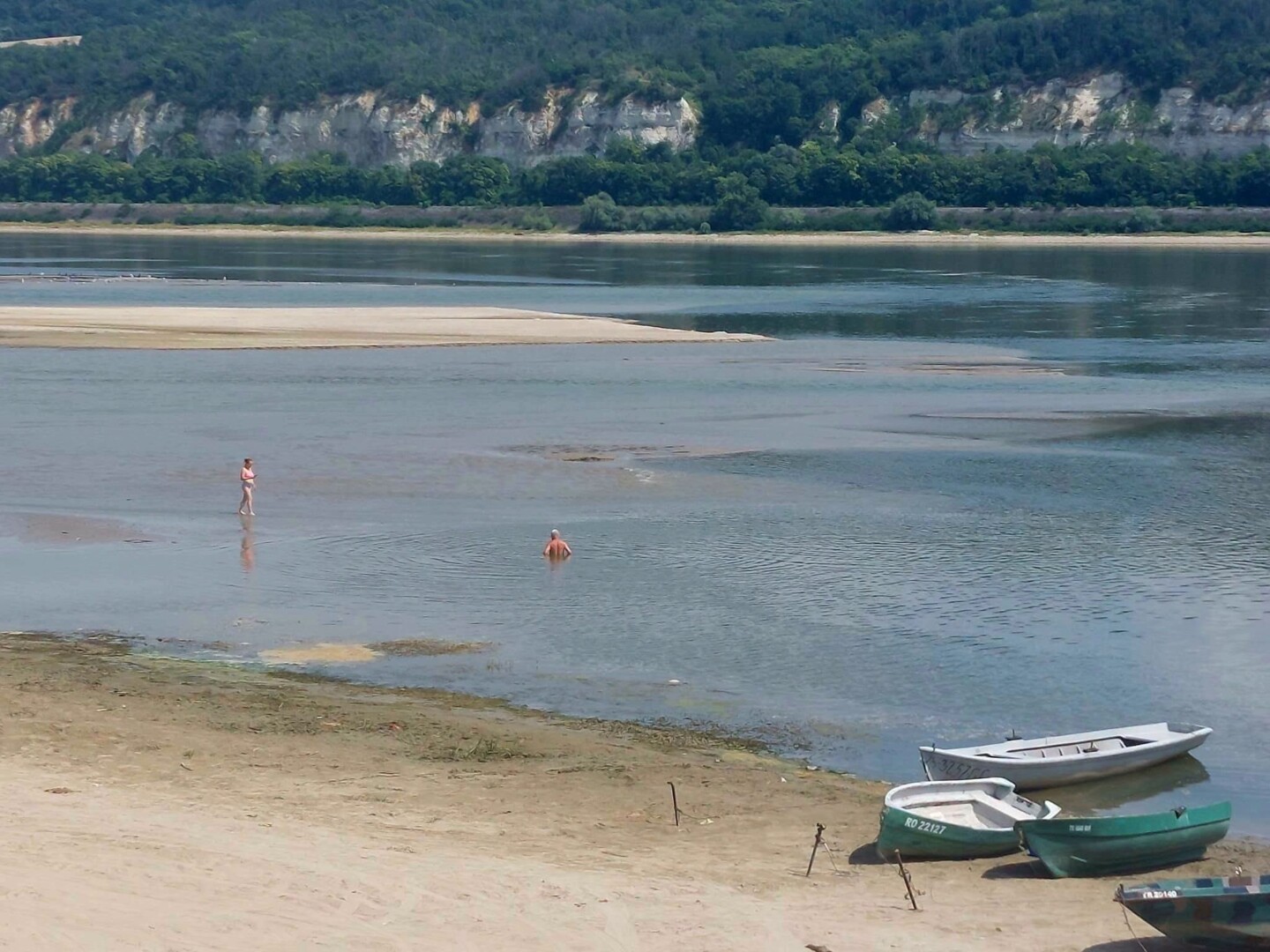
Water levels of the Danube in Romania have fallen to their lowest since 1996, leading to irrigation restrictions for farmers and partially disrupting shipping and tourism along the banks.
The Danube River reached its lowest flow last week, leading to the restrictions in southeastern Romania, according to the Romania’s state water management agency.
Water levels are expected to continue declining over the next several days before recovering early next week due to heavy rain in several counties, Romania’s state water management agency said.
The water agency said the level at the Romanian entry point of Europe’s second-longest river was 1,700 cubic meters of water per second on Sunday, against the monthly average range of 4,700 cubic meters per second.
Romania is one of the European Union’s largest grain exporters, exporting about one-third of the bloc’s total.
Over the weekend, authorities restricted farmer access to water for crop irrigation in southeastern Romania and controlled water reservoirs to ensure minimum levels needed for cooling state nuclear power producer Nuclearelectrica’s two reactors in southeast Romania.
