








The Israeli president flew to Iași, where the Iron Guard Fascists murdered 13,000 Jews in 1941
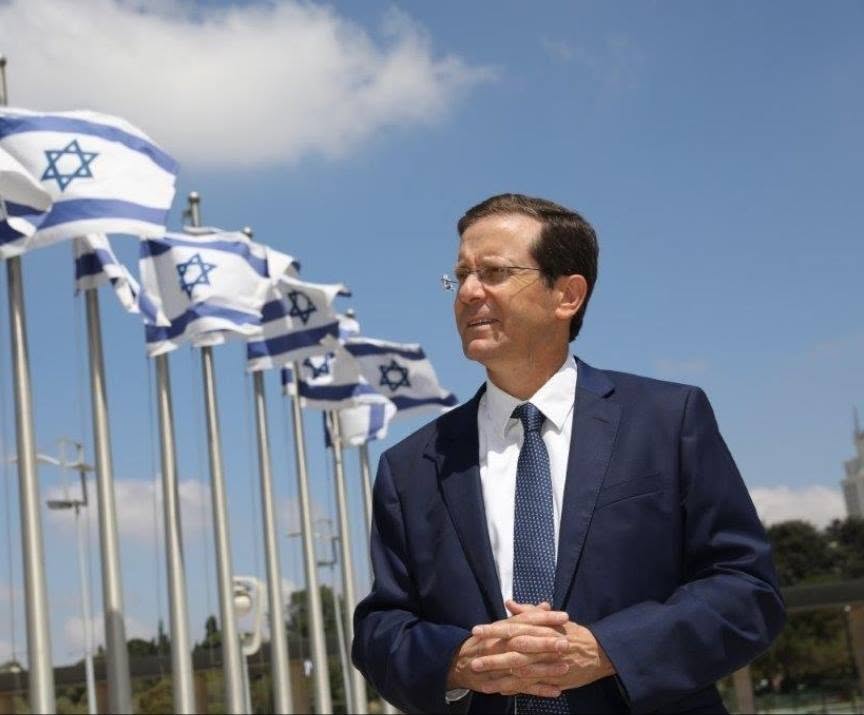
Israeli President Isaac Herzog on Sunday visited the city of Iași, Romania on a state visit to the country to attend a state ceremony marking 85 years since one of the worst massacres of Romanian Jews, in which thousands of Jews were murdered.
The ceremony was held at the city’s Jewish cemetery, where many of the pogrom’s victims lie in a mass grave.
Herzog, who was accompanied by his wife Michal, attended a reburial ceremony for 22 victims of the pogrom whose remains were recently identified.
He will then visit the Holocaust museum and other memorial sites in the northeastern Romanian city.
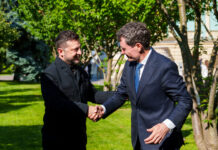
Herzog wrote that he “will hold meetings with President Nicușor Dan and Romania’s political leadership, and address the joint plenary of the Romanian Parliament, where I will pay tribute to the longstanding friendship and cooperation between Israel and Romania,” on a post on X.
„Jews from Romania had an essential role in setting up and developing the State of Israel and today are a living bridge between Romania and the Jewish people. Faced with the reemerging antisemitism, we have the shared responsibility to defend the truth, memory and human dignity,” Herzog said, thanking Romanian local and national authorities for their support.
“The only people that die are the ones who are forgotten,” said President Nicusor Dan in a message paraphrasing Elie Wiesel, the Romanian-born Jewish Noble prize winner..
“The pogrom of June 1941 remains a deep scar in national history and consciousness, a devastating consequence of anti-Semitism, intolerance and hatred directed against fellow human beings,” his message read.
Romanian Foreign Minister Oana Toiu wrote on X on Saturday about the pogrom, in which some 13,000 Jews were murdered. .
“Over 13,000 Romanian Jews were killed in the city or on the “death trains”. Romanian citizens, killed by a Romanian regime that many still heroize today by falsifying history. The truth cannot be avoided, it must be assumed, and Romania has begun to assume it,” she wrote.
She also mentioned how “some Romanian diplomats who opposed the decision to mark the passports of Jews [had] helped many people to be saved in time from extermination. Even in the darkest episodes of history, there were heroes,” adding that she had discussed this with Rabbi Yehuda Kaploun, whom U.S. President Donald Trump appointed last year to serve as U.S. special envoy to monitor and combat antisemitism.
Romania had some 800,000 Jews before the Holocaust. Today, the minority’s population is estimated as around 8,000.
