








Ever since I received a Pentax K1000 about 40 years ago, I have been unaccountably drawn to photographing creatures of the wild
I have previously written about how my parents bought me a Pentax K-1000, a “single-lens reflex” camera that seemed, to a teenager, like an instrument of sorcery. Suddenly I could freeze time, bend light, and change the scale of the world. A twist of the aperture ring gave me mastery over brightness; the shutter speed let me arrest motion or let it blur into abstraction. With a change of lens I could drag the far close, or make the uncomfortably near intelligible. It was a revelation, one that quietly set the stage for how I would look at the world ever since.
That is to say, like an annoyance pointing a camera at things – and these days, in a way even less dignified, a flat little computer that for legacy reasons we still call a phone.
This was my humble start in journalism, using that Pentax for my high school job as a photographer for the King of Prussia Courier, a small local paper run by a crusty editor in a one-person office. He would dispatch me to cover Kiwanis Club luncheons, zoning board meetings, or, if fortune favored me, a high school football game under the Friday night lights. For five dollars a picture — decent money at the time — I snapped evidence of community life: men in cheap suits shaking hands, cheerleaders caught mid-kick, the solemn ritual of ribbon cuttings.
Later, photography remained a private pursuit. But my subjects shifted. On city streets and in far-flung towns, I began taking candid pictures of people — strangers caught in unguarded moments. It was my way of documenting the awkward choreography of reality: confused tourists in Naples; tough guys in Sicily who have long passed the age of seventy, a skeptical peasant woman in Romania, a pizza parlor guy in Philadelphia, an angry sommelier in Monaco, a street clown in Malta.
About 15 years ago I began producing sets of images from various locations, entitled, “In Paris, the same as everywhere else.” It was people staring at their phones instead of talking to each other. I stopped that when it actually became so ubiquitous that it turned into a statement of the obvious – and one that is in no way funny but just terribly sad.
My family has viewed this as an embarrassing and pointless nuisance. Perhaps they feared, altruistically, for the subjects’ privacy; maybe for our safety; I cannot rule out that they simply recoiled at a breach of indifferent decorum. The reasons were never clear, but the objections grew persistent.
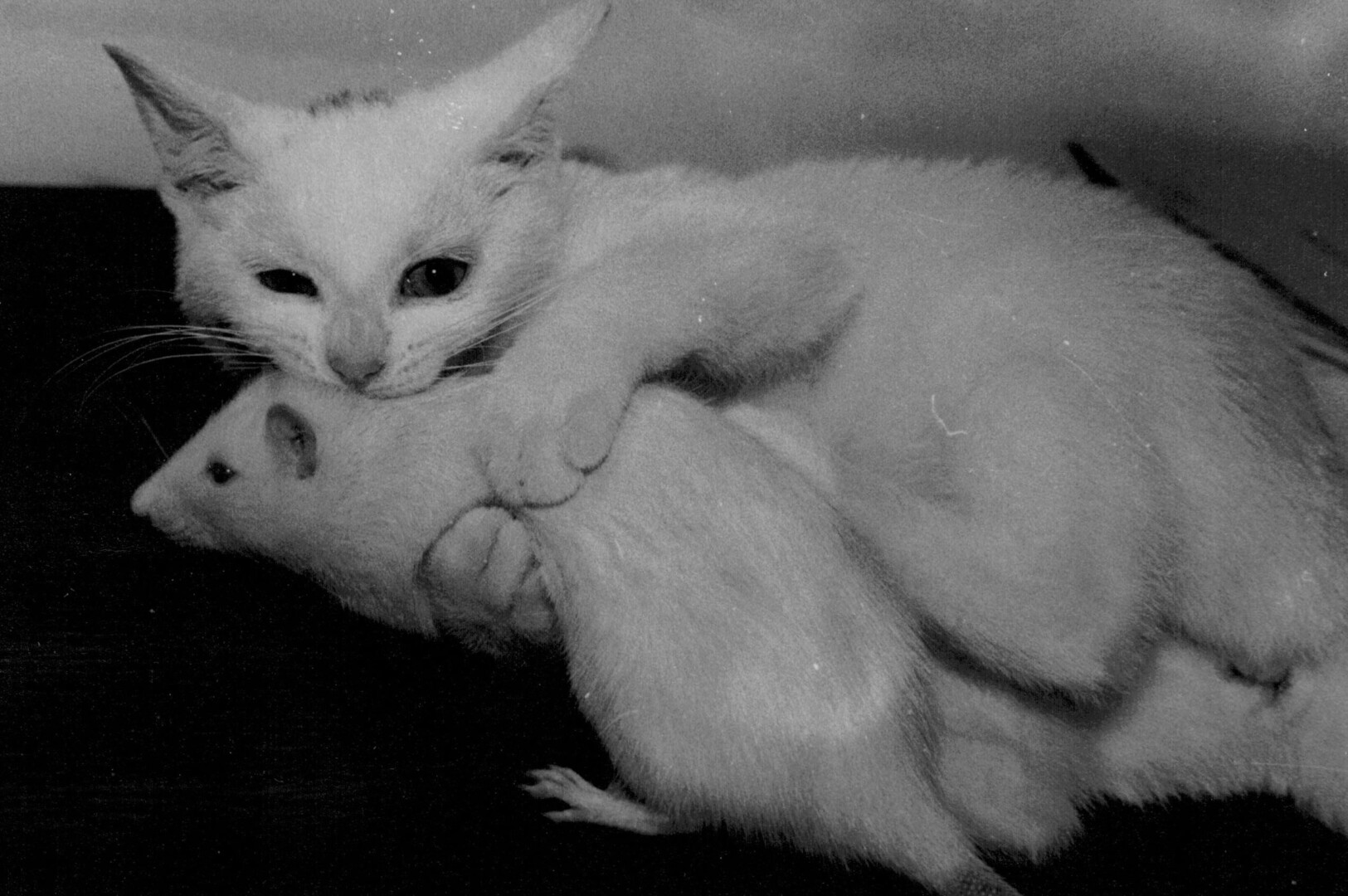
To mollify them, I began to photograph animals with greater interest. Indeed I had been doing this always. Here is a picture or my pet cat Spike and my adorable rat Nixon. How they loved to frolic in the 1980s (when they were alive)!
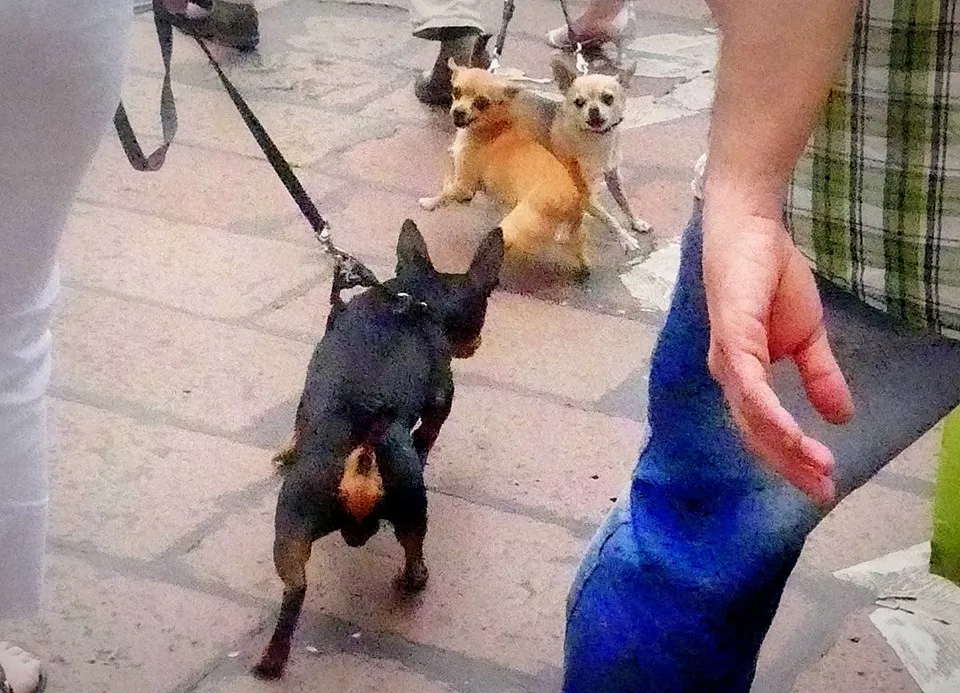
No one could accuse me of invading a pigeon’s privacy, or offending the dignity of a hound. Here’s a group of them being all alpha in Milan.
And so my photo archive began filling with images of monkeys competing for a morsel (at the Cairo Zoo, in 2012) …

… of horses preening (this one in Medina, Malta, 2016) …
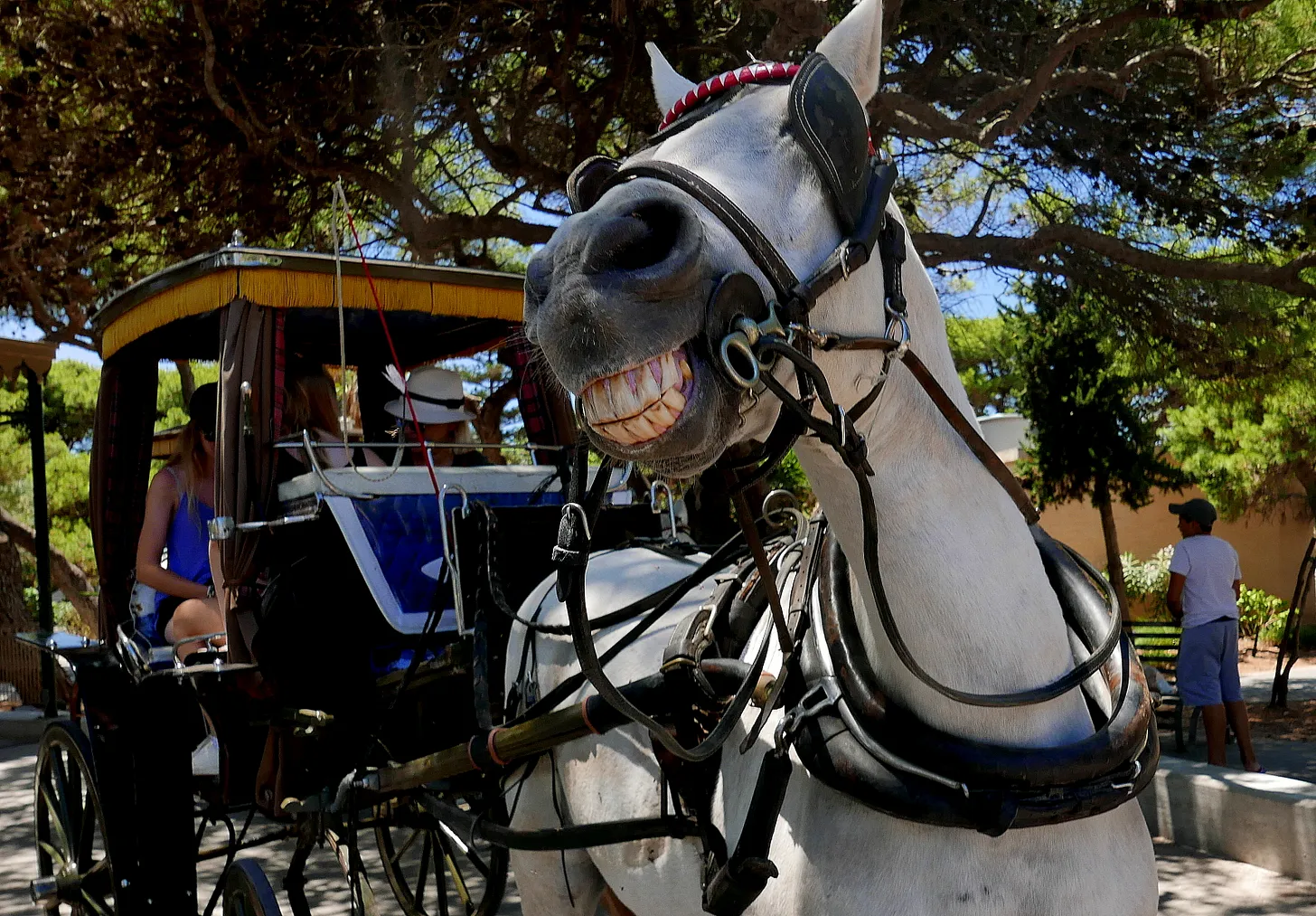
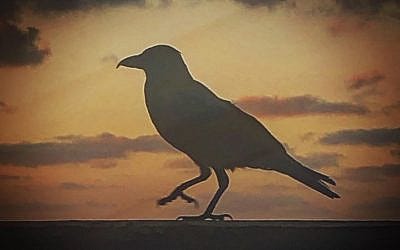
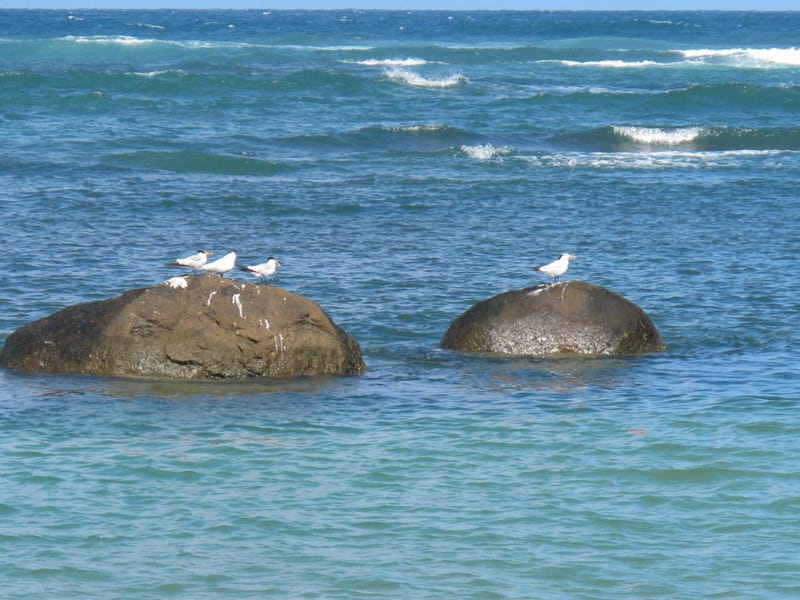
… and of birds — always birds — the objections somewhat diminished. It was a modus vivendi. And what is it about those damn birds? I call this one (from Punta Cana, the Dominican Republic,2013) Bird, Alone.
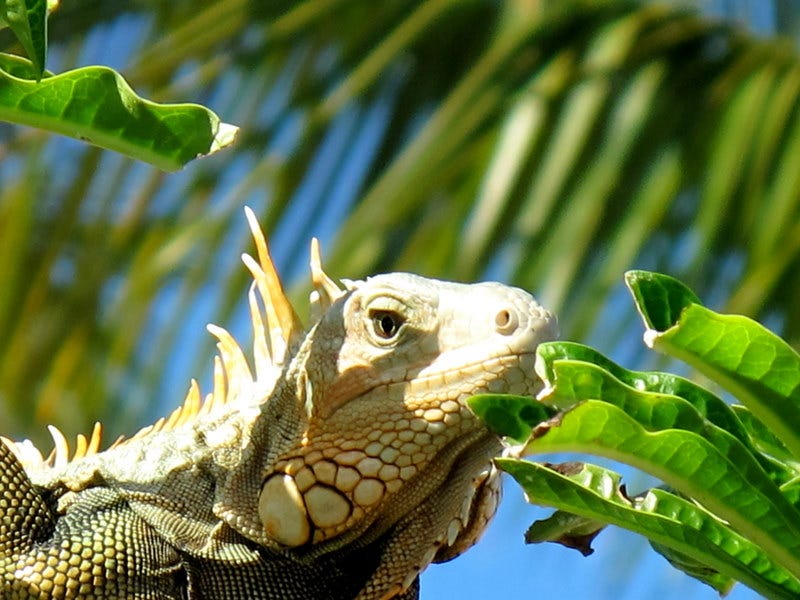
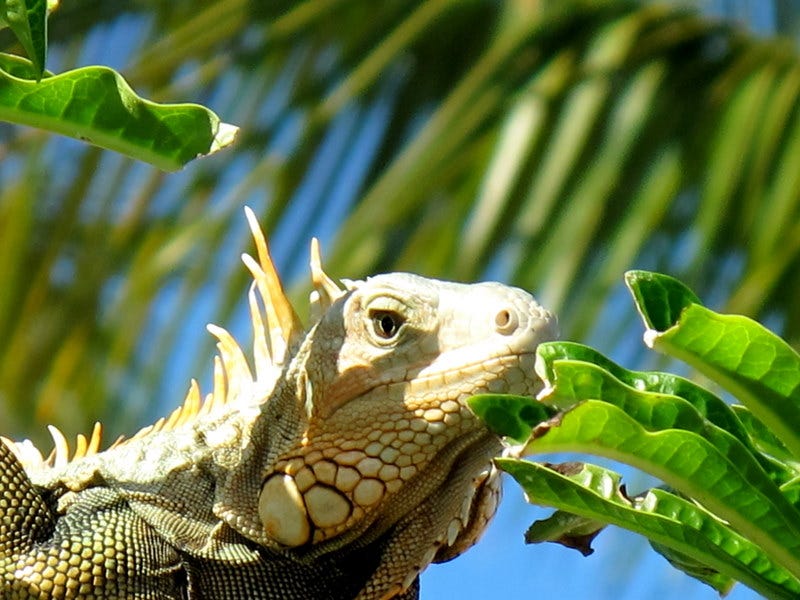
It was taken in the Dominican Republic, not far away from this reptilian wonder.
At the most obvious level, they are records of motion and form. As in the below image of elephants in Kenya.
But why I really love it so, I don’t fully understand.
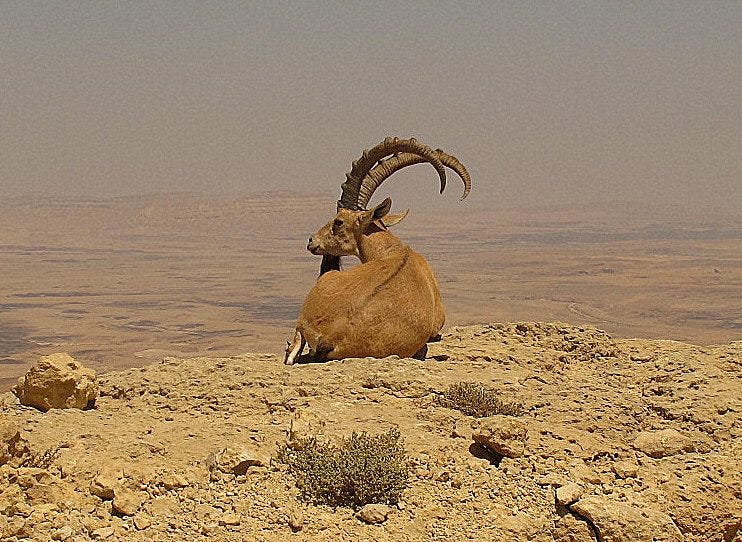
Philosophers have long debated the question of animal minds. This mountain goat in the Negev Desert seems lost in contemplation. Is he?
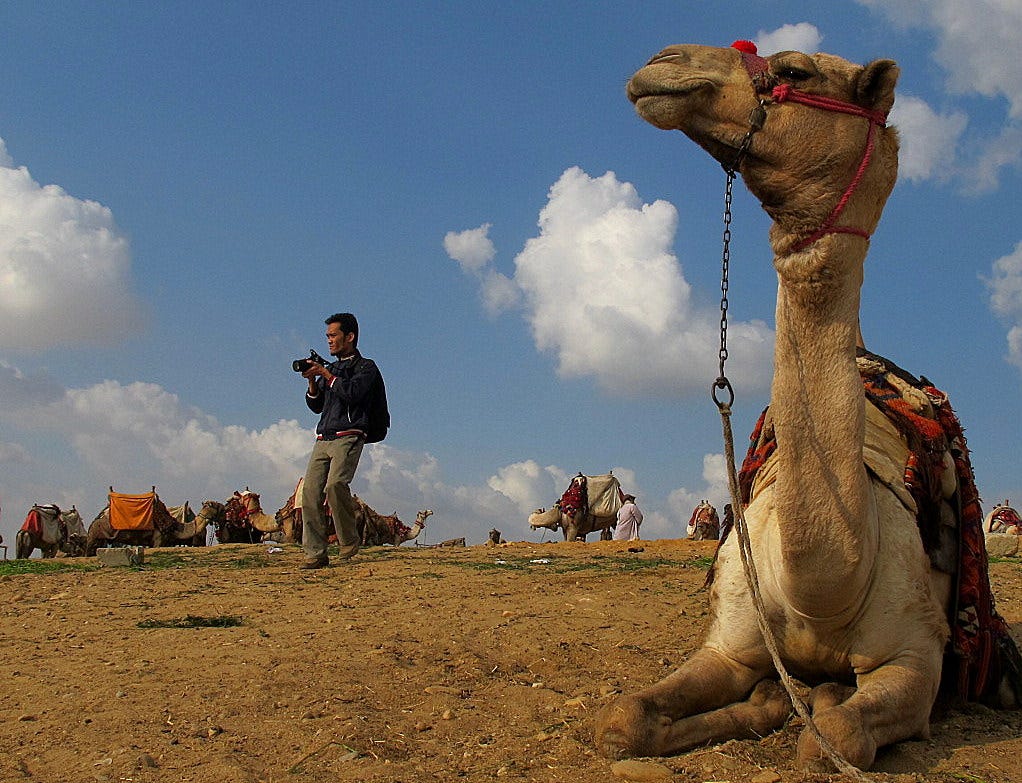
I find myself wondering who is the more truly intelligent — the tourist, the photographer, of this camel in Giza, seemingly content with his lot in our combined and pitiable mortal coil?
Descartes dismissed animals as mere automata, machines of flesh and bone responding to stimuli without inner life. Darwin, by contrast, insisted on a continuity: if natural selection shaped intelligence in us, it must have left its traces in them. Modern ethology offers tantalizing evidence — crows fashioning hooks, dolphins calling each other by name, octopuses displaying curiosity and mischief. And yet, no matter how clever the trick, the question lingers: do they think in ways that involve concepts, or merely act in ways that mimic them?
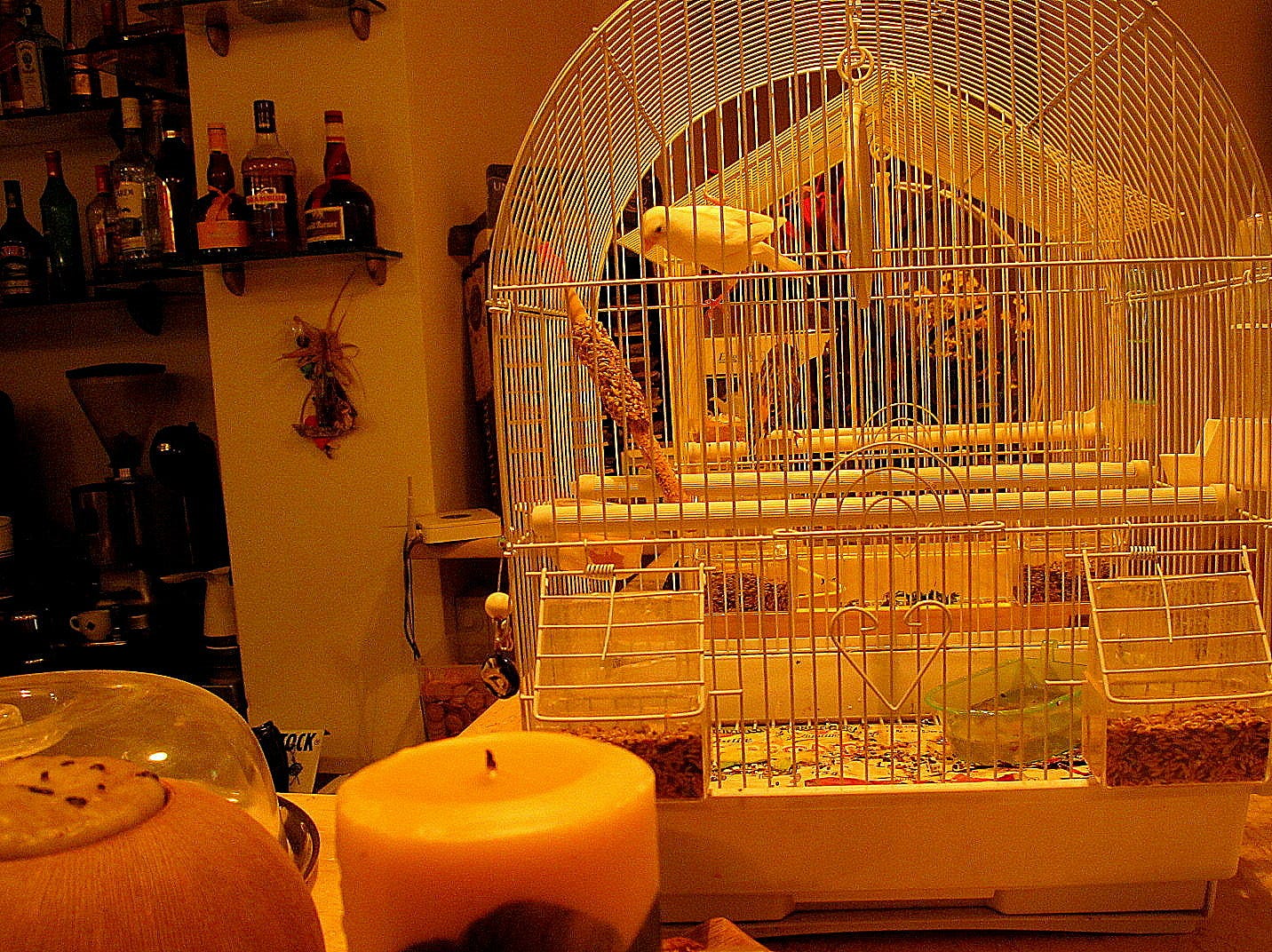
Are we any different? A flock of birds rises, scatters, recombines; one veers off, inexplicably, and another follows. One sits in a cage, contemplating a seed (as this one in Crete, 2014).
To us it seems like randomness. To them it might be a genetic algorithm refined through millennia of survival. But then again, what is our own “thought” if not a higher-order version of that? We pride ourselves on deliberation, on weighing alternatives, on imagining futures. But perhaps those, too, are patterns evolved for survival — elaborate but ultimately mechanical.
Artificial intelligence sharpens the edge of this puzzle. Machines now produce sentences, essays, even images that seem suffused with creativity. They recall information, recombine it, generate something that passes for novelty even though it’s not. But they do not “think” in the way we imagine we do. They calculate, remember, they adjust based on feedback loops — and we call it intelligence. Which forces an unsettling question: how different is that from us?
When I watch a bird veer off in an odd direction, I ask: is this decision or instinct? When I read a paragraph spun out by an algorithm, I ask: is this thought or merely pattern recognition? And when I catch myself making a choice — whether to snap a picture, to turn left instead of right, to forgive or to resent — am I so sure it is anything more? Perhaps we are all, in the end, machines of different orders. Animals, humans, and now our silicon offspring, each enacting routines inscribed by evolution or code, each improvising within constraints, each persuaded of our own uniqueness.
Upon these questions, the photography sheds little light. The camera freezes a moment, but it generally cannot explain it. It records the monkey’s hand reaching for bread, while another looks on balefully. Is it calculation, instinct, emotion. We simply cannot know.
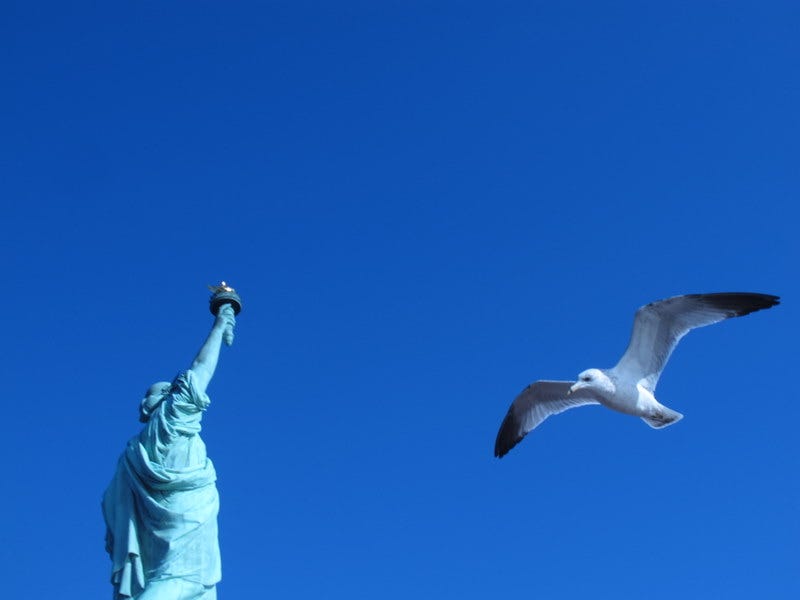
It holds the bird mid-flight (as here, in New York City, 2013), but not the reason behind the angle.
Why, then do I bother? Because none of that really matters. Like most things we do, we do it because we like it. It is, in the end, a way to get through the day, not do damage, and leave some kind of mark, even if only we can see.