











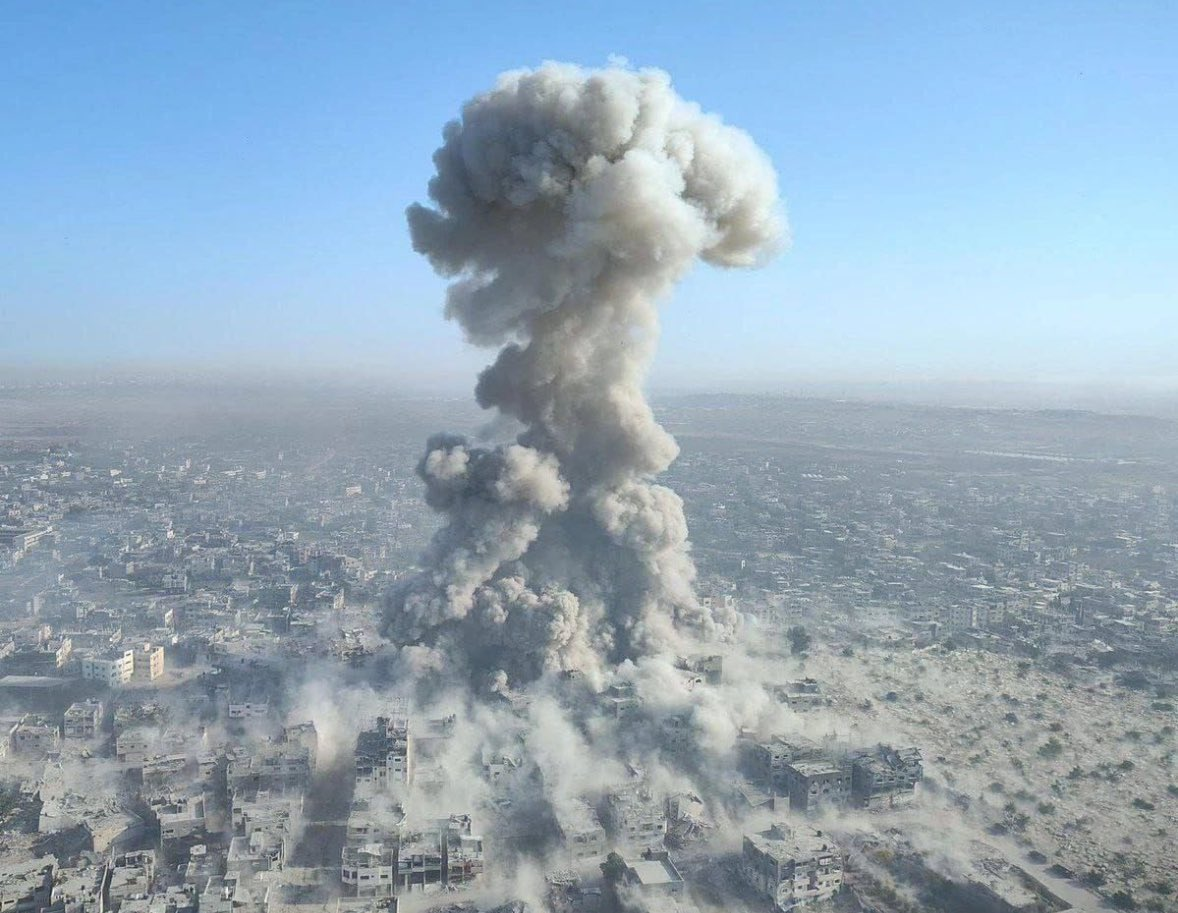
The US attacks the key Iranian nuclear sites, and now many consequences may follow. Among the possibilities is a chance for great progress in the Middle East.
The Islamic Republic — the mafia that hijacked Iran 46 years ago — spent billions to fund jihadist militias around the Middle East and pursue nuclear weapons amid silly games. Now, very likely, that whole project lies in ruins while the Iranian people suffer under economic sanctions. How much longer?
In my TV appearances over the past two weeks, I consistently warned against a delay in the US reaction to the current crisis that would drag out the war – and also noted that the very idea of it could be a misdirection. So, well, it was. It now becomes very clear to anyone who needed evidence of the obvious that Israel and the US were aligned all along on Iran. Now that the US has attacked Iran’s nuclear sites, the question is what next.
More likely, I think, is that talks will commence after the US (and Israel) declare victory. In those talks, Iran will be requested to hand over any remaining fissile material, disavow uranium enrichment beyond 3% civilian levels, end its missile program and cease any further undermining of Arab countries – meaning an end to support for Hezbollah, the Houthis, the Shiite militias of Iraq, Hamas, and more.

Meanwhile, if Israel is wise it will announce immediately an end to its operation in Iran. Benjamin Netanyahu does not know how to end wars; he should quickly figure it out. The regime in Iran has been humiliated enough that a revolution may follow. Israel cannot force this issue.
Of course, Iran might retaliate. Tehran could attempt to block the Strait of Hormuz, through which a fifth of the world’s oil flows — plunging the global economy into chaos. U.S. military assets in the region, such as the Al Udeid Air Base in Qatar or the Fifth Fleet in Bahrain, could come under missile attack. Iran may also activate its proxies: Hezbollah in Lebanon, the Houthis in Yemen, and Shiite militias in Iraq. Any one of these could trigger a wider war, possibly even drawing in Gulf states or forcing the U.S. into deeper conflict.
Either way, these US strikes truly draw a line in the sand. For three decades the dictatorial Iranian regime has been messing with the region and the world and lying about its nuclear ambitions, and it correctly calculated that the world fears attacking it. Tonight that risk equation was upended.
It remains to be seen what the exact results of the strike are – but it is reasonable to assume that the main Iranian enrichment facilities have been destroyed. There is satisfaction there for anyone who has been frustrated by Western acquiescence of Iran’s brazen stalling tactics and indifference to the view of the outside world.
There is no reason why Iran should even have been allowed to undermine the sovereignty of Lebanon, Iraq, Yemen and the Palestinian Authority, and to endanger Jordan and support the despot Bashar Assad in Syria. It was madness, and perhaps it ends.
If indeed that’s the case, the hope is that the weakening of Iran might lead to a better Middle East, and compel Israel to rethink as well, and shift to greater accommodation of the Palestinians.
There is a chance, which we described in an article this weekend, that the weakening of Iran will lead to an endgame in Gaza, an expansion of the Abraham Accords, and great progress throughout the Arab Middle East. It is, obviously, absurd that Trump might end up a peacemaker. But the Gods of history work in strange ways.
Of course, there is also a chance that we are looking at a major escalation. That’s in the hands of the Iranian regime. It could officially withdraw from the NPT and risk further conflict. But maybe not.
The hope, shared by much of the world, is that tonight’s developments might bring closer the day that the people of Iran are free.
US strikes three Iranian nuclear sites; Trump says sites are ‘obliterated’
