














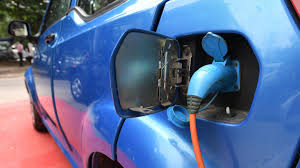
The Iran conflict has become the most powerful, if unintended, accelerator of Europe’s electric-vehicle transition since subsidy-driven booms of 2020-2022. The Strait of Hormuz blockade and the surge in oil and gas prices jolted energy markets and triggered widespread inflation fears, while average petrol prices in the EU climbed in some countries above €2 per liter, reshaping consumer purchase intent almost overnight.
The results are clear, new EV car sales in Europe climbed and the situation boosted the second hand market too, writes eToro analyst for Romania, Bogdan Maioreanu. .
After hopes for peace and for the reopening of the Strait of Hormuz pushed down Brent oil futures at around $90 per barrel on April 17th, latest instability and uncertainty concerning the negotiations between the US and Iran pushed it back to over to $110 per barrel, today. According to the Financial Times, Goldman Sachs predicts Brent crude will average $90 per barrel in Q4 if Middle East exports normalize by the end of June (up from a prior $80 forecast). However, if exports remain disrupted through July and Gulf of Mexico output continues to drop by 2.5 million barrels per day, prices could instead average $120 per barrel.
In this context, March new car sales brought a confirmation that, in Europe, more and more buyers are looking at battery electric vehicles (BEV) as a viable option for their mobility needs. The figures from the European Automobile Manufacturers’ Association (ACEA) confirm this. In Q1 2026, 546,937 new battery-electric cars were registered in the EU, capturing 19.4% of the market — up from 15.2% a year earlier, while March alone saw a 48.9% surge in BEV registrations. By the end of the first quarter of 2026, petrol car registrations decreased by 18.2%, with declines across all major markets. Romania is following this trend. In the first quarter of 2026, new BEV registration increased by almost 20% while petrol car registrations decreased by 43% and diesel car registrations by 36%. In fact, if we look at the numbers, there were more BEV registered cars in that period (2587) than diesel cars (2250). In March alone, the BEV new registration soared by 148% compared with the same month in 2025.
The current situation had an impact on the second-hand automotive market, too. Online classifieds operator OLX reported that customer inquiries for electric vehicles jumped 40% in Romania, alongside increases of 50% in France, 54% in Portugal and 39% in Poland. With diesel and petrol still dominating Romania’s fleet, the sustained pump-price shock is forcing a re-evaluation that domestic incentive schemes such as Rabla Plus had struggled to trigger on their own.
Analysts caution against reading the Q1 surge in BEV sales as a permanent re-rating of consumer preferences. The Iran shock is, by its nature, conjunctural and pump prices will ease if Hormuz traffic normalizes. Some of the demand currently flowing toward BEVs reflects sticker shock at the petrol station rather than a settled conviction about electric mobility. Interest in electric vehicles had already been rising before the war began, the conflict merely accelerated a transformation that was already underway, and structural obstacles such as uneven charging infrastructure across central and eastern Europe, Romania included, have not disappeared.
The Iran crisis will end eventually. The infrastructure, the habits, and the price expectations it is shaping most likely will not. The half-million BEVs registered in the quarter were enough to reduce oil consumption by an estimated 2 million barrels per year in Europe, a tangible gain in energy security at a moment when oil dependence has become a visible vulnerability. And this makes the direction of the shift undeniable.
_
