













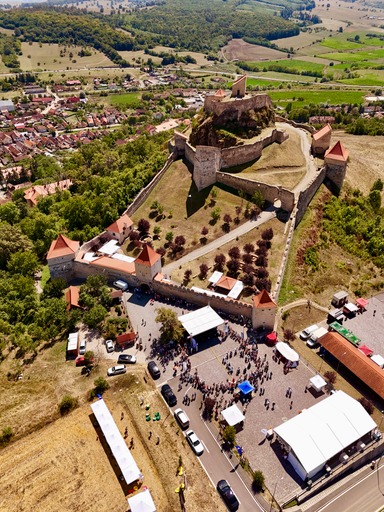
Rupea Citadel, an iconic fortress that lies in the heart of Romania, is 700 years old.
A major Transylvanian fortress and one of the most imposing sights in the region, it was built by the Transylvanian Saxons as a vantage point and defense system in the 14th century.
Citadel
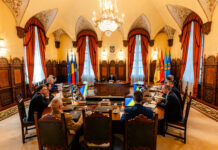
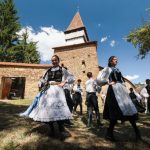
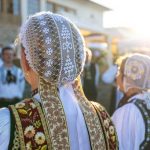
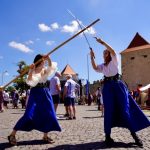
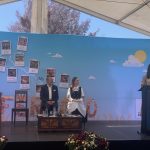
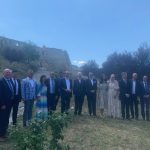
To mark the venerable anniversary, hundreds of Romanians, Saxons, foreign tourists and Romanian and foreign ambassadors gathered on the hill where the citadel stands. They listened to speeches, and watched live Saxon music and dancing, followed by a sumptuous Transylvanian feast in the ramparts.
It was the last event of the Haferland Festival, a three-day event which celebrates Saxon traditions with an eye to European values and inclusion. Festival patron Michael Schmidt and his wife Veronica who head the M&V Schmidt Siftung, presided over the ceremony which ended the 12th edition of the popular festival, under the auspices for a second year of His Serene Highnesses the Prince and Princess Alexander von und zu Liechtenstein.
Romania’s Ambassador to Austria Emil Hurezeanu told the audience seated in the shadow of the fortress that the anniversary was “the moment of rediscovery.”
Rediscovery
“We are at the epicenter of a rediscovery,” he said, touching on the European vision that Saxons believe in.
Romania’s Ambassador to Germany, Adriana Stanescu, stayed on topic. “Robert Schuman (Eds: the architect of the European integration project) says Europe needs a soul. This meeting is a soul centered on culture and history.”
Germany’s Ambassador Peer Gebauer said “The multi-ethnic, multi-lingual togetherness is at the heart of our European values.”
Dutch Ambassador Willmijn van Haaften said Dutch travelers moved to the area in the 12th century to join the Saxon settlers.
European unity
“I believe in European unity and diversity which brings more freedom and prosperity to more people,” she said.
The audience laughed when the Ambassador, a keen cyclist, promised to return on her bike next year.
Perched on top of a hill above the town, the fortress is visible for miles from every direction. Built to defend the surrounding villages, and deserted when no longer needed, the citadel sat in ruins for a few centuries, until 2013, when, reconstructed it opened its gates for visitors as a relic from the past.
Rupea Fortress is known as Cetatea Rupea in Romanian, Burg Reps in German, while the Hungarians call it Kőhalmi vár.
Transylvanian Saxons
In 1224, a Hungarian king invited Saxons to settle and defend the sparsely populated Transylvania from marauders from the east. They came from an area which is today’s Luxembourg.
The Transylvanian Saxon settlers built the fortress which was first mentioned by a 1324 document. It is situated on a 120 meter high basalt cliff, on the western side of Rupea.
‘With a hint of Shakespeare’: the Noble sisters hold summer concert at Haferland Saxon festival
