














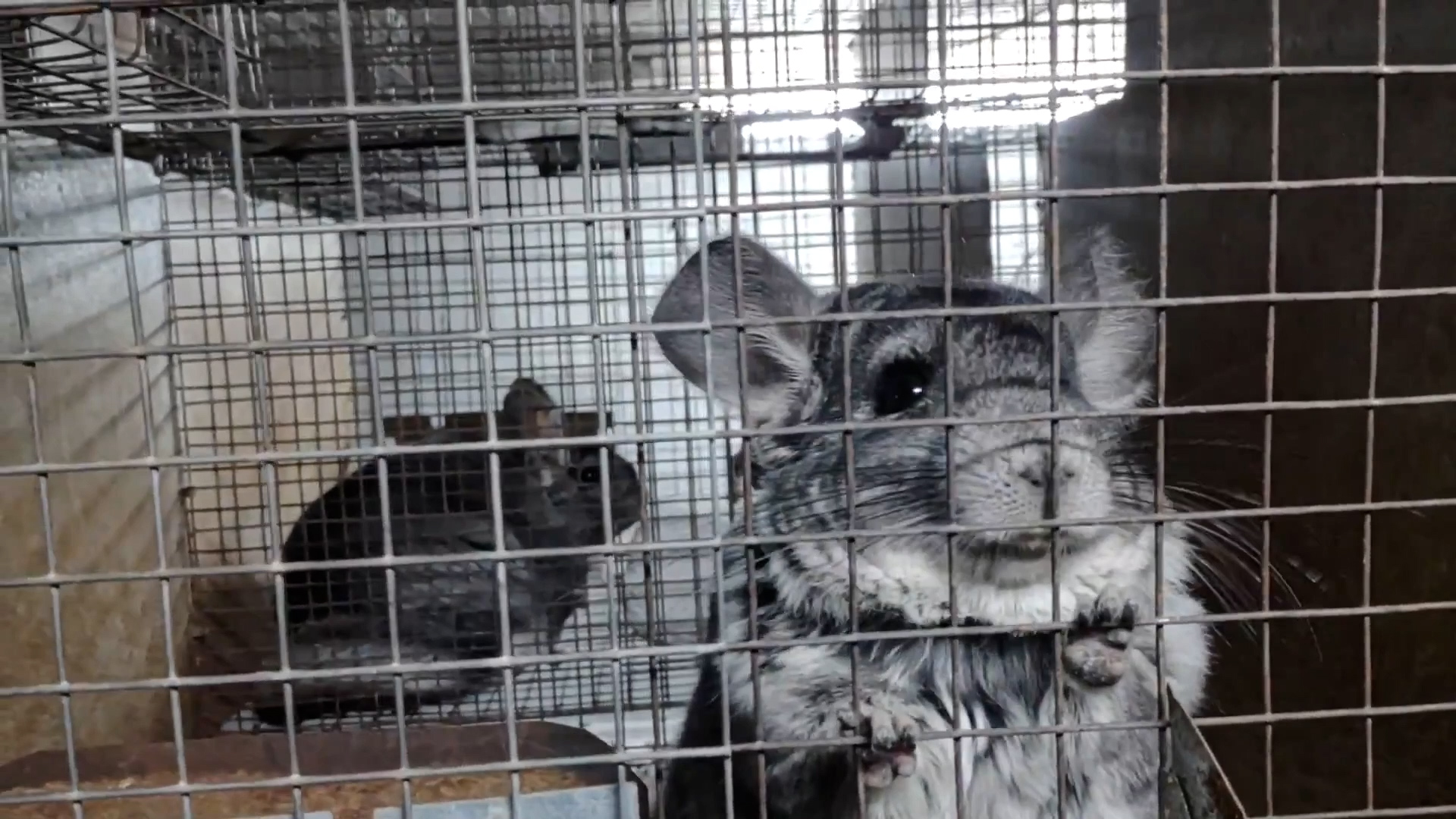
The Romanian Parliament on Tuesday voted overwhelmingly to ban chinchilla and mink fur farming, the only two fur farm industries that exist in the country.
Lawmakers voted 217 in favor, six against, with seven abstentions.
Humane Society International/Europe hailed what it called “a monumental victory for animal protection in Romania,” which now becomes the 22nd country in Europe to ban fur farming.
The bill was proposed after HSI/Europe conducted an undercover investigation which exposed gruesome conditions on fur farms in Romania.
Chinchillas were filmed confined in cramped, filthy wire cages, before they were slaughtered for their fur at just a few months old in improvised gas chambers or by having their necks broken.
HSI said the vote was the result of nearly two years of political debates and sustained campaigning by HSI/Europe’s Romania office and other animal welfare groups.
Andreea Roseti, Romania director for HSI/Europe, said: “Today’s vote to ban fur farming is not only a groundbreaking decision for animal protection in Romania and a legislative milestone, but a resounding affirmation of our country’s growing commitment to animal welfare.”
“By banning fur farming, Romania is taking a significant step towards a more compassionate society, where animals are no longer seen as commodities for fashion.”
She thanked people who signed petitions and wrote letter “whose voices have made a difference.”
“Your support will prevent the suffering of thousands of animals, and we hope this law will bring us an important step closer to an EU-wide ban on fur farming.”
Now that the bill has passed the Chamber of Deputies, fur farming will become illegal in Romania effective 1st Jan, 2027.
The legislation is expected to be signed into law by President Klaus Iohannis and published in the Official Journal to become effective.
According to a nationwide survey commissioned by HSI/Europe, over 67% of Romanians support a fur farming ban. HSI/Europe’s campaign in Romania gathered more than 74,000 petition signatures demanding an end to fur farming, which HSI/Europe submitted to the Parliament.
The fur industry in Romania is in decline, with the number of fur farms having dropped dramatically from more than 150 in 2013 to around a dozen in 2022.
Two large mink farms currently produce about 100,000 mink pelts and 15,000 chinchilla pelts annually.
Fur facts:
- Tens of millions of animals suffer and die each year in the global fur trade, the majority reared in barren battery cages on fur farms.
- Fur farming has now been banned in 22 European countries—the 15 Member States of Austria, Belgium, Croatia, Czech Republic, Estonia, France, Ireland, Italy, Latvia, Lithuania, Luxembourg, Malta, Netherlands, Romania, Slovakia, Slovenia plus Bosnia and Herzegovina, Guernsey, Norway, United Kingdom, North Macedonia and Serbia. In addition, Switzerland and Germany have implemented strict regulations which have effectively ended fur farming and Denmark, Sweden and Hungary have imposed measures that have ended the farming of certain species. Political discussion of a ban is underway in Bulgaria and Sweden.
- Mink on almost 500 fur farms across 13 countries in Europe and North America have been found to be infected with Covid-19, and Highly Pathogenic Avian Influenza A(H5N1) has been found on 72 fur farms (one in Spain, 71 in Finland) to date. Millions of mink, arctic fox, red fox, raccoon dogs and sable have been slaughtered on public health grounds.
- Nine fashion brands in Romania have pledged to go fur-free after working with Humane Society International/Europe, and have become the first designers in Romania to join the global Fur Free Retailer program. Among them, Ioana Ciolacu, Muse um Concept, REDU, OCTAVIA CHIRU, Katerini, Scapadona and Axente join the almost 1,600 fashion brands, retailers and designers in 25 countries around the world that are part of the Fur Free Retailer program, including Gucci, Moncler, Prada, Adidas, H&M and Zara.
