





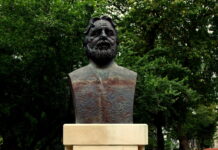






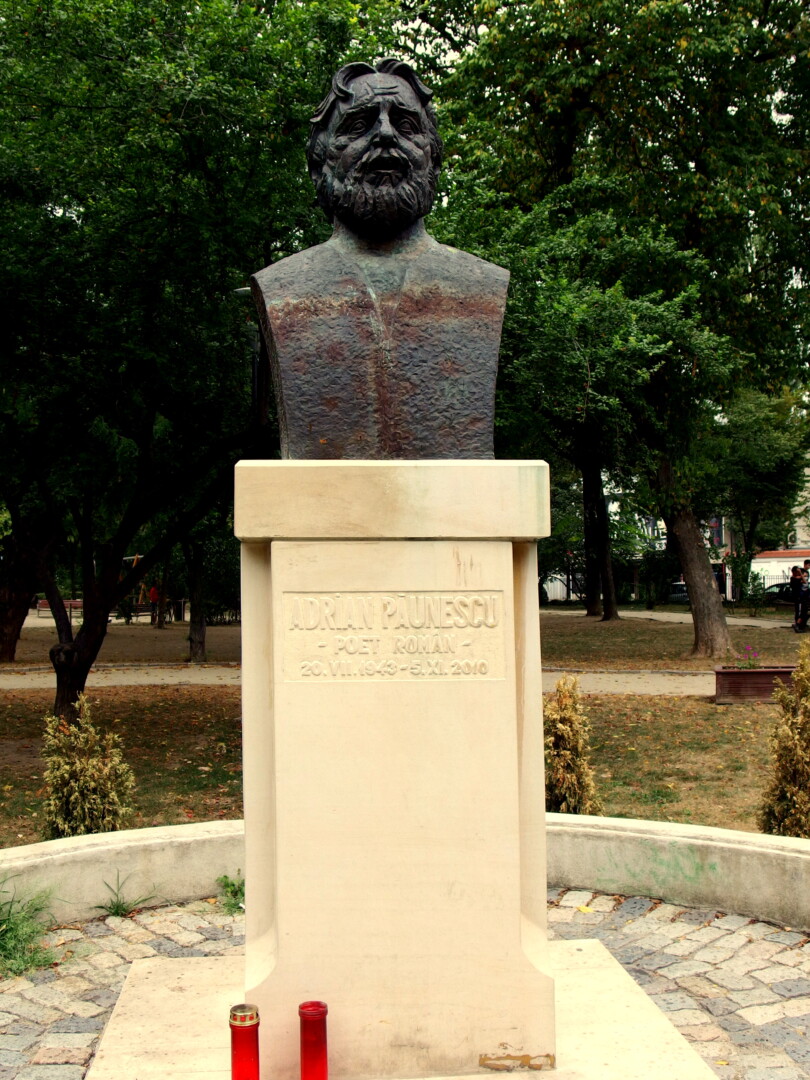
The Institute for the Investigation of Communist Crimes and the Memory of the Romanian Exile (IICCMER) has called for the removal of a monument dedicated to poet and Ceausescu apologist, Adrian Păunescu from a park in the capital.
The IICCMER opposed the monument’s inauguration in 2012, arguing that publicly honoring a figure who played a significant role in promoting the propaganda of the communist regime and the personality cult of Nicolae Ceaușescu was incompatible with respecting the memory of the victims of the communist dictatorship.
The Institute stressed that its request does not challenge or deny the literary value of Adrian Păunescu’s work, but rather the symbolic meaning of having a public monument dedicated to him.
It said that such a monument represents a form of official recognition and should be assessed in light of Paunescu’s entire public and biographical record.
Adrian Păunescu was the editor of Flacăra magazine and founded the Cenaclul Flacăra cultural movement, approved by the communist regime, promoting the official ideology and Nicolae Ceaușescu’s personality cu
ICCMER said the continued presence of the monument in a public space highlights challenges Romanian society still faces in critically confronting its communist past and underscores the need to strengthen public knowledge of recent history.
The Institute also argued that such public tributes fuel nostalgia by downplaying the role some public figures played in propping up the dictatorship.
But the head of Romania’s Writers’ Union, Varujan Vosganian, while acknowledging Paunescu’s public support for the communists, said that the statue should stay.
“Adrian Păunescu was an apologist for the dictatorial couple and for this his statue should be taken down.. He also did things deserving of a statue…If someone, somewhere, has erected a statue of him, I say that it is better to leave it there,” Vosganian said, stressing was speaking as a writer, not the head of the union.
It said it had issued warnings about the growing nostalgia for communism. Its Communist Nostalgia Barometer research highlights the importance of understanding Romania’s recent history and building a public memory based on historical research and respect for the victims of the communist regime.
The Institute said it was willing to provide authorities with its historical and documentary expertise in future initiatives concerning the remembrance of the communist regime.
Paunescu was born in Moldova in 1943 but spent most of his childhood in Romania. His father was sentenced to 15 years in prison for ‘anti-communist activities’ after the communists came to power and Paunescu reportedly had to wait three years before he could be admitted to university due to the stain of being of “unhealthy social origin.”
The communists used this political discrimination to marginalize and block access to higher education, jobs, and social standing for people with so-called “class enemy” backgrounds.
Ceausescu’s children: 535 ‘orphans’ ‘exterminated in inhumane conditions’ focus of probe
