









Romania has the highest farmland biodiversity in Europe. It was in the forefront of European grassland conservation 20 years ago, and is again today as it pioneers an innovative private grassland payment scheme.Universul.net visited the Transylvanian highlands this summer to report on the exciting new development.
Imagine developing a market which will pay these farmers to maintain biodiversity, bringing millions of Euros into Romania in recognition of the biodiversity and carbon benefits which the countryside has in abundance.
That’s exactly what’s happening in the Transylvanian village of Apold which has become a pilot study for the whole of Europe.
Apold is technically a commune and is composed of four small villages: Apold, Daia, Șaeș and Vulcan. The new nature trail that crosses rural Romania, the Via Transilvanica, passes through Daia.
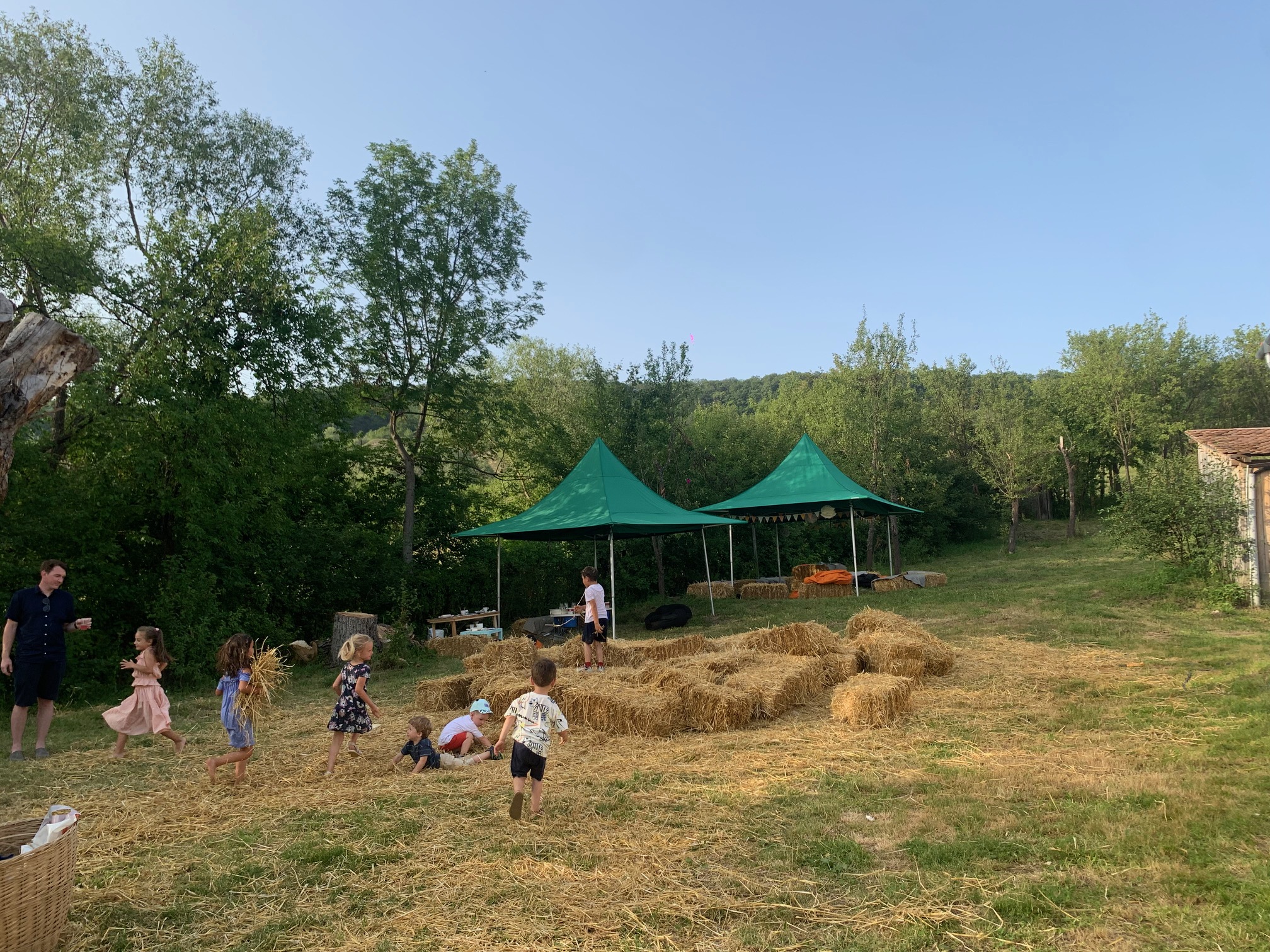
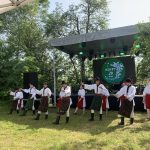
Universul.net visited Fundatia ADEPT on a scorching hot day in late June when it celebrated its 20th anniversary in the highlands of southern Transylvania. The area, a swath of lush rolling fields and woods, is unsurprisingly at the forefront of biodiversity conservation and rural development.
If that sounds grand, the idea is actually simple. Small-scale farmers will be paid for managing their land in a traditional way, flower-rich pastures and hay meadows, rather than plowing the land and intensifying farming which will reduce biodiversity and release carbon.
The village and surroundings are teeming with blue butterflies, dung beetles and the lesser spotted eagles, nature’s treasures that will disappear if not protected.
Romania is a proud, if under-financed and underdeveloped farming nation. It boasts four million of the European Union’s 12 million farmers, although to put the figure into perspective, three million of Romanian farmers have less than a hectare.
Biodiversity Credits, an instrument to give market value to biodiversity, have been around in Australia, the U.S., Canada, and Colombia for a long time but are relatively new in Europe. Only in June 2023, did the UK and France announce a joint plan to launch a new biodiversity credits initiative.
“Our first task was to convince the Ministry of Environment and also biologists that farmland has a vital role in nature conservation,” Nat Page told Universul.net. “They thought farmland and high biodiversity landscapes were separate. Late-mown haymeadows are richer in species than fertilized grassland mown many times each year – but they are also richer in species than grasslands never mown at all. Occasional disturbance maintains species diversity. It’s a dynamic mosaic.”
Lying in the Transylvanian highlands, the area around Apold (Sighisoara-Tarnava Mare) is a Natura 2000 Site, EU recognition of its biodiversity importance. It is a mosaic of habitats covering 900 square kilometers and a population of 25,000 scattered in 30 villages.
It was the abundance of wildlife in the area which includes hilly areas with deciduous forests, pasture, hay meadows, arable patches,orchards, historic villages and traditional farming methods that first attracted King Charles III to the area in the late 1990s.
The future king had a vision for the Transylvanian highlands that ADEPT,a biodiversity conservation and rural development NGO, is putting into practice.
It was an alien concept to Romanians who have traditionally divided land into two categories: wilderness (for nature) and farmland (for production). [Traditionally managed farmland actually has higher biodiversity than unmanaged wilderness; a fact only recently appreciated. In western as well as eastern Europe, the new trend is to encourage nature in farmland: nature and farming supportive of each other, rather than antagonistic.
“Romanians…. didn’t value maintaining these nature-rich farmed landscapes. But because we (in the West) lost it, we understood its value,” he told Universul.net over a breakfast of Transylvanian bread, homemade jam, roast aubergine puree and zacusca, the Balkans’ answer to ratatouille.
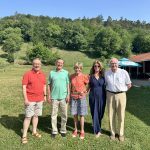
The former British diplomat was joined by Adept board member, Nicolae Ratiu, the son of the late Romanian statesman Ion Ratiu and newly retired British ambassador Andrew Noble, brimming with ideas on how to get Apold’s success story out.
It’s been a long time coming. Page who is something of a visionary, first dreamed up the idea before Romania had even joined the EU in 2007. He began to work with Cristi Gherghiceanu the Executive President of ADEPT.
In biodiversity conservation, this part of Romania is designated High Nature Value (HNV) farmland.
“Romania was the first country in the EU to have HNV grassland support policies, which have become important throughout the EU,” Page said. “In 2005 we paid scientists to help the Ministry of Agriculture & Rural Development to design different HNV payment packages, adapted to different habitat types,” the former British diplomat said.
As a result of these HNV packages, there are 1.2 million hectares in Romania where farmers receive 150 euros per hectare per year, which adds up to 200 million euros per year of support for small-scale farmers, from European funds. But this is not enough to stop the loss of farmland biodiversity, and the loss of Romania’s precious small-scale farming communities.
Now, Romania is leading Europe again in the development of Grassland Biodiversity Credits. This innovative scheme measures 5 ‘metrics’: birds, butterflies, amphibians, soil invertebrates and plants. This puts a financial value on, and reward farmers for, the eagles, storks, centuries-old oak trees and flowers not seen elsewhere, thus saving the what people call the last authentic medieval landscape in Europe.
It works like this: landowners, with the support of non-profit organizations or specialized companies, generate a supply of credits, or “certificates.” One credit is equal to a measured conservation or increase of the 5 metrics over a specific period of time.
“The banks had to be persuaded to pay for them,” Page said. He’s a fan of corporate funding such as Goldman Sachs to pay for 25 years of funding which means “Twenty-five years of security for farmers.”
“This pioneering project will bring oodles of money to Romania and directly benefited small farmers,” he said. “The fact that the farmers will receive a minimum 60% of money earned though the scheme is key to success, because it depends on continued support of the farmers.”
The credits will be traded, not to offset negative impacts on biodiversity elsewhere, but to directly support and further incentivize the efforts of landowners/stewards and communities to conserve and restore important habitats and species across the world.
The scheme aims to preserve traditional farming techniques and maintain the extremely rich biodiversity that you find in the meadows of southern Transylvanian and avoid land sales.
There are 400,000 carbon credits and 420,000 biodiversity credits available, with a price of 25 euros for a carbon credit and 18 euros for a biodiversity credit.
Biodiversity credits are a verifiable, quantifiable and tradable financial instrument that rewards positive nature and biodiversity outcomes (e.g. species, ecosystems and natural habitats) through the creation and sale of either land or ocean-based biodiversity units over a fixed period.
When anchored around principles of high integrity, equity and inclusion, and transparency, they can generate benefits for the Indigenous People and local communities – the ultimate custodians and stewards of nature which have safeguarded it for generations.
Simultaneously, biodiversity credits can create positive value for business by reducing exposure to physical nature risks, keeping pace with regulatory changes, supporting positive nature outcomes aligned with consumer preferences, and securing access to competitive finance.
Biodiversity credits can help bridge the existing financing gap by mobilizing additional capital for biodiversity conservation and restoration. At least half of the world’s GDP is moderately or highly dependent on nature and the services it provides.
There has been a 69% decline on average in wild species populations since 1970 with human activity pushing ecosystems towards irreversible tipping points.
The global biodiversity financing gap estimated annually to reverse biodiversity decline by 2030 is $711 billion.
And that’s good news for Romanian farmers and Europe.
“It’s turning the richness of the countryside into hard cash, benefiting traditional farmers and the Romanian economy,” Page said.
Saxons tap into their roots and rhubarb in a bid to make centuries-old villages sustainable
Saxons tap into their roots and rhubarb in a bid to make centuries-old villages sustainable
