














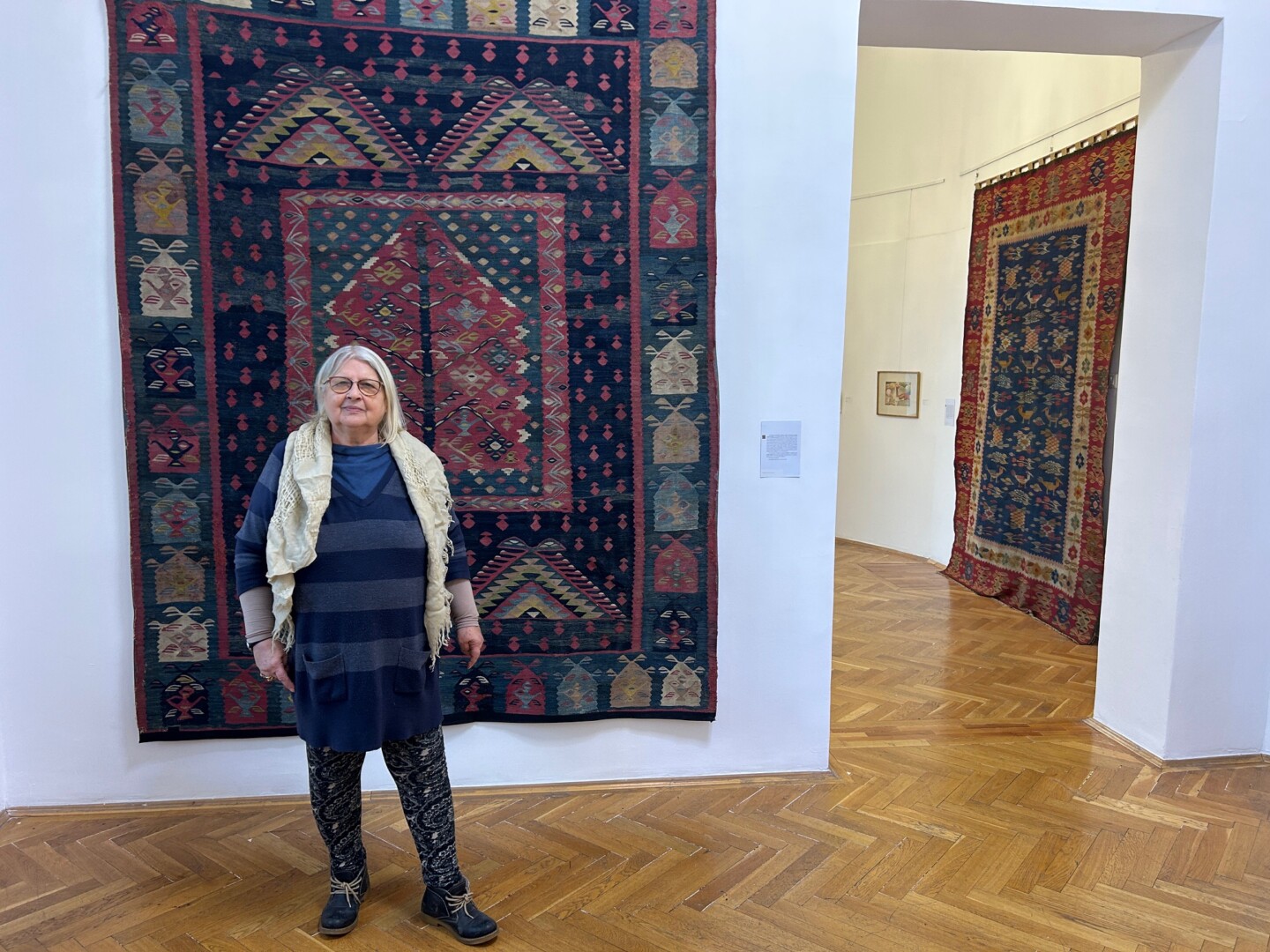
Many have admired the Romanian rug: the intricately woven floorpiece that lies at the center of the home and is also sewn into the nation’s identity and heritage.
The Oltenian carpet from the south is the most famous and probably most admired rug with its rich colors and stylized motifs such as flowers, trees (Tree of Life), birds (hens, cuckoos), and geometric shapes. They are woven in wool with cotton weft for wall hangings and symbolize fertility, nature, and cultural identity, their designs telling stories of rural life.
Persian influence
They show the influence of Persia and the Orient says Mrs. Pomponiu, noting that the carpets first appeared in the 17th century in the Romanian principalities of Wallachia and Moldova which were under Turkish ‘suzerainity’ or rule for about 400 years and later developed with their heyday in the late 19th century.
Compared to Oltenian rugs, Moldovan carpets which are influenced by French art are often brighter with bigger and rounder motifs. The older ones were woven on looms in monasteries and sometimes feature crosses and grapes, a symbol of the bounty of the land.
Transylvania which rejoined Romania after World War I when the Austro-Hungarian Empire crumbled did not have the same carpet weaving tradition although rich Transylvanians bought and collected rugs, she says.
UNESCO recognition
The carpet making craft has gained some international recognition. In 2016, the craft of making traditional wall carpets was inscribed in UNESCO’s Representative List of the Intangible Cultural Heritage of Humanity as an expression of identity.
But the floor carpets that grace houses, villas and apartments, some of them family heirlooms, or purchased as objects of culture and value, have no place in the world’s heritage, something Aurelia Pomponiu thinks they deserve, though that’s a job for the Culture Ministry.
Traditionally until about 100 years ago, carpets were vital parts of a bride’s dowry, signifying wealth, while their quality and complexity showed the family’s status.
The patterns indicated the weaver’s specific village or region and acted as a social and geographical marker. They were used for both decoration and insulation, and lay on floors, beds, and walls.
Techniques like tight picking (thread by thread) and use of looms were passed down generations and preserved an art form that connects to the Orient, especially Turkey, but beyond that they remain distinctly Romanian.
Monasteries
When they first appeared in the 17th century, they were woven by peasant women in the winter months or by nuns at monasteries, using hand-dyed thread made of vegetable dye. Landowners owned workshops where they were woven while in Moldova they were crafted in monasteries.
“I’ve always been passionate about carpets,” says Mrs. Pomponiu, a major Romanian carpet restorer who has dedicated 50 years to her craft. “I specialized in carpet restoration at university and have taught it to students,” she says, noting it is a dying art.
But not quite yet. Interest in Romania’s heritage has grown in recent years as people seek to reconnect with ancient traditions. Her book “Romanian Carpets Restoration,” in Romanian and English is for sale at an exhibition in a gallery housed in a grand 19th century villa featuring half a dozen precious, historical carpets she spent a decade restoring.
The exhibition runs from Nov. 18 until Jan. 5 at the Roman Galleries on Romana Square.
Wonky edges
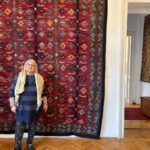
The oldest rug on display dates back to 1807, an Oltenian carpet measuring 250cm by 189 cm which was heavily damaged when it first came into her possession. Carefully restored, it has pride of place at the exhibit; the only signs of age are its slightly wonky edges and the Cyrillic script that Romanian used in the early l9th century.
She started her craft in 1975 and recalls restoring carpets in the 1980s in the royal palaces of Cotroceni in Bucharest, now the presidential palace and in Peles Castle in the Carpathians the home of Romania’s royal family.
The Communists abolished the monarchy in 1947 but in recent years the state has invited the late King Michael’s daughter, Margareta, to play a diplomatic and philanthropic role in Romania and lead a royal household.
Carpet restorer Aurelia Pomponiu retains her love of the rugs and the ancient craft, and wants to share the pieces she painstakingly restored with others in this unique exhibition.
“I want the carpets to be seen by people who love them,” she says. “It’s a rediscovery of Romania’s identity.”
String instrument that is vital part of Romanian folk music gets UNESCO recognition
