














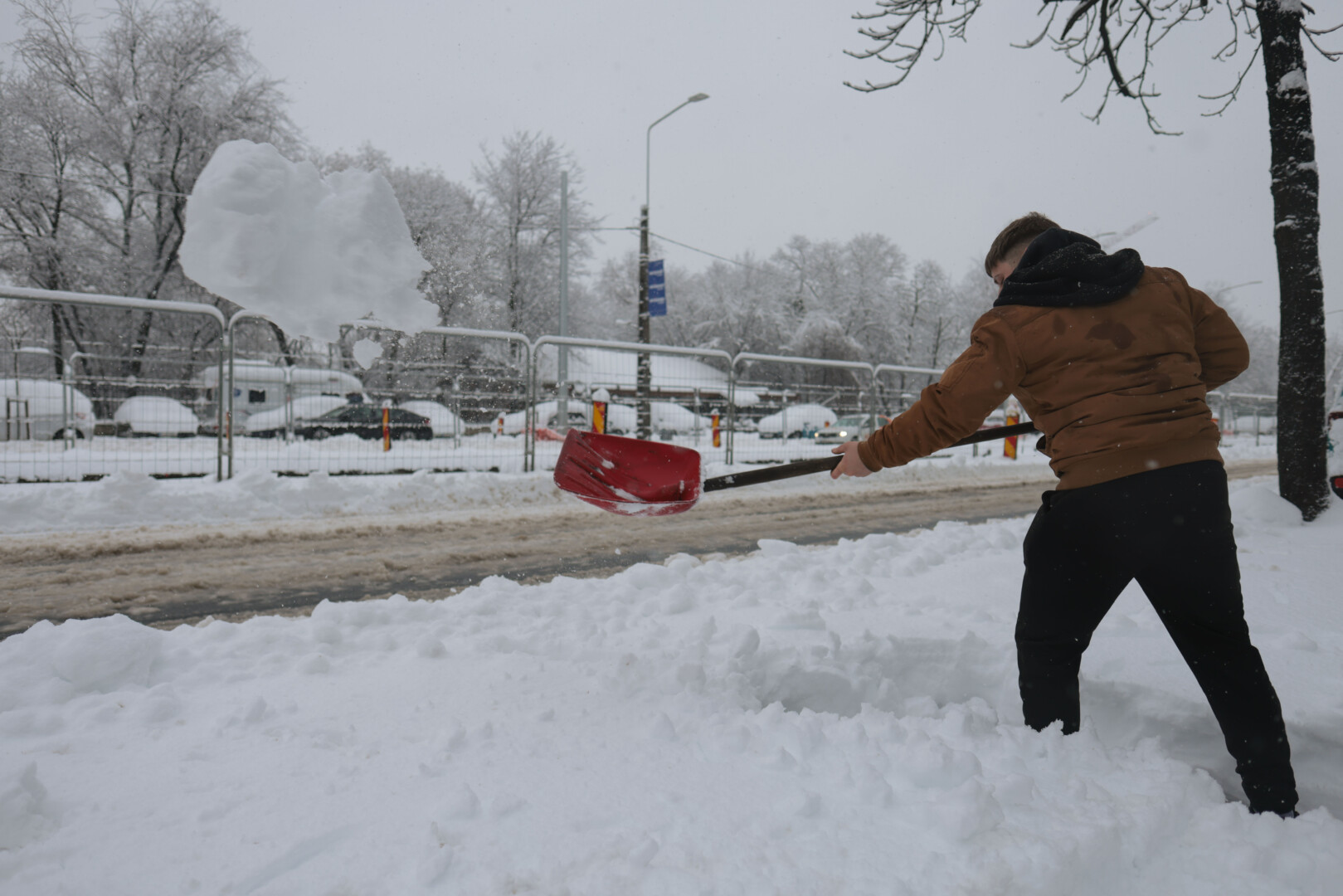
Romanian authorities sent out a Ro-Alert siren on people’s phones before dawn on Wednesday with a weather warning jolting many out of their sleep.
Even though it was the heaviest snow in over a decade, many people took to social media to complain less about the snow and more about the 4.20 am alert which woke them up, with some having trouble going back to sleep again.
Romanian psychiatrist Cristian Paparau explained about the effects of the loud message on people’s phones, particularly for people with anxiety, panic attacks or those vulnerable to stress.
He said that from a psychiatric point of view, each “strident alert” activates in the brain “exactly the same system that activates itself in the face of a real danger” he said in a Facebook post.
“The amygdala does not differentiate between ‘major danger’ and ‘possible inconvenience’. The body reacts to sound, not to the amount of snow. It is not the snow that causes a panic attack, but the perception of imminent danger,” he said.
Saying he believes in “prevention and the need for warning”, “proportionality and rationality” must be taken into account.
“Not every inconvenience is a catastrophe, not every snowfall is a disaster,” the university professor said.
“I was woken up at 5 a.m. by a shrill sound of RoAlert. My heart jumped out of my chest. Weather warning message…. outside – silence. A mound of snow laid quietly overnight. At 7am, another RoAlert. And I asked myself: when did we start to get scared of winter? 20–30 years ago, a snowfall like this was simply… winter.
“Roads were cleared slowly, maybe a delay, maybe a day when things went slower, but it was not experienced as an imminent danger. Today, even before we see the flakes, we hear the alarm,” he said in a message entitled “When the alert becomes stronger than the event itself”.
According to the doctor, from a psychiatric point of view, each “strident alert” activates in the brain exactly the same system that is activated in the face of a real danger.
“The amygdala does not differentiate between ‘major danger’ and ‘possible inconvenience’. The body reacts to sound, not to the amount of snow. Heart rate increases, blood pressure increases, cortisol is released, sleep disintegrates,” explains the doctor.
He adds that for a person with anxiety, panic attacks or vulnerability to stress, these “repeated triggers” do not remain neutral, but can generate nocturnal panic attacks, hypervigilance during the day, the feeling of generalized danger, without a clear object.
“It is not the snow that causes the panic attack, the perception of imminent danger does,” says Paparau.
“The alert activates our fear. Fear is contagious, more contagious than the flu,” he added.
“Winter means snow, summer means heat, autumn means rain. Not every inconvenience is a catastrophe, not every snow is a disaster.”
PHOTOS | Worst snow in Romanian capital in more than a decade
