





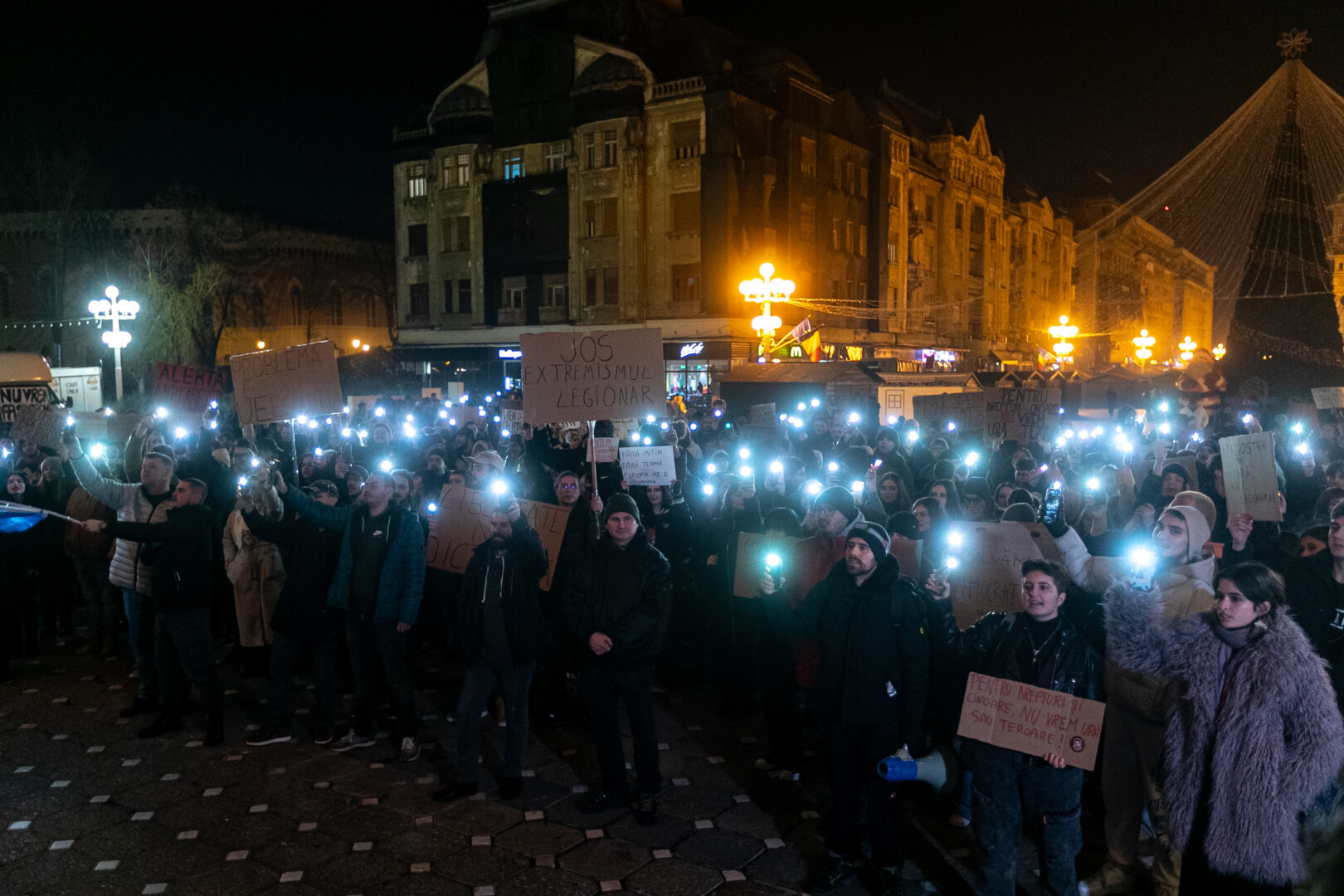
How quickly can a country fall?
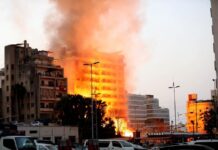
In the blink of an eye (after more than a decade of repression) if we look at Syria this weekend where Syrian President Bashar al-Assad fled after rebels swept into the capital Damascus after 13 years of civil war and 24 years of rule.
But a country like Romania? A committed member of European Union and NATO for most of this century? A country that started from the lowest point of all the former communist countries only to recently overtake Hungary and Greece in terms of national output?
A pro-American country where people were so desperate to join the Atlantic club in 1997 that they turned their faces toward sunset (i.e the West) in 1997 when Czechia,Hungary and Poland joined NATO that year? It didn’t work but Romania finally became an Ally in 2004 and since then has become one of the stable, most reliable allies in the region, better than Bulgaria, Hungary and even Poland for while.
There was rejoicing on the streets when Romania along with Bulgaria was admitted to the European Union on Jan. 1,2007, even though they arguably weren’t ready. Anything but being in a gray zone noman’s land, the worst possible option,the editorialists of the time wrote. And right they were. Romania is in a key geo-strategic position, a place malicious state actors would like to sabotage, as they just did in Romania’s recent elections.
Since Romania joined the EU, billions of euros of EU funds have flowed into Romania, to projects in cities, towns down to the smallest poorest villages. In Pietrosani village, near Bulgaria, in the poor Teleorman county which my church helps, EU funds have refurbished or built a school, a kindergarten and roads.
EU money has fueled Romania’s growing prosperity and NATO has provided an umbrella of security with weapons, ammunition and know-how with a war raging at its border.
So it was with some dismay that in the blink of an eye, after two rounds of elections, holding a broad pro-Atlantic or pro-Western position in Romania was suddenly a vulnerable position to be in.
That’s what happened last week after nationalist parties won a historic more than 30% of the vote in the Romanian Parliament, and radical, independent (his description) Calin Georgescu was the frontrunner for the presidential runoff.
Two days later, Romanian investigative journalist Victor Ilie who reported that adverts for herbal remedies and saints placed on Russia-friendly television channels RTV and Realitatea Pluswas financed by AdNow, a digital advertising company connected to the Kremlin, was targeted.
“All the systems in Romania will be canceled, including journalists who have lied to the people. Don’t you get it, we know everything about you? What you do, what you eat, everything,” said Bruno Mihailescu, head of “United Thracia” a Georgescu-supporting group told him.
Romanian actor Victor Rebenciuc, 91, who’s taken part in anti-Georgescu protests was threatened with ‘an ax in my head’ and his bloody remains to be trampled on by passers-by, he told demonstrators on Thursday evening, the day before the elections were annulled.
Romania’s pro-European parties can be criticized for many things, but they do not threaten violence against journalists nor people who don’t agree with them.
In this regard, Klaus Iohannis is probably the most democratic and relaxed president Romania has ever had. The unpopular president has no informal entourage who promotes him in the media and is known to be relaxed about critical articles.
But I have noticed a growing intolerance in recent years as nationalists or the euphemistic term ‘sovereigntists’ they describe themselves becomes more mainstream. It started with Brexit, a referendum where I wasn’t allowed to vote and the trend has continued.
Last week, I hesitated before saying our publication was pro-Atlantic. It suddenly sounded like a political rather than a general statement.
Universul.net is not in thrall to any political party or politician, but we have a broadly pro-European (not pro-EU) line. In Romania, that has been the default for many publications and people, and still is.
Pro-European means transparency, openness, fairness, and not conspiracy-minded, rather than specifically supporting the European Union and European Council. It means not skewing or hiding facts, but reporting them and adding context where necessary. It means listening to different points of view but not parroting them blindly, as they do in the ‘he said, she said’ school of journalism.
It means being discerning. If Mr. Georgescu says he admires Russian President Vladimir Putin and calls him a patriot, we do not need to add: “He insists he isn’t a fan.” He just said he was.
Many Romanians and Romania’s Allies have been in dismay these last two weeks; the stock market dove and businesses considered pulling out as nationalists described how they would renegotiate their terms. Mr. Georgescu dismissed NATO and the EU as irritants, pesky clauses in a contract that needed to be rewritten, and questioned if the war in Ukraine really existed. His main concern he said was “for the Romanian people to be happy.”
The question is not how quickly can a country fall, but how easily? Much more easily than you’d think; dangerously so.
