














|
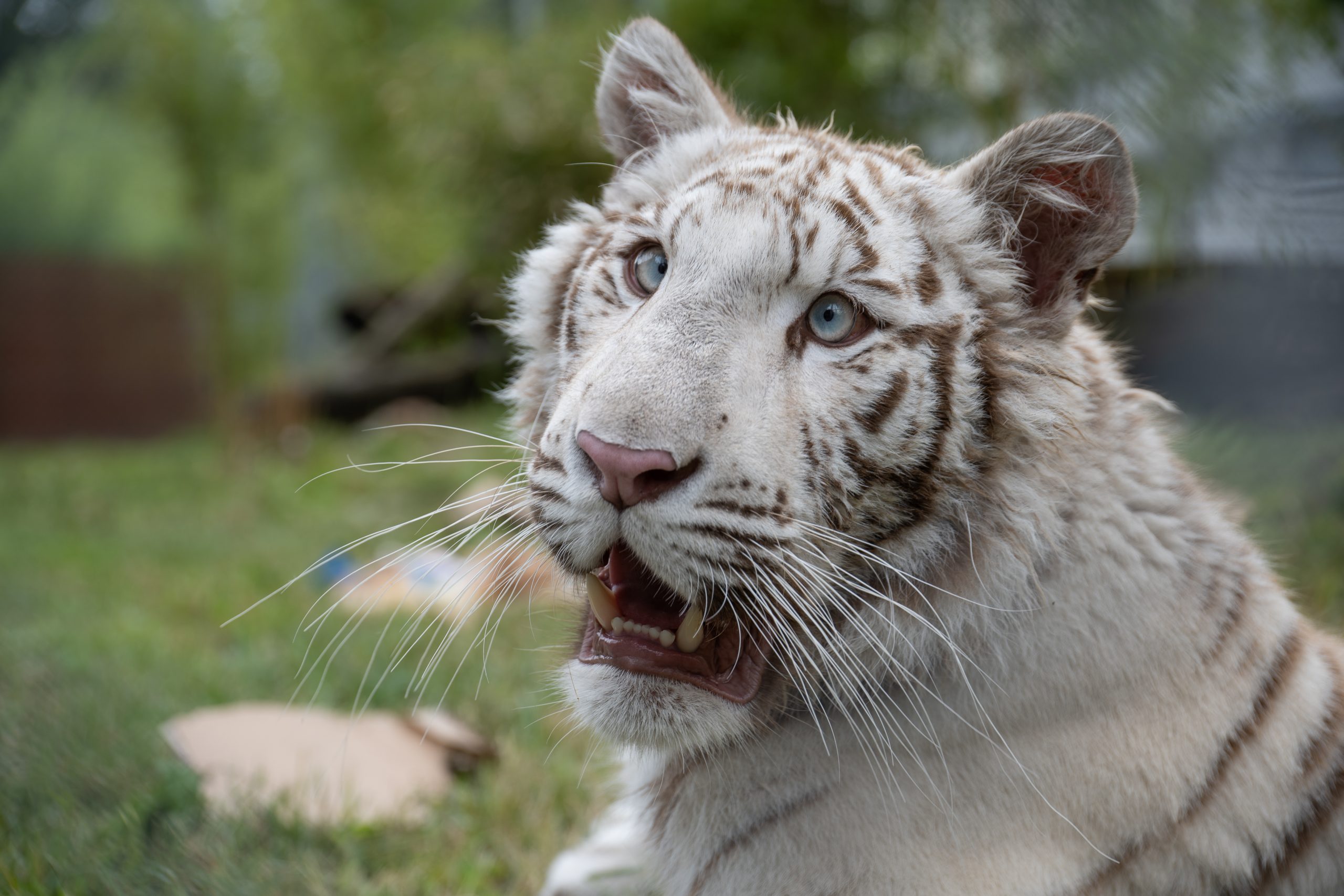
Global animal welfare organization FOUR PAWS calls on governments to end the ruthless trade and breeding of white tigers in captivity Abused for human entertainment, slaughtered for their fur, or killed for their bones to be used in ‘dubious’ traditional medicines – on the black market, live adult tigers can be bought for an estimated 22,000 Euros, while the price for tigers with white fur is even higher. In the run-up to International Tiger Day on 29 July, global animal welfare organization FOUR PAWS has drawn attention to what they said is the urgency to raise awareness that the ruthless trade of big cats is still raging due to a lack of regulations in the EU and worldwide. Tigers with white fur seem are especially sought-after, the group said. This popularity has devastating effects as most of these big cats come from inbreeding, resulting in life-long suffering from medical conditions, such as impairment of vision, deformations, heart and kidney problems. “Tigers are not pets. The cruel exploitation of big cats must end now. Contrary to the strong efforts on the protection of wild tigers, the commercial trade of captive tigers and their parts is still raging across the globe. FOUR PAWS calls on governments to implement and effectively enforce better legislation for tigers and other big cats to end the commercial trade. With countless tigers suffering, there is a great urgency to act,” said Barbara van Genne, who leads the Wild Animals Department at FOUR PAWS. Ms Van Genne said that the fate of white tigers was even more tragic : “In our rescues, we are more and more confronted with white tigers and lions, who are especially vulnerable victims of this ruthless trade. White big cats pay a high price for their unique appearance. They are suffering their entire lives from the horrific consequences of inbreeding and need specialized care.“ The tragic past of white tigress Charlota FOUR PAWS has rescued more than 50 tigers from captivity in poor conditions and is currently providing a species-appropriate home for 26 tigers in its specialized sanctuaries and partner projects. Among them is the two-year-old white tigress Charlota, who was rescued from illegal keeping in a private home in Czechia and transferred to TIERART Wild Animal Sanctuary in Germany after temporarily being accommodated in Zoo Hodonin in 2023. As is typical in this industry, the tigress was separated from her mother soon after birth, so she could be hand-raised. Her former owner exploited her as a pet and posted videos of her on social media. The local authorities were able to confiscate Charlota and asked FOUR PAWS to take her in. Charlota shows clear signs of inbreeding and needs special care. The two-year-old tigress suffers from crossed eyes, chronic kidney disease and her spine and foreleg bones are deformed. “Charlota is a very happy and curious tigress and has recovered from her horrific past very rapidly under the professional care by our experienced team. At TIERART she has found a new home and better future. In the summer she particularly enjoys sinking all cardboard boxes in her pool,” says Lara Steinbrunn, animal caretaker at TIERART. Given Charlota’s medical condition and traumatic past, individualized special care is provided by a professional team of caretakers. A training and enrichment plan has been created based on her specific needs, to support the physical and mental rehabilitation process. For example, Charlota is provided with scents, cardboard boxes, or hay on a daily basis to decrease stereotyping, increase natural behaviors and keep her mentally stimulated and active. White tigers are not a separate species Contrary to a common misconception, white tigers are not a separate (sub)species that needs to be conserved, nor are they albinos. Their white coat is the result of a rare, recessive gene mutation, called leucism, that needs to be carried by both parent animals. This is why there are hardly any sightings of white tigers in the wild and inbreeding practices are used to get the white fur color in captivity. Most white tigers in captivity today are descendants of one male tiger that lived in the 1950s in India. Private keeping of tigers still legal in many parts of the world Today, South Africa is the world’s largest exporter of big cats and their parts. Also, in several European countries it is still permitted to keep and breed tigers in private facilities or circuses. FOUR PAWS urges European Member states to implement the EU Tiger Guidance and calls on governments worldwide to introduce a ‘positive list’ of animal species that can be legally kept as pets, determining which species can be traded for life in private captivity, excluding wild animals like big cats. TIERART Wild Animal Sanctuary, which is run by FOUR PAWS in Maßweiler, Germany, provides a species-appropriate home for big cats that were rescued from poor conditions in zoos, circuses or in private captivity. TIERART also houses and cares for numerous native wild animals such as foxes, badgers, wild cats, hares or hedgehogs. Since 2017, TIERART has operated a rescue station for lynx in cooperation with the EU-LIFE-LUCHS project. Many of the native animals that are taken in at TIERART receive medical care and are released back into the wild once recovered. Animals that cannot be released back into the wild and exotic animals like tigers find a permanent, species-appropriate home. FOUR PAWS has launched a reporting tool to report any concerning activities regarding the commercial exploitation of big cats online. The reporting tool can be accessed here: https://www.four-paws.org/campaigns-topics/campaigns/ruthlesstrade/big-cat-reporting-tool  
|
|
|
