










Note to euroskeptics: the EU is a central reason for it
The Catalan independence movement once shook Spain to its core, with massive protests, a controversial referendum, and a unilateral declaration of independence that for a few seconds in 2017 turned Barcelona into the capital of a self-proclaimed republic. Yet the movement is losing momentum and descending into irrelevance, not so much because of a change of heart among Catalans but do to a bigger picture.
To begin with, the existing nations which together call the shots have an anti-separatist bias, because many of them are vulnerable: China, Russia, India, Canada and even European countries like Britain, France and Italy all face internal separatist challenges, and the last thing they want is to validate independence movements. The global order is therefore built on the inviolability of borders (though Vladimir Putin forgot about with Ukraine).
And thus, there was little global opposition to Spain’s decision to lower the boom on the Catalonia movement – jailing for a few years the local leaders who insisted on the 2017 referendum (in which independence handily won). And the national parliament invalidated the Catalonian one’s declaration of independence on the same day, Oct. 27, 2017.
Perhaps the biggest reason this worked out for Spain is the European Union — a political entity that fundamentally alters the calculus of separatism. It’s true that many mock it and Britain left it and it has problems – but it’s critical nonetheless. By binding member nations into a supranational entity, the EU dilutes the urgency of statehood. If everyone is part of the same political and economic structure, the significance of national borders diminishes.
So Catalans live, work, and study freely across Europe, enjoying the benefits of EU citizenship, including economic integration, political representation, and protection of minority rights. In this context, the nation-state becomes an “in-between entity,” whose importance pales compared to the overarching structure. For a place like Catalonia, it basically means that whether or not it is separate from Spain, they are both part of something bigger, and that greater Europeanness can make independence seem quite small.
Is it so terribly unfair? The world, many would agree, already has enough countries. Each additional one, with its local politics and national ethos and petty egos, complicates hopes for a coordinated response to global problems like pandemics, migration, climate change, tech disruption and trade.
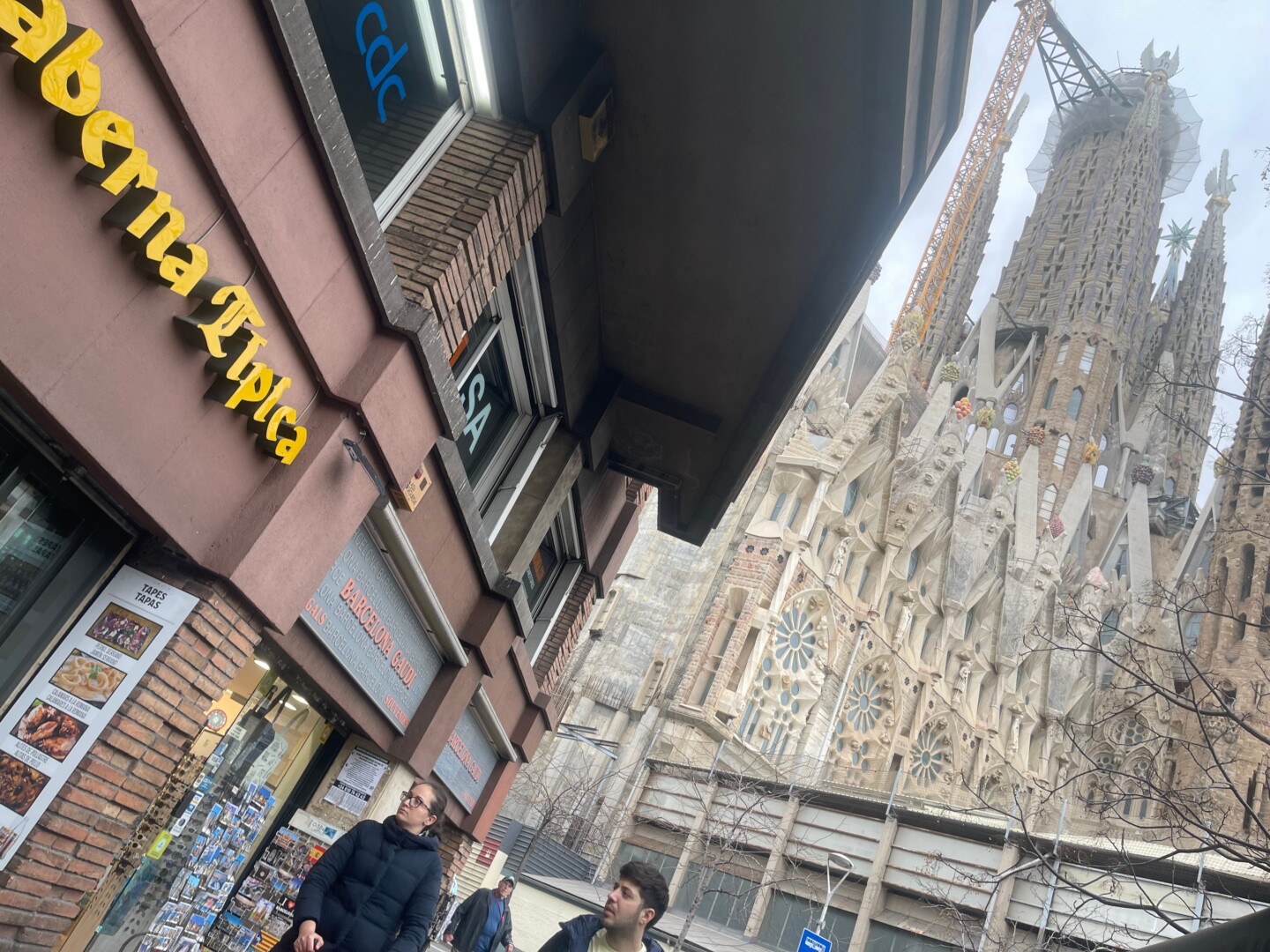
Still in all, as I visited Barcelona for a conference I could not help but wonder what this beguiling mix of old and new might have been like as a true national capital.

A vast sprawl along the coast at foothills, it does have some distinctiveness. For example, the “chamfered” blocks in large parts of town, slicing away the sharp edges of the grid like a sculptor refining a rough stone, create broad, open, octagonal intersections that bathe the streets in light and space.

While not unique — Buenos Aires, Valencia, and Mendoza have flirted with similar designs — nowhere else are they as sweeping, systematic, and transformative. They aren’t just about easing traffic; they shape the urban experience, softening the city’s geometry and lending its avenues a rare expansiveness, as if the streets themselves are exhaling.

Then there’s the economy. Catalonia’s push for independence was fueled by a desire for greater autonomy, economic control, and cultural preservation. It is one of Spain’s wealthier regions, contributing, with under a sixth of the country’s population, a disproportionate 20% of Spain’s GDP and 25% of its industrial output (automotive, pharma and more).

It is also culturally distinct, with its own language, history, and identity. But it’s on the edge. Catalans basically all speak Spanish, and a significant minority consider Spanish their mother tongue. While Catalan is more than a mere dialect – its word for “please,” “si us plau,” is closer to the French “s’il vous plaît” than the Spanish “por favor” – but it is still clearly a sister language to Spanish. This is not Quebec versus Anglophone Canada; French and English are worlds apart, while here the difference is real but not absolute.

And yet, difference alone does not justify independence. The world is full of regions that are culturally distinct but politically unified. Bavaria is temperamentally different from Saxony, but both are German. Corsica is culturally distinct from mainland France, but remains French. Flanders and Wallonia are vastly different, yet coexist within Belgium. If every distinct region sought independence, the world map would look like shattered glass.

Keenly aware of that, the EU does more than just provide a common market and a grander identity; it acts as a stabilizing force against separatism in a bureaucratic way. If Catalonia were to become independent, it would not automatically inherit EU membership but would need a lengthy and complex accession process, requiring unanimous approval from all existing member states. Even a wealthy, well-governed region like Catalonia could face years of uncertainty outside the EU, complicating trade, travel, and political representation. Scotland would face similar challenges, as does Kosovo. The relationship is symbiotic. The EU benefits from stability and cohesion, while member nations benefit from integration and regions can bank on the EU’s requirement for minority rights and protections.
Some might see see a compromise that that saps the spirit. Maybe — but one also senses a confidence that comes from constancy. Some streets and cafes feel like that haven’t changed in a century — you half-expect to find the young George Orwell (author of Homage to Catalonia) conspiring with the POUM (Workers’ Party of Marxist Unification) at the bar. (The ornery Brit was struck by the egalitarian feeling in Barcelona, describing it as “the first time that I had ever been in a town where the working class was in the saddle.”)

“The beauty of Spain is that our regions are so different, and anyway we are Europeans,” said a young man named Nacho, reflecting what I found was the mindset of a generation that identifies as European first, Catalan second and Spanish third – and is disinclined to argue much or risk jail time over it.

As the central building block for global organization, the nation-state is barely two centuries old. As I wrote a few weeks ago regarding the case of the Palestinians, statehood is not some automatic right all groups of people have. Individuals’ primary associations are fluid. Is a Texan American first? Lately that’s not so clear. Are you Jewish or Israeli first? Syrian or Kurdish or Arab or Muslim first?
There is a case, across Europe, for being European first. It’s not open-and-shut, and it draws skepticism, but it’s real. It may create a political space where people can maintain their cultural identities without the need for new nation-states.
I make this point largely for the benefit of frowny non-Europeans (like the blowhard US vice president) who love to mock Europe over bureaucracy, declining birthrates or overregulation. You’re missing a trick. Vuelve a pensar.

