











Or: How I became a journalist, Part II

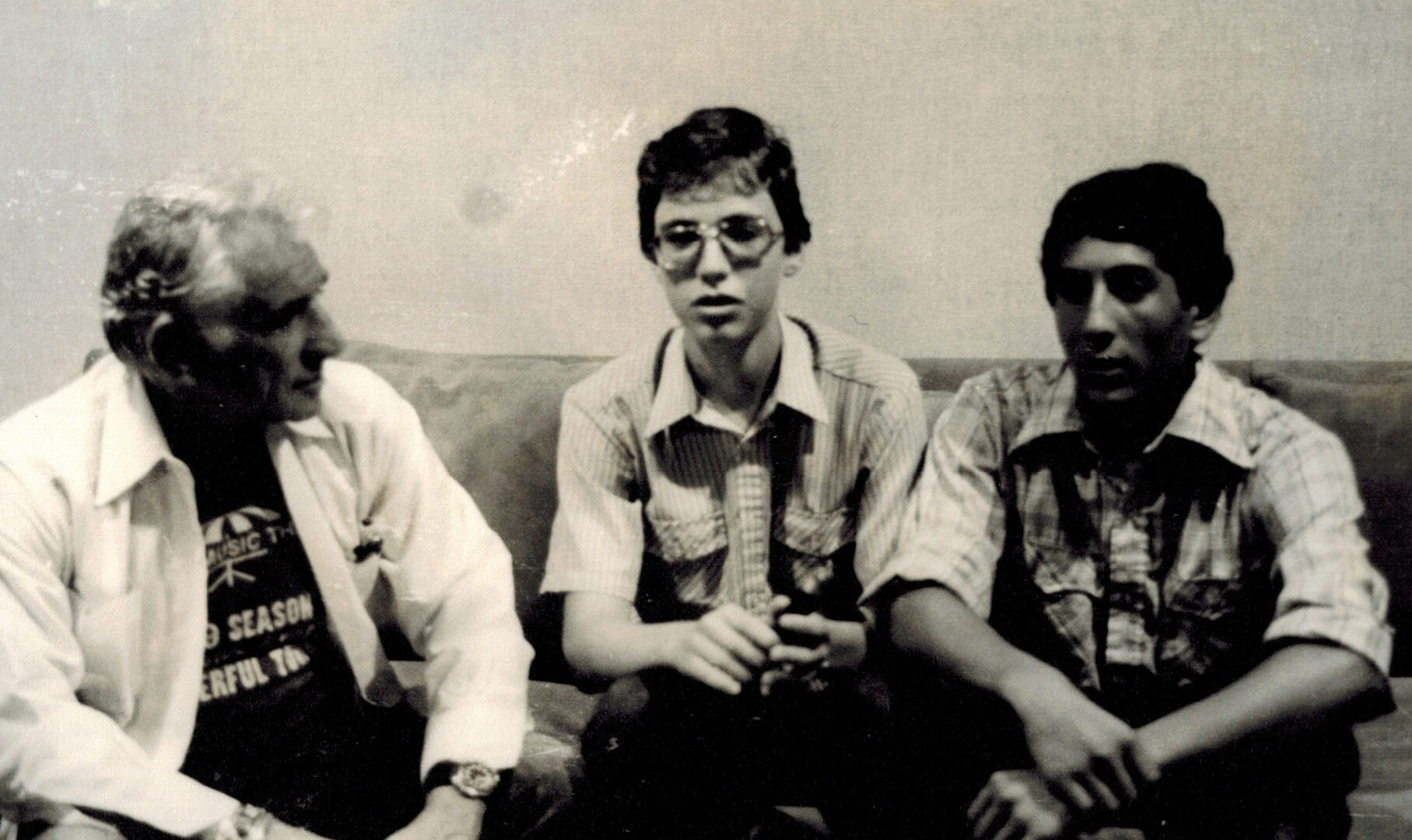
Last week I traced my journalism misadventures in part to an interview for high school TV with the classical music great Leonard Bernstein 45 years ago. Here’s the other part: An encounter about a year after that with baseball legend Pete Rose. Bernstein was a huge celebrity for the cognoscenti; Rose was a hero to ordinary baseball fans, like me.
It’s on my mind because Rose died recently at 83, sadly under-heralded because of a late-career gambling scandal that dogged him to the last. I hope readers will indulge therefore another personal reminiscence, second in a two-part series, both in honor of the man and in remembrance of former me.
Our meeting — which I briefly touched on in a recent article about the very madness of sports fanhood — occurred in May 1980, in now-destroyed Veterans Stadium, then the hideous home of the Philadelphia Phillies.
My friend Alfred and I were by now a little more practiced and polished. Unlike the Bernstein situation, a high-wire act which required us to talk our way backstage, by this point we were actually invited as “student reporters” to watch a game from a fenced-in area in what was basically the first row of the crowd in the cement pile that was eventually blown to bits in 2004.
On the day in question we were expected to remain in our place, in the little cage behind the “batter” (who wields the “bat” and swings at “pitches”). The idea was to film what we could with the same massive TV camera-and-recorder contraption called a “portapak” which we had carted with us to the meeting with Bernstein as well. Miniaturizing tech had not yet kicked in.
Halfway through the game against the Pittsburgh Pirates we seemed to communicate without speaking — and like bats out of hell we burst through the fence. Our goal was the “dugout,” the area on the sidelines where players sit during that majority part of the game when they in fact are doing nothing. We made it about 10 feet onto the field when burly “ball boys” (that is a thing) grabbed us and hurled us, portapak and all, into a recessed area I hadn’t known existed. I felt at the time that undue violence was employed; today, I realize, we would likely have been shot.
Alfred tried to argue our way out of this pickle, choosing the wrong media format in adolescent agitation. “It’s OK, it’s OK!” he cried. “We’re from the paper!” Ball boys eyed us quizzically, perhaps searching in vain for pens. “Yeah? What paper? The toilet paper??” This quip seemed to amuse them to a point of distraction, such that we managed to flee to the nearby dugout.
This was another minor miracle, as when we had persuaded the nervous minder to allow us into Bernstein’s lair. Lightning had struck twice — not exactly in the same place, but also not so far away.
And I found myself sitting next to Rose. In the “7th inning stretch” (again for the benefit of non-Yanks, this is when everyone is occupied with singing “Take me out to the ball game,” drinking beer and eating hot dogs), he agreed to speak. Another celebrity interview for “16 Minutes”! Alfred held the camera steadily enough, recorder strap tugging mightily against his shoulder.
In the video, which like Bernstein’s resides on Youtube, you can hear me nonchalantly – and quite needlessly – explain to the Philly high-schoolers that “I’m talking to Phillies first baseman Pete Rose.”
I lobbed him a softball, if you will, soliciting an assessment of the young season so far. His rambling answer ended with: “It’s an important series although it’s only May, and you just got to play one day at a time.”
If there is one thing I know about baseball, and knew even then, it’s that the best play “one day at a time” in their excruciatingly long season, always ready to “go out there and give 110 percent.” Mathematically speaking, it too is a miracle.
At this time I snuck in a tougher question. “What went wrong with the Phillies last year and what’s different this year?” Rose looked around. “Well, the difference is no injuries to the regulars. We had six guys who broke bones last year, and 21 guys were on the disabled list. We’ve been fortunate so far this year, knock on wood, that we haven’t had any broken bones to any key players. Don’t forget last year the Phillies got off to the greatest start in history of the ball club.” But then, he noted, the injuries did them in during June, July and August.
I pressed on, much as they would on the original 60 Minutes. “Do you think this year’s Phillies can survive those summer months?”
Rose began to lose his patience, uncomfortably playing with his bat in a subtly menacing way. “I don’t think it’s question of surviving! It’s just playing consistent baseball day in and day out. We got a tremendous team, and if we stay healthy, (we) got a chance of winning. If you don’t, there’s no sense in playing. But I think it’s going to be a great year for Philadelphia baseball, simply because of the players we have on this ballclub.”
Time would prove him right. The Phillies won their first-ever World Series that October (see Rose celebrating at the 42-second mark below). It is one of only two that they have managed to this day. (There were high hopes this summer, but they flamed out in scandalous fashion, and so there is a scandal.)
Rose would go on to play well into his 40s and set the record for most major league baseball hits (batters getting on base, in a position to score, more or less) – 4,256, and it still stands. He then became manager of the Cincinnati Reds, his original club – and was soon ensnared in allegations that he bet on baseball games including those involving his own team. (Can we discern a hint at this dark side in his comment during the interview about the imperative of winning, else “there’s no sense in playing”? I cannot say.)
Barred from baseball, he was never inducted into the Hall of Fame (which is a true and deep affront). I think he never recovered.
None of that was known to us on that clear night in Philadelphia during the magical May of 1980, as the future never is. What I did know is that I had one more final question. It was a wily one, far wilier than anything I mustered with Bernstein (ah, what a year of experience can mean when you’re a teen). It was the kind of question that in later years I like to believe marked my professional interviews with the likes of Mikhail Gorbachev, Yasser Arafat, Tony Blair and Benjamin Netanyahu. Always save the best for last! Keeps them on their toes.
The Phillies had made the playoffs (the post-season championship tournament) for three years running, but failed to make the “World Series” when they hired Rose in 1979 to bring the big one home. They made him the highest-paid team athlete in the world. He made just under $1 million per season, which is $4 million today, which is also now chump change in sports, which shows you what has gone wrong with the world. Despite this massive expenditure, they missed the playoffs altogether, what with all those pesky injuries. They fired coach Danny Ozark and replaced him with one Dallas Green. Many suspected the superstar Rose had engineered the move. No one yet had dared to ask. It was a different time.
“How do you compare, uh, Dallas Green and Danny Ozark?”
Rose had finally had enough. “I didn’t,” he snapped. I think I might have been tempted to remark that he replied in the wrong tense to a different question – but the big man rose to his feet, and the interview was over.
I felt at that precise moment a thrill that I had never known before: I rattled, even just a little bit, the highest-paid team athlete in the world. I gave 110 percent. And that was when I knew.
