









From Romania to Russia to Iraq, history shows that revolutions fail when they misunderstand the machinery of power. Iran will be no different.
One of the most difficult questions after the weakening or collapse of an authoritarian regime is not how to remove its leaders, but what to do with the people who actually ran the system. Revolutions focus on the symbolic moment: the dictator falls, statues come down, the ideology is repudiated. But regimes are also about security services, bureaucrats, economic managers, and political insiders who control the levers of power.
If those networks are completely destroyed, the state can collapse, and the result may not be wonderful. If they remain entirely untouched, the old system often reemerges under a new name. The tension between obliteration and continuity has defined many a transition from dictatorship, and it offers a useful framework for thinking about Iran.
In Iran, this means a clever approach toward the Revolutionary Guards, who are the “men with guns” at the heart of the regime. Europe, which has been shamefully reluctant to ban them, should take its cue from Lebanon, which just did. The IRGC is not simply another branch of a state military. It is the ideological spearpoint of the Islamic Republic, responsible for internal repression, missile programs, and the orchestration of militias across the Middle East. Treating it as anything less than a terrorist organization is not realpolitik but a shameful acquiescence.
Europe, which has recently taken rhetorical steps against the IRGC, should ban the group altogether. following in the footsteps of Lebanon this week — a move that would force European banks, companies, and courts to treat the Guards not as a quasi-legitimate arm of a foreign state but as what they plainly are: a transnational organization that finances militias, intimidates dissidents on European soil, and sustains the violent machinery of Iran’s revolutionary regime.
This would not bring down the Iranian regime, obviously, but it would do something important: it would strip away the diplomatic ambiguity that has allowed the organization to operate as both a military institution and a transnational network of coercion. It would say clearly that the regime’s primary instrument of violence has no legitimate place in the international system.
At the same time — and this is where the matter becomes more morally ambiguous and delicate to execute — the individuals inside that system may eventually have to be offered a path out of it. They may need amnesty, and they may be allowed to keep some of their plunder. It is infuriating, but life can be complicated that way. Allow me to explain.
The background is that the Islamic Revolutionary Guard Corps has transformed itself from a revolutionary militia into one of the largest economic conglomerates in the Middle East. Analysts at the Foundation for Defense of Democracies estimate that IRGC-linked companies control or influence roughly 20 to 40 percent of Iran’s economy, spanning construction, energy, telecommunications, shipping, and banking. But there’s much more to consider.
Much of this empire operates through front companies tied to its engineering arm, Khatam al-Anbiya Construction Headquarters, which has secured tens of billions of dollars in government contracts. The result is a hybrid institution unlike a normal military: a security force that also functions as a sprawling patronage machine, channeling wealth to loyalists while using its economic power to reinforce political dominance.
The situation at present with Iran reminds me of what I saw in Eastern Europe 35 years ago, in the wake of the collapse of communism, with two post–Cold War cases that illustrate the dilemma clearly: Romania and Russia.
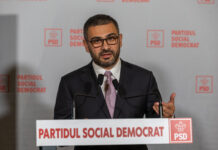
In Romania in 1989, the fall of Nicolae Ceaușescu did not produce a clean break with the communist system. Instead, much of the communist elite reorganized itself almost immediately under a new banner, the National Salvation Front, led by Ion Iliescu, a former senior Communist Party official.
The Front presented itself as the leadership of the revolution, but in reality it inherited much of the machinery of the state. The bureaucracy remained largely intact, the security apparatus was not dismantled, and the political class was drawn heavily from former regime insiders. Critics complained that the revolution had been hijacked by the very people who had served the old regime. There were huge demonstrations in the central plaza; at one of them I was attacked by a mob, beaten with batons, arrested and thrown in a paddy wagon.

Yet Romania’s transition had important advantages. The state did not collapse. Violence largely subsided after the initial upheaval. And over time the system gradually evolved toward pluralism and integration with the European Union. The former communists reinvented themselves as social-democratic politicians. Romania’s transformation was slow, morally unsatisfying to many, and full of compromises — but it ultimately produced stability and democracy. If a little corrupt.
Russia followed a different path after the collapse of the Soviet Union. In the early 1990s, reformers attempted a decisive rupture with the communist past. The Communist Party was temporarily banned after the failed 1991 coup against Mikhail Gorbachev. Soviet institutions were dismantled. New democratic structures were created, and many hoped a liberal state would rise from the ruins.
The American economist Jeffrey Sachs, representing the IMF, ran around advocating shock therapy as inevitable; today he is an apologist for the war criminal Putin, who is the direct result of Boris Yeltsin listening to his ill-considered advice, rendered with a (then) young man’s customary arrogance and overconfidence.
The networks that had governed the Soviet system did not vanish. The security services, bureaucratic elites, and economic power structures survived in fragmented form. At the same time, the state itself grew weak and chaotic. The 1990s were marked by economic collapse as savings evaporated, oligarchic corruption as state assets were sold off to those who paid off officials, and a profound sense of disorder in which nothing was sacred.
In that environment, a new political order gradually emerged built around the restoration of centralized authority. The rise of Putin — a former KGB officer who seemingly has, amazingly, absolutely no heart or soul — symbolized that shift. Russia did not restore communism, but it recreated many of the habits of the Soviet state: a dominant security apparatus, a controlled political system, and a fusion of state power with elite economic networks.
The lesson is that attempts at total rupture often fail because they underestimate how deeply embedded regimes are in the institutions of the state.
The clearest warning may come from a third example: Iraq after the American invasion in 2003. One of the earliest decisions made by the U.S.-led occupation authorities was the policy known as de-Baathification. Members of Saddam Hussein’s Baath Party were purged from government institutions, including ministries, schools, and the civil service. Even more consequentially, the Iraqi army was dissolved entirely, leaving hundreds of thousands of trained soldiers suddenly unemployed and humiliated.
The intention was understandable. The Baath Party had been the backbone of Saddam’s dictatorship. Removing its influence was seen as essential to building a democratic Iraq. But the policy ignored a critical reality: Baath Party membership had been widespread and often compulsory for anyone seeking a professional career in the Iraqi state.
By purging the entire system, the occupation authorities effectively dismantled the state itself. Ministries lost experienced administrators. Security structures collapsed. Armed and angry former officers became a reservoir of instability, many of them later feeding into insurgent groups. In one of the great ironies that U.S. “planners” failed completely to foresee, remnants of the “secular” Baath state mutated into the hyper-Islamic fire-breathing dragon known as ISIS. The result was not democracy but Yazidi girls being enslaved and Western journalists’ heads chopped off. Or, in journalistic vernacular, “sectarian conflict.”
Iraq’s experience became a textbook case of how overzealous revolutionary purges by clueless outsiders can destroy the very capacity needed to govern. Reza Pahlavi, the son of the late Shah who was replaced in 1979 by the Islamists, who has aspirations to factor into a new Iran, seems to understand this very well.
These three cases — Romania, Russia, and Iraq — illustrate the spectrum of possibilities after authoritarian collapse. Romania represents continuity through rebranding. Russia shows how a failed rupture can ultimately lead to the restoration of authoritarian power. Iraq demonstrates how purging the old system entirely can produce state collapse and violent disorder.
The implications for Iran are profound.
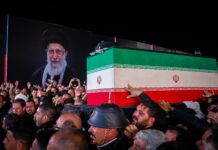
The Islamic Republic is often described primarily as a theocratic regime dominated by clerics. But over four decades it has evolved into something more complicated: a hybrid system combining religious authority, military power, and an enormous patronage economy. At the center of this structure is the Islamic Revolutionary Guard Corps, which has become not only a military force but also a political and economic powerhouse. It is a little like the military in Egypt, which runs the economy through shadowy tentacles that reach everywhere.
The IRGC controls large sectors of Iran’s economy, including construction, energy, telecommunications, and logistics. It operates vast business networks and maintains powerful intelligence and paramilitary organizations. In many ways it functions as the backbone of the state.
Any serious political transformation in Iran would therefore confront a reality in which the people who actually run the country are deeply embedded within the very institutions that define the regime.
If the Islamic Republic were to weaken dramatically — which many hope will be the result of the current war — the question would not simply be who replaces the Supreme Leader or the clerical establishment. The real question would be what happens to the institutional ecosystem that sustains the regime.
Here the distinction between institutions and individuals becomes crucial. The IRGC as an organization — with its ideological mission of exporting revolution and enforcing clerical rule — cannot survive in any Iran that hopes to become a normal state. That institution will have to disappear. Europe banning it now would help establish that principle clearly.
But the people inside it are another matter.
One theoretical path would involve encouraging elements of that system to evolve rather than disappear. Instead of dismantling the IRGC and the regime’s power networks entirely, a transition could allow parts of the security elite to remain in place while abandoning the ideological framework of the Islamic Republic.
In essence, the revolutionary state would shed its revolutionary identity while preserving its institutional core. Also, sadly, its corruption and patronage.
This would resemble the Romanian scenario more than the Iraqi one. Revolutionary institutions might rebrand themselves as national ones. Former Guards officers could evolve into something closer to a conventional military elite within a nationalist state rather than an ideological force devoted to exporting revolution.
Such a transition would undoubtedly be controversial. Many Iranians view the IRGC as an instrument of repression and corruption. Allowing its veterans to remain powerful could appear to betray the demand for justice after decades of authoritarian rule.
Yet revolutions rarely succeed when they demand total purification. Elites seldom surrender power willingly unless they are offered some form of security — political, economic, or personal. If those guarantees do not exist, the people who control the security forces often fight to the end.
There is also a practical consideration. Iran is a country of nearly ninety million people, with a complex economy and a volatile regional environment. The sudden destruction of its governing institutions could produce instability on a scale far greater than that seen in Iraq.
Bottom line: successful regime change may require dealing with the very people who upheld the old regime. The debate about Iran’s future will inevitably revolve around ideals: democracy, freedom, justice. Those aspirations are real and legitimate. It may also revolve around who controls Iran’s oil, and that would be grim and vulgar business of the kind that I sadly expect from Trump. But history suggests that the success of any transition will depend on something more mundane and more difficult — the management of the old regime’s sordid, cruel and essential machinery.
