









America is not an ally in the normally understood sense for the next four years at least, so Europe will have to own its own troubles
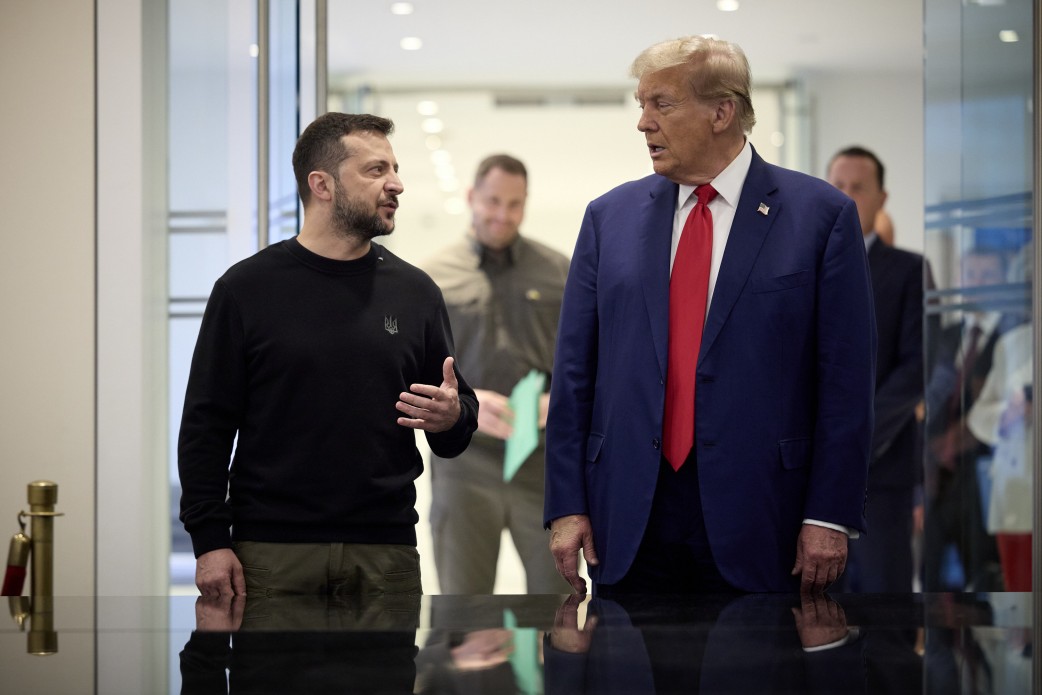
The Oval Office clash between Donald Trump (backed by the hectoring JD Vance) and Volodymyr Zelensky marks a turning point in the war in Ukraine — and possibly in European history. As the duo berated Zelensky for alleged disrespect and canceled a minerals deal, in what looked very much like a trap, it became clear that US support for Ukraine is no longer guaranteed.
This leaves Europe at a crossroads. If America steps back, Europe must step up. Shocking though it may seem, Trump is doing what many foresaw in walking away from America’s longstanding commitment to Europe’s security. This is now Europe’s problem. That should be reflected in Zelensky’s upcoming meetings with European leaders in London — which should look like a mirror image of the circus in the Oval Office.
(A week after the calamitous US election the election we predicted pretty much just this, saying that the Europeans will be “horrified,” since it would upend not only the regional security dynamic on Ukraine but also the foundation of the continent’s post-World War II order, which has relied on a stable transatlantic alliance.” In the poll that day, two-thirds preferred doubling down on aid to Ukraine.)
SUBSCRIBE TO ASK QUESTIONS LATER
And, as ever with Trump’s contrarian instincts and seemingly reckless actions, there is a kernel of truth and reason: It is indeed high time for Europe to grow up and take responsibility for its own security, 80 years after World War II.
Trump’s betrayal could hardly have been framed in more vulgar fashion, as if to place an exclamation point on it. Friday’s Oval Office meeting came amid what can only be described as a gangster-like attempted shakedown (indeed, thusly did we describe it), as Trump demanded $500 billion of Ukraine’s rare-earth minerals—resources crucial for advanced technologies—without offering any meaningful security guarantees in return. It was a nakedly transactional move, pressuring Ukraine – a country some 20 times poorer by per capita GDP – at its most vulnerable moment, as it fought for its life.
Despite expectation of some compromise – a deal giving the U.S. significant access to valuable resources, including titanium and lithium – the meeting devolved into a heated confrontation. Trump accused Zelensky of “gambling with World War III” and abruptly cut short the meeting, canceling a planned lunch and joint press conference. His aptly-titled vice president piled on, accusing Zelensky of being ungrateful and disrespectful. Zelensky fired back, pointing out that Vance had no understanding of Ukraine’s situation. The public shaming was unprecedented, and the fallout was immediate. Trump’s admonition that Zelensky was “not ready for peace if America is involved” underscored his long-telegraphed desire to wash his hands of the conflict.
The Oval Office debacle is about more than great TV or bad policy on Ukraine. Trump’s isolationist instincts are emboldening Russia and unsettling NATO. If America does step back, the financial shortfall for Ukraine will be enormous – but not impossible to replace. To date, over three years, European countries have provided about $140 billion in aid (military, financial and humanitarian) as of December 2024, and the United States has provided $120 billion. Most of the US funding supports American industries who produce weapons and military equipment. The European Union, whose annual GDP exceeds $20 trillion, can make up the difference. If made a priority, it’s not even a question.
Indeed, for too long, Europe has relied on American military power while skimping on its own defense. Despite repeated calls from the U.S. to increase NATO spending, most European countries have fallen short of the 2% GDP target. Now, with American support in question, Europe has no choice but to carry its own weight. This isn’t merely about fairness; it’s about survival. As Trump’s erratic diplomacy demonstrates, American security guarantees are no longer set in stone. If Europe wants to defend its way of life and democratic values, it must be willing to pay for it.
So Europe needs to ramp up its military aid immediately. According to a RAND analysis, Ukraine urgently needs advanced air defense systems, electronic warfare equipment, artillery, and drones. Specifically:
- Air Defense Systems: Patriot and SAMP/T systems to counter Russian missile and drone attacks. Europe produces 70mm rockets adaptable for short-range air defense.
- Electronic Warfare Equipment: To counter Russian drone swarms, Europe should provide advanced electronic warfare systems or fund Ukraine’s own production.
- Artillery and Ammunition: Ukraine is burning through artillery shells faster than they can be supplied. Europe must accelerate production and supply chains.
- Drones: Both reconnaissance and combat drones are vital for Ukraine’s operational effectiveness on the front lines.
Meeting these needs requires European NATO members to allocate about 0.5% of their GDP annually—a manageable sum considering Europe’s economic power. By pooling resources and coordinating production, Europe can provide Ukraine with the equipment it needs to defend itself and maintain pressure on Russia.
If Ukraine falls, Russian aggression may not stop at its borders. Eastern Europe would be next, followed by the Baltic states, and eventually, Western Europe itself would feel the heat. NATO’s credibility is on the line. If Europe fails to defend Ukraine, the entire security architecture of the continent could collapse.
Providing military aid is essential, but Europe must also play a leading role in diplomacy. A complete Ukrainian victory over Russia is unlikely, and a negotiated settlement may be the only way to end the conflict. However, any agreement must include robust security guarantees and a fast track to European Union membership for Ukraine.
Some will say Trump is just negotiating. He has a strange way of doing it with Putin, as I described last week in “The Art of the Sellout.” He basically gave the Russian dictator everything up front without any concessions in return.
European leaders must learn from this mistake and ensure that Ukraine’s sovereignty is non-negotiable. While a deal that freezes the current battle lines may be necessary, it must come with ironclad security guarantees backed by NATO forces — or at least the European component. Europe must make it clear to Russia that any violation of the ceasefire would trigger an overwhelming military response.
European leaders are meeting this week to discuss their next steps. This is their moment of truth. Statements of solidarity are not enough. They must commit to real action—financially, militarily, and diplomatically. This includes:
- Establishing a European Defense Fund to pool resources and coordinate military aid.
- Fast-tracking Ukraine’s EU membership to bind it to Europe politically and economically.
- Implementing Security Guarantees to deter Russian aggression and maintain stability.
Eighty years after the end of World War II, Europe is once again at a crossroads. The post-war order that kept Europe safe and prosperous is crumbling, and the U.S. is no longer willing to shoulder the burden alone. Europe must grow up. This means taking responsibility for its own security and defending its values against authoritarian threats.
The lessons of history are clear: appeasement doesn’t work. Russia’s aggression is not just a threat to Ukraine but to all of Europe. This is a European problem, and it is high time for Europe to solve it. If European leaders fail to act, they will not only betray Ukraine but also jeopardize the security and prosperity of the continent for generations to come.
For Europe to effectively support Ukraine and safeguard its own security, it must act in concert. This cannot be done piecemeal, with each country deciding its own level of commitment. It requires a united front, coordinated military aid, pooled financial resources, and a cohesive diplomatic strategy. Acting as a collection of midsize and small countries will only dilute Europe’s influence, giving Putin the upper hand. The European Union must leverage its combined economic and political power to lead decisively, demonstrating that Europe is more than the sum of its parts.
That will be another drama across the union, with Hungary — run by Trump mini-me Viktor Orban — trying to block whatever he can. Trump and his ideological allies, including populist movements within Europe, are actively undermining the idea of European unity, just as Putin has tried to do for years. Their goal is clear: to weaken the Western alliance by fragmenting Europe.
This is Europe’s defining moment. If it does not defend Ukraine, it will be defending itself soon enough. Even then, Trump should not be counted upon. He will try to extort future rights to champagne, or seize North Sea oil, or demand that Europe take America’s immigrants and pay for their transport too. There are no limits. Limits were so 20th century.
