











Trump seems to feel that leading the free world is a job for suckers – and that Ukraine should be sold for scrap
From the moment Donald Trump was re-elected, it should have been clear that his approach to Ukraine would be betrayal (as we predicted on this pages). This week, he proved it beyond doubt in statements about the war that were not just a capitulation to Russian propaganda but a fundamental misreading of American interests. Even those who saw it coming might have expected something marginally less awful: An abandonment of America’s entire post-WWII strategy — reckless and ruthless in equal measure — that reveals instincts dangerously misaligned with the realities of global power.
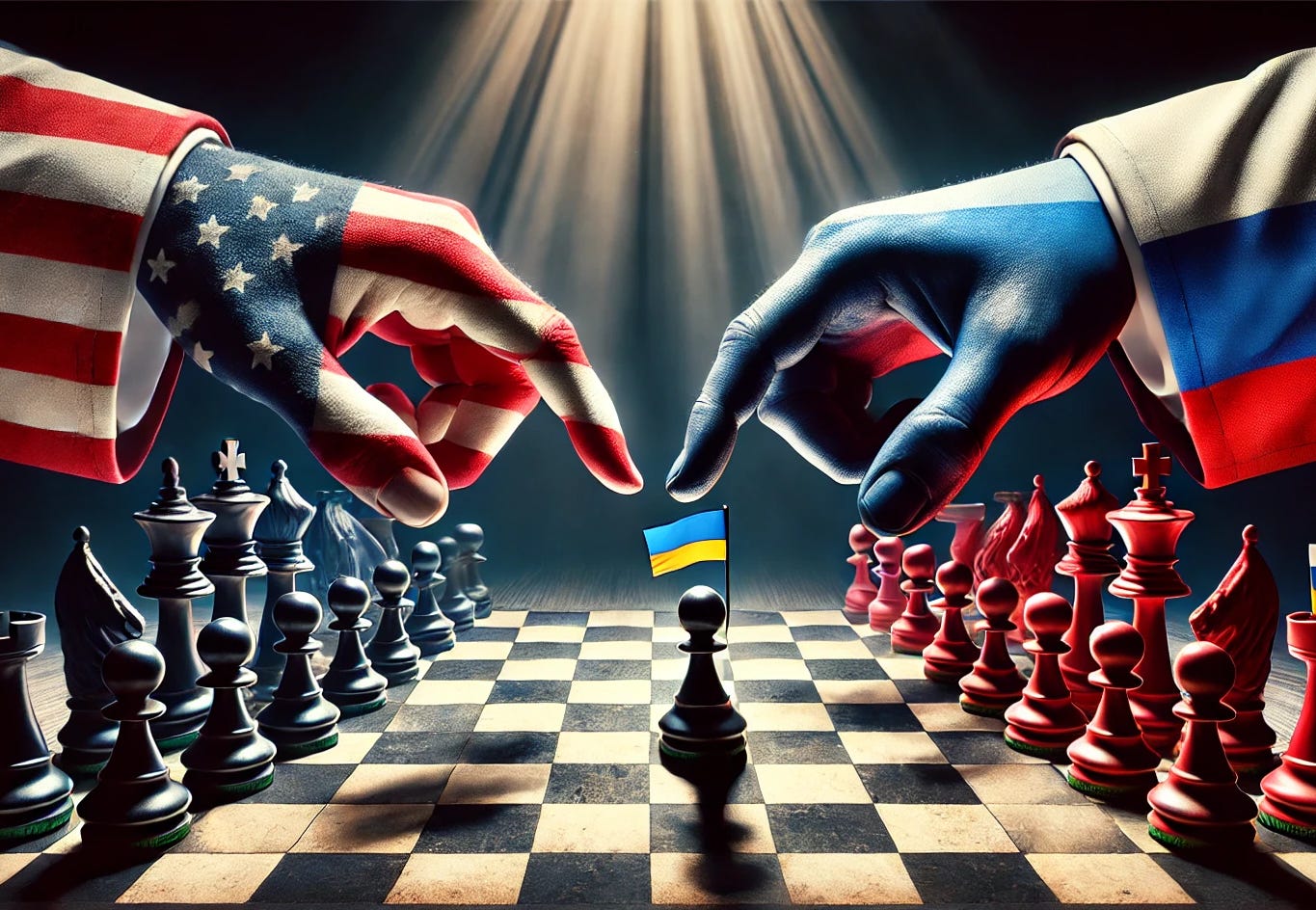
There have always been two ways to look at this war. One view holds that Russia is an aggressor, plain and simple, and that appeasing Vladimir Putin would be akin to the infamous Munich Agreement of 1938 — an act of weakness that would only embolden him to push further, into Moldova, the Baltics, or even beyond. Under this logic, Ukraine’s fight is not just about its own survival but about the security architecture of Europe and the credibility of NATO.
The other perspective, which Trump evidently subscribes to, argues that while Russia’s invasion was wrong, Ukraine’s pre-war borders were, to some extent, artifacts of Soviet history — drawn sometimes arbitrarily and not inherently sacrosanct. Under this view, Russia had legitimate fears about a NATO presence so close to Moscow, and the best outcome now would be a negotiated settlement that recognizes some of Russia’s territorial gains while ensuring Ukraine’s security through EU membership and other guarantees.
One can believe in either of these positions. Both are intellectually defensible. But Trump’s approach isn’t just about choosing one framework over the other — it’s about adopting the worst possible execution of any framework at all.
If the goal were a negotiated settlement, it would have to be done carefully, with Ukraine and Europe as central players. Instead, Trump is cutting deals with Putin over Ukraine’s head, sidelining European allies, and making concessions before negotiations have even begun. This is, at best, amateurish and, at worst, a reckless betrayal of not only Ukraine but also the very principles of Western leadership.
Even more disturbingly, Trump and his Cabinet puppets have begun echoing Putin’s rhetoric. This week, he suggested that Ukraine “started” the war, a blatant falsehood that aligns neatly with the Kremlin’s propaganda. He baselessly claimed that Zelensky has a 4% approval rating — another total fabrication that Russia’s state media immediately amplified. He even leaned into the idea that Ukraine’s wartime suspension of elections calls its legitimacy into question, a talking point that conveniently mirrors Putin’s recent attempts to delegitimize Zelensky, and is patently absurd when Putin is a dictator whose own “elections” are an obvious sham.
Then, there’s the NATO debacle. Trump’s team has openly stated that Ukraine will never be allowed to join NATO. Whether or not one believes that Ukrainian NATO membership is realistic, declaring it publicly and unilaterally removes a key bargaining chip from the table. It’s an unnecessary giveaway — diplomatic malpractice of the highest order. If Trump were truly the master negotiator he claims to be, he would understand that you don’t start by announcing what you’re willing to concede for free.
At least at Yalta, Franklin Roosevelt was bargaining with a Soviet Union that at that point was on somewhat equal footing with the United States. The U.S. had endured a world war, and Stalin’s forces had already occupied much of Eastern Europe. Trump, by contrast, is handing Putin what he wants for free. He is neither recognizing Ukraine’s legitimate need for security nor extracting meaningful concessions from Russia. Instead, he is giving away American leverage in the most reckless and short-sighted manner possible.
Why is Trump doing all this? The possible reasons are many. There’s his long-standing admiration for autocrats like Putin, his deep-seated belief that allies are burdens, and his instinctive hostility toward NATO and the European security order (there’s also the possibility of personal financial entanglements). Beyond all this, there may be a deeply personal element: revenge. Ukraine played a role in Trump’s first impeachment, and Trump never forgives; it is an insult that must be repaid in kind.
All this points to a bigger problem than Ukraine: Trump is a menace to the global world order that America built and that has more-or-less kept the peace in the years since World War II.
And yet, there is one kernel of strategic truth in his broader stance. The United States does spend too much time cajoling wealthy European nations into paying their fair share for defense. It is absurd that, 80 years after the war, America still carries such a disproportionate burden for Europe’s security. Trump’s crude methods aside, there is a legitimate case to be made that Europe should take more responsibility for its own military capabilities, just as there is logic in the way his confrontational approach to the Middle East has shaken up long-stagnant political dynamics there.
However, recognizing this reality does not justify the way Trump is handling the situation. There is a difference between strategically encouraging European defense autonomy and outright abandoning allies while placating an adversary. Instead of forcing Europe to step up responsibly, Trump is making Ukraine and the region more unstable, all while strengthening Putin’s hand.
Perhaps the most disgraceful aspect of Trump’s position, though, is his attempt to turn American military aid into a transactional shakedown. He has suggested that Ukraine should “pay back” U.S. assistance with its rare earth minerals — a grotesque departure from how great powers are supposed to behave. If the United States helps Ukraine, it should do so because it of strategic interest or moral imperative, and not because it expects some material kickback. Turning military aid into an extortion scheme cheapens America’s role on the global stage, making it not great – but rather a goon. It is a terrible and dangerous message.
So what now? Well, first, Trump needs to stop talking about Ukraine. Every word he utters on this subject undermines American leverage, destabilizes Europe, and strengthens Putin’s position.
Second, Europe needs to take charge of Ukraine’s future. If NATO membership is off the table for now, then the EU should make an unequivocal commitment: Ukraine’s accession will be fast-tracked, with economic and security guarantees that render Russia’s territorial gains hollow in the long run.
America was once the leader of the free world. Trump seems to consider that a job for suckers. If he continues on this abominable path, he won’t just be remembered as the president who betrayed Ukraine — he’ll be remembered as the man who destroyed America’s reputation.
