



Finland will become the 31st member of NATO on Tuesday, immediately preceding a two-day meeting of Allied Foreign Ministers.
NATO Secretary General Jens Stoltenberg welcomed Finland’s imminent accession, saying: “It will be a good day for Finland’s security, for Nordic security and for NATO as a whole.”
“This is a historic week,” Stoltenberg said on the eve of a meeting of NATO foreign ministers in Brussels. “From tomorrow, Finland will be a full member of the alliance.” He said that he hopes Sweden will be able to join NATO in coming months.
Finnish President Sauli Niinistö and Defense Minister Antti Kaikkonen will attend the ceremony, along with Foreign Minister Pekka Haavisto.
“It is a historic moment for us. For Finland, the most important objective at the meeting will be to emphasize NATO’s support to Ukraine as Russia continues its illegal aggression,” Haavisto said in a statement. “We seek to promote stability and security throughout the Euro-Atlantic region.”
Russia’s Deputy Foreign Minister Alexander Grushko said that Moscow would respond to Finland becoming NATO’s member by strengthening its defenses.
“We will strengthen our military potential in the west and in the northwest,” Grushko was reported as saying on state RIA Novosti news agency. “In case of deployment of forces of other NATO members on the territory of Finland, we will take addition steps to ensure Russia’s military security.”
Finland and Sweden feared they might be targeted after Russia invaded Ukraine last year and abandoned their traditional positions of military neutrality and sought to join the world’s biggest defense alliance.
Opening remarks by NATO Secretary-General Jens Stoltenberg:
Good afternoon.
This is an historic week.
Tomorrow, we will welcome Finland as the thirty-first member of NATO.
Making Finland safer and our Alliance stronger.
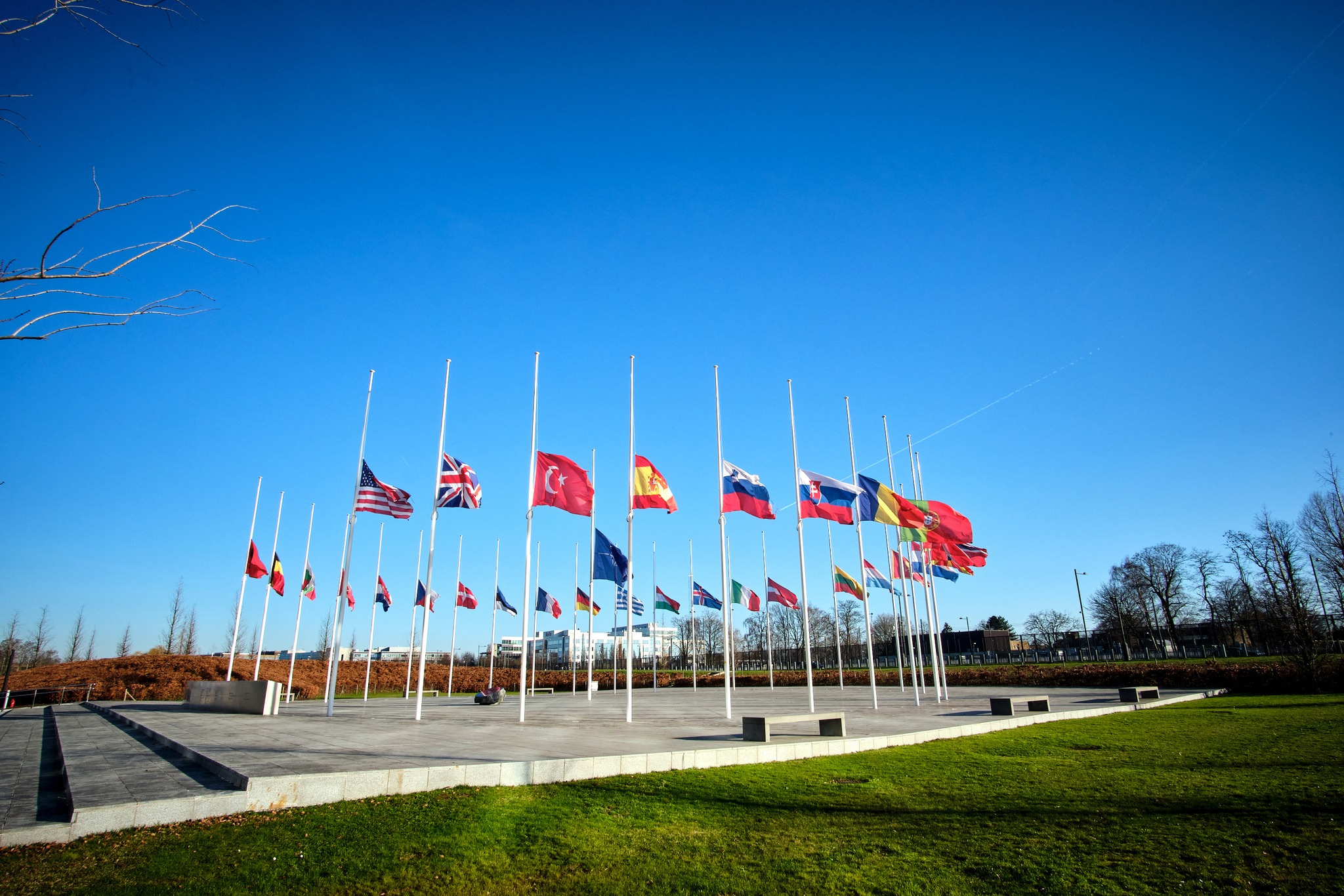
We will raise the Finnish flag for the first time here at the NATO headquarters.
It will be a good day for Finland’s security, for Nordic security, and for NATO as a whole.
Sweden will also be safer as a result.
Last year Allies made an historic decision to invite Finland and Sweden to become members of NATO.
Since then we have seen the fastest ratification process in NATO’s modern history.
And all Allies agree that Sweden’s accession should be completed quickly.
NATO Foreign Ministers meet at an important moment for our security.
Tomorrow, we will hold the NATO-Ukraine Commission with Foreign Minister Kuleba.
To address Russia’s war of aggression, and our support to Kyiv.
We do not know when this war will end.
But when it does, we will need to put in place arrangements so that Ukraine can deter future aggression.
And history does not repeat itself.
We cannot allow Russia to continue to chip away at European security.
I welcome President Zelensky’s peace plan, which upholds the principles at the heart of the UN Charter.
It provides the foundation for a just and sustainable peace.
But there are no signs that President Putin is preparing for peace.
He is preparing for more war.
That is why we are united in our determination to stay the course.
And support Ukraine for as long as it takes.
Allies have delivered 65 billion euros of military aid.
And I welcome that modern battle tanks and other armoured vehicles have started to arrive in Ukraine.
This can make a real difference on the frontlines, and allow the Ukrainian forces to liberate more territory.
We will discuss how we can step up our support, including by continuing to strengthen Ukraine’s armed forces.
And supporting their transition from Soviet-era to NATO equipment and doctrine.
Our support is for the long-haul.
So I expect that ministers will agree to start work on developing a multi-year programme for Ukraine.
Allies will also discuss threats and challenges in the South.
Including instability, terrorism and the growing influence of Iran, Russia and China.
To address all of these challenges, it is essential that we invest more in defence.
At the Vilnius Summit, I expect Allies to agree an ambitious new defence investment pledge, with 2% of GDP for defence as a floor, not a ceiling.
On Wednesday, NATO’s Indo-Pacific partners – Australia, Japan, New Zealand and the Republic of Korea, will join us.
Together with the European Union.
The consequences of Russia’s war against Ukraine are global.
And what is happening in Europe today could happen in East Asia tomorrow.
So I welcome our partners’ strong support to Ukraine.
Including Japan’s recent announcement of contributions to NATO’s assistance fund for Ukraine.
We will discuss deepening cooperation in areas such as cyber defence, new technologies and countering disinformation.
We will also address China’s growing alignment with Russia.
Any provision of lethal aid by China to Russia would be a major mistake.
At a time when Russia and China are challenging the international order and democratic values,
it is even more important that we stand together as NATO Allies.
And with like-minded partners.
