

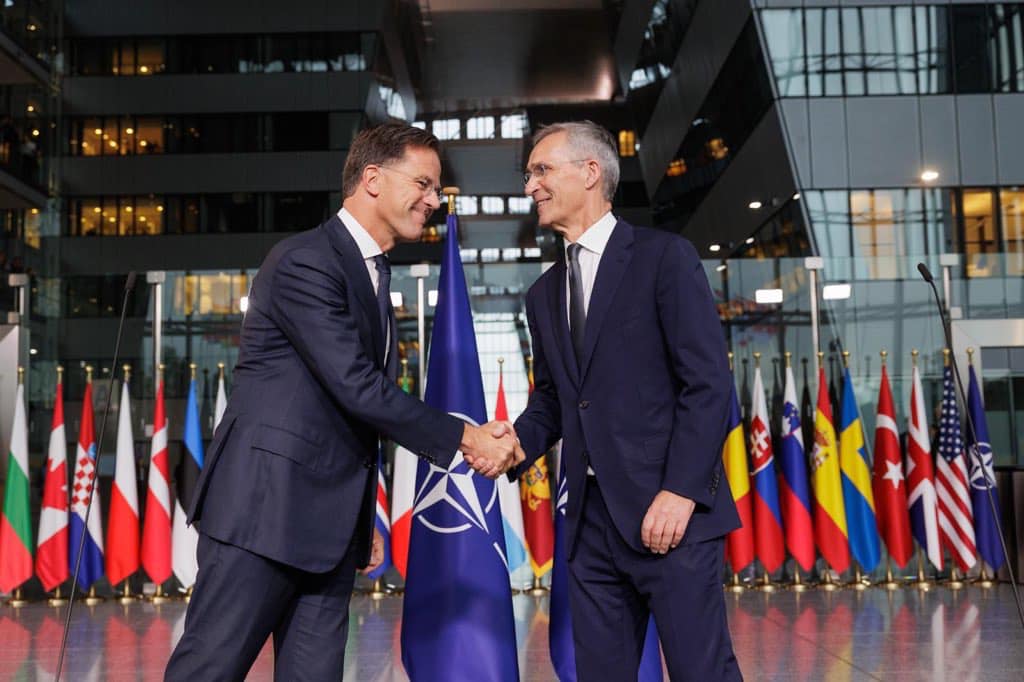
Former Dutch Prime Minister Mark Rutte took office as the NATO Secretary General on Tuesday.
He was welcomed to NATO Headquarters in Brussels by the outgoing NATO Secretary General Jens Stoltenberg, whose term ends after ten years.
Mr Rutte and Mr Stoltenberg laid a wreath during a ceremony at the NATO Memorial to the Fallen.
Mr. Rutte thanked NATO allies for trusting him with the leadership role. “It is a big job, and I have big shoes to fill,” he said.
NATO’s 32 members appointed him during the summer after the Dutch politician secured the early backing of the United States, Germany, and Britain despite his record of low defense spending in government.
Romanian President Klaus Iohannis had also put himself forward to be Secretary General, the leader of the Brussels-based organization, but the Romanian government in June offered its support to Mr. Rutte.
The Dutch politician takes over at a challenging time for the Western defense alliance, facing the threat of a more aggressive Russia while supporting Ukraine against Russian President Vladimir Putin’s full-on invasion.
“There can be no lasting security in Europe without a strong, independent Ukraine,” Mr. Rutte told the alliance’s decision-making body, the North Atlantic Council (NAC).
Former secretary general Stoltenberg stepped down after 10 challenging years for the alliance’s unity and purpose.
The changing of the leadership takes place as war continues to rages in Ukraine, on the alliance’s borders.
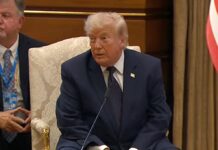
The war and increased threat of Russian expansionism renewed NATO’s Cold War resolve to protect members after years of turmoil during former US president Donald Trump’s presidency.
The former U.S. president criticized allies, particularly Germany, for what he considered unacceptably low defense spending.
A chaotic withdrawal from Afghanistan in 2021 marked a low point for the alliance, just six months before Russian President Vladimir Putin’s invasion of Ukraine in February 2022.
NATO’s ‘transformational’ decade
In an essay to mark his departure, Stoltenberg described the last decade for NATO “as the most transformational” for the 32-member alliance since the Cold War.
Stoltenberg highlighted the new deployments of allied troops in Eastern Europe, the ramp up in defense industry production, and the fact that 23 allies are now spending at least 2% of their gross domestic product (GDP) on defense in 2024 – up from just three countries in 2014.
During Stoltenberg’s tenure, Montengro, North Macedonia, Finland and Sweden joined NATO. Both Nordic countries abandoned years of neutrality after the full-blown Russian invasion of Ukraine.
Stoltenberg was admired for his skilful negotiations in the face of opposition from Turkey. Ankara demanded greater commitments from Sweden to combat terrorism alleging Stockholm supported banned Kurdistan Workers’ Party (PKK), a group Ankara labels as “terrorists”.
The top NATO official is tasked with the political leadership of the alliance and ensuring consensus among allies, particularly when navigating complex issues during times of crisis.
NATO is also concerned about the rising military strength of Beijing and views China as a challenge to the alliance’s security.