













| Global milk production is rising, causing suffering to 277 million dairy cows and massive greenhouse gas emissions, animal welfare group says |
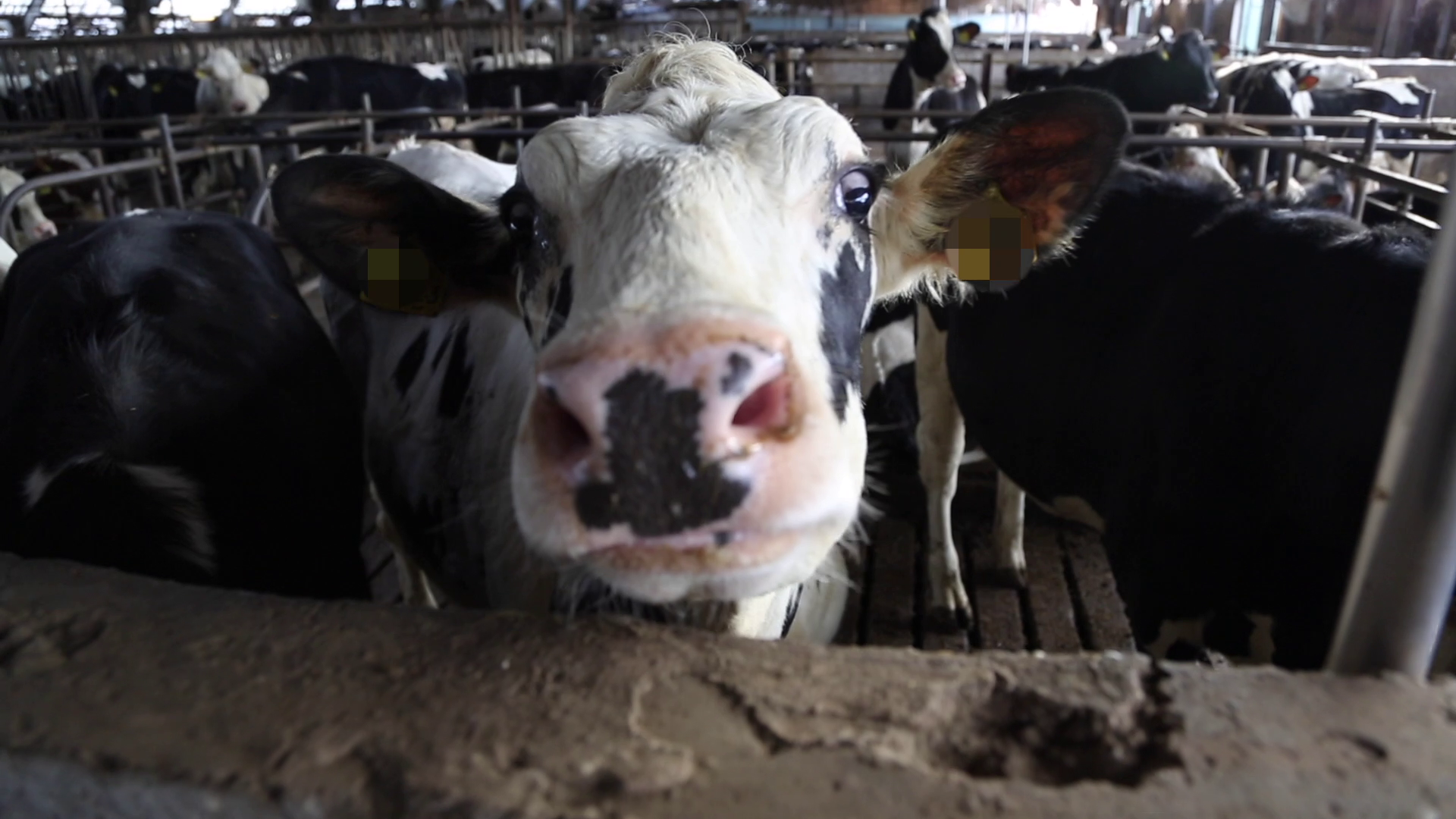
| The demand for milk is rising with more than six billion people consuming milk according to the Food and Agriculture Organization (FAO), while global production to increase by about 15% until 2032. With more than 150 kg annual milk consumed per capita, Europe and the United States rank among the top milk producers. However, developing countries are catching up and milk consumption has almost doubled in these countries since the early 1960s, the FAO says. The world-wide demand for dairy is taking a high toll on dairy cows, FOUR PAWS said on Wednesday. In the run-up to World Milk Day on June 1, the animal welfare group issued a statement saying that “behind every glass of milk lies a life of suffering.” FOUR PAWS called for a structural change in the whole dairy production, allowing mother-bonded or fostered calf rearing and a complete ban on tethering of animals and fully slatted floors. “In industrial farming, cows are abused as milk-making machines. Behind every glass of milk lies a life of suffering. Contrary to what the dairy industry wants to make us believe, they often don’t spend their time on lush meadows. Dairy cows are mostly tethered in stables, standing on dirty hard floors. They are kept pregnant from the industry most of their life and can barely walk due to their oversized udders. They suffer from metabolic disorders, lameness and painful udder infections,” said Carolina Cardoso Nagib Nascimento, Expert Farm Animal Welfare at FOUR PAWS. Dairy cows can provide up to 30 litres of milk per day, but it takes a high toll.They are often fed concentrate feed, made of soy and grains, leading to digestion and metabolic disorders, as their natural diet is high in fiber and consists of grass and hay. Dairy cows can get emaciated as their bodies can’t take in enough nutrients. ‘Cruel’ separation of mothers and their calves shortly after birth “To give milk, dairy cows must give birth to a calf every year. It is heartbreaking to see that only within a few hours mothers are cruelly separated from their calves. Instead of feeding their offspring, the entire milk then goes into dairy production, so that humans can quench their thirst. This cruel practice needs to end,” says Carolina Cardoso Nagib Nascimento. Calves are often fed skimmed milk powder mixed with water and kept isolated in boxes, leading to behavioral disorders, psychological stress and illnesses. To maximise production, their mothers are then inseminated already a few weeks after giving birth. Their lives end prematurely as many are slaughtered and replaced by new animals at the age of five, when milk production decreases, despite a natural life expectancy of 20 years. Milk & butter: greenhouse gas emissions quadruple compared to plant-based dairy alternatives About two thirds of all global animal agriculture emissions come from cattle farmed for beef and dairy. Dairy milk generates two to four times more greenhouse gas emissions compared to plant-based milk. This also holds true for butter, for the production of which about four times as many greenhouse gases are emitted (12.1 kg of CO2) than for plant-based spreads (3.3 kg of CO2). “We are having more dairy than our planet can digest. A massive reduction of current milk consumption is urgently needed to save cows, the climate and nature – instead of celebrating the benefits of milk, the industry should take its responsibility, and stop the suffering of cows and to harm to our planet,” said Herman van Bekkem, Program Lead Climate at FOUR PAWS. Lancet Commission recommends a maximum of 250 grams of milk per day per person. This is equivalent to one glass of milk or one slice of Gouda cheese.
https://universul.net/romanian-cows-produce-smallest-amount-of-milk-in-eu/ |
