



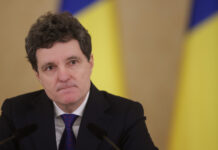

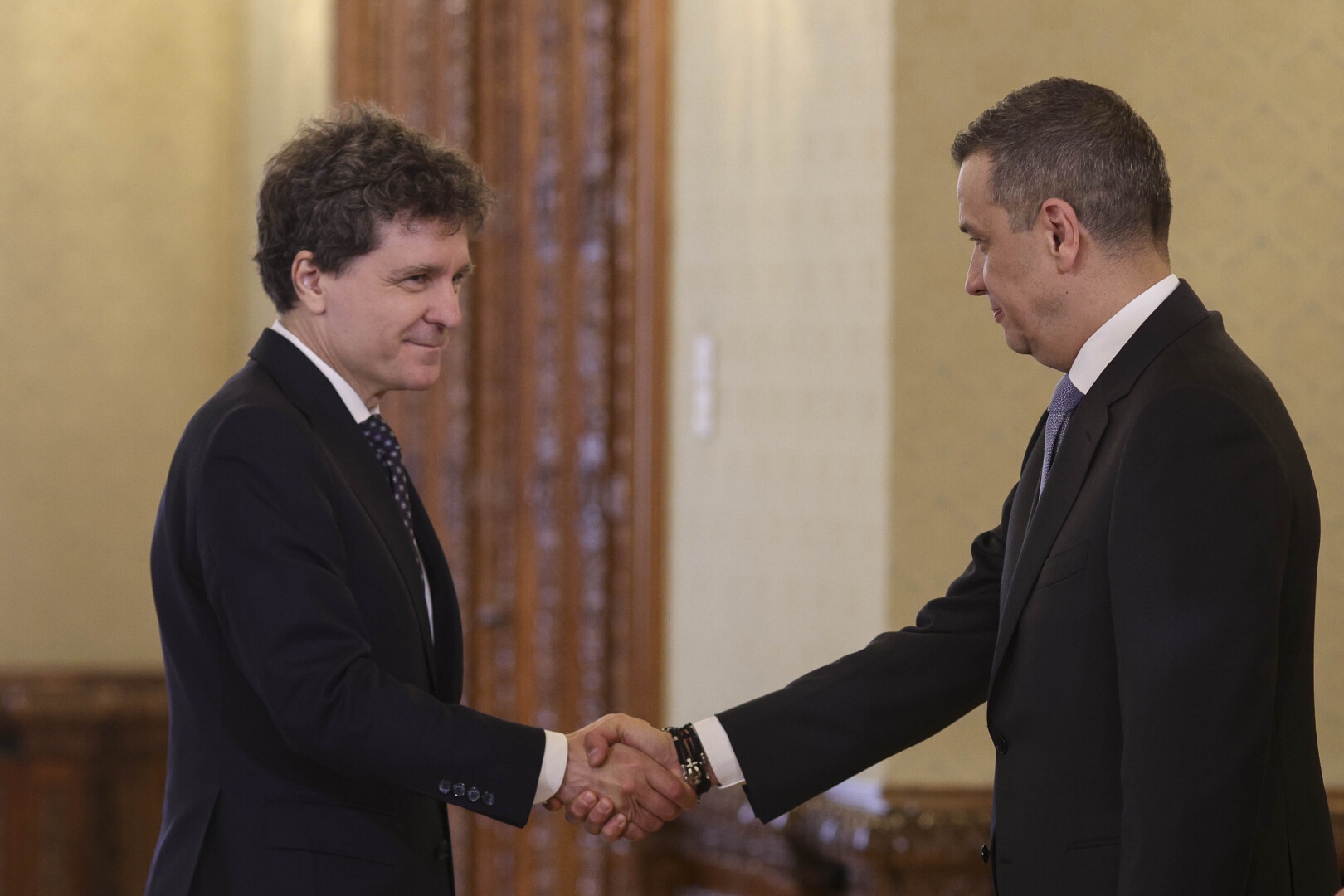
Sorin Grindeanu can be sure that he will remain in history.
His name is synonymous with the famous ordinance that diluted the fight against corruption and brought half a million protesters to the streets in a single evening.
His name is also tied to the most unusual rejection of a prime minister in Romania’s history: being removed from government by a no-confidence motion brought by his own party, the PSD.
His name is now linked to the start of one of Romania’s deepest and most unpredictable political crises, unfolding in a domestic and international context rarely so delicate and complex.
His name is also associated with attempts to sanitize AUR’s image: the extremist party with which PSD-Grindeanu helped topple a government, negotiated support for forming another, and still appears unwilling to rule out future projects.
Finally, his name is becoming synonymous with blackmailing his own country over access to €4.5 billion from the European Union.
On July 13 and 14, by breaching PSD’s pledge not to endanger PNRR funding, Sorin Grindeanu sent the same alarming signal three times:
- That the written commitment and his own signature, that the PSD will not jeopardize accessing the money from the PNRR, isn’t worth the paper it’s written on.
- That it is precisely a political leader (party leader, former and, potentially, future prime minister) from an EU country who treats a contract between his country and the European Commission as null and void. And he does this not out of the national interest, but out of pure personal and party interests, thus risking not only his own credibility, but Romania’s credibility in the eyes of its international partners – from states to institutions.
- That although he is in a personal war with Ilie Bolojan, Sorin Grindeanu is in fact sacrificing a mass of taxpayers and beneficiaries, all of them his fellow Romanians, both individuals and companies. The fact that he conditions the party’s vote on the reforms on which the receipt of 4.5 billion euros is not only serious, but also infantile. Especially since Ilie Bolojan has already been dismissed, and if we still see him left in office, this is precisely due to the PSD leader’s refusal to have assumed the government the day after his party dismissed Bolojan’s government.
The risk that Grindeanu’s signal on the PNRR could escalate, ultimately costing Romania at least sone of those billions, grew even greater because the Romanian president’s response was strangely soft and relaxed given the gravity of the moment.
President Nicușor Dan did not see in Grindeanu’s blackmail anything more than a banal negotiation tactic, “a form of Mr. Grindeanu to say that, one: he is not part of this government and, two: that he wants to negotiate on these packages of laws.”
Given how “inspired” the head of state’s instincts have proved over the past three months, and how “serious” the information behind some of his decisions appears to have been, Nicușor Dan’s interpretation is itself a new cause for concern.
Nicușor Dan also treated lightly the behavior of the PSD-Grindeanu in the last months of the coalition, so that in the end we witness its brutal break.
He also treated Nicușor Dan as a simple entry into a period of “political turbulence” and the fact that the PSD withdrew its support for Ilie Bolojan and was going to leave the government, so that today the plane called Romania would be just a few meters from touching the ground directly with the nose, not with the landing gear. There is, however, a difference between turbulence and collapse.
As the same Nicușor Dan had reasonable expectations, on two occasions even, that the prime minister appointed in an untransparent and unrealistic manner by him will also be invested in office. Each time it was a failure.
And, the icing on the cake: since April and continuing throughout the months of May, June, July, Nicușor Dan has been constantly sure that at least the consensus on the PNRR will remain. Only for Sorin Grindeanu to state the opposite.
As we have noted before, the longer the current crisis persists, the more it slips beyond rational control and takes on a wild, deeply unpredictable life of its own.
The victims are of course the democratic and financial stability of the country, as well as people’s living standards.
Recently, in a sign of desperation, the political battle had already shifted into a realm that should remain outside such confrontations: justice. Now we are witnessing a second major drift, as political hostilities move into the PNRR arena and, with it, the country’s budget — one that depends heavily on the €4.5 billion and, in turn, supports millions of families.
That neither the politicization of justice nor the weaponization of the PNRR deeply alarmed the Romanian president is itself a major warning sign.
- PS: I recently wrote that the PSD is boiling since Grindeanu has come to manipulate like Putin. The conditioning of support for the PNRR on Bolojan’s departure reconfirms that the pressure of the PSD (stressed by the loss of power and, more recently, even by the specter of early elections) on their leader is real and growing
Romania’s president raises prospect of early elections amid political deadlock
