













“The first method for estimating the intelligence of a ruler is to look at the men he has around him,” advised Niccolo Machiavelli. Ignore the gender; note the plural.
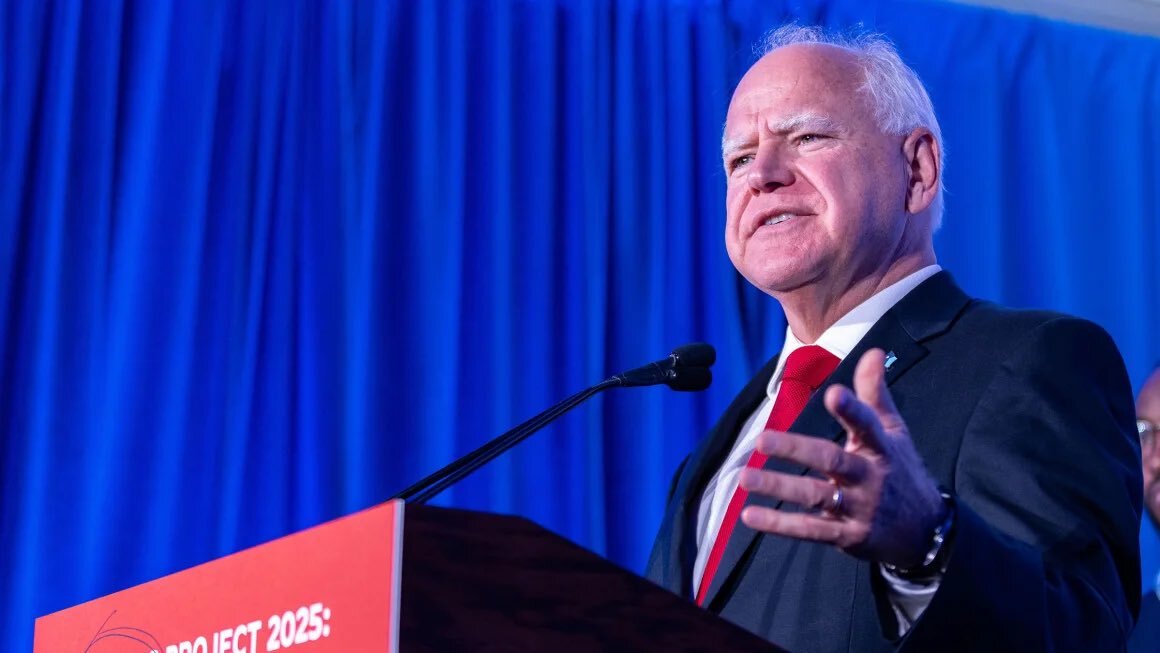
Now that the veepstakes have ended with Democratic nominee-apparent Kamala Harris choosing Minnesota governor Tim Walz as her running mate, I have a radical suggestion: Instead of the traditional path of campaigning as a duo and largely sidelining the impressive gallery of others who were considered as well, run as a team instead.
The potential Cabinet-in-waiting could include other successful governors and senators from swing states as well as other impressive and competent figures. The swing state issue is critical, because in America’s unique and problematic electoral system only those places really matter and Harris needs pretty much all the them. That includes Pennsylvania, whose own governor Josh Shapiro, a centrist who would have undercut the damaging narrative that Harris herself is too far to the left, was perhaps unwisely passed over.
Walz, a Midwestern everyman who was a geography teacher, football coach and longtime member of the National Guard, is not a crazy choice. He may appeal in other Midwestern swing states like Wisconsin and is a friend of labor. Perhaps critically, in our era of never-ending silliness, he is much hailed as the coiner of the instantly classic and uber-accurate term “weird” to describe Donald Trump and his own VP pick, Sen. J.D. Vance of Ohio (in his bestselling book Vance pretends to be a hillbilly and, even more absurdly, tall).
So, imagine if alongside the pick for vice president, Harris also unveiled in coming days and weeks a comprehensive larger group that included many of the contenders. Imagine campaign posters all over the country that show not just the ”ticket” but also the team, including:
- Gretchen Whitmer, the governor of Michigan, has earned national recognition for her leadership during the COVID-19 pandemic and strong advocacy for women’s rights and economic development. She pulled out of the veepstakes but Michigan remains in danger for the Dems largely because of anger by the large Muslim community over Biden’s support for Israel in the Gaza war. Harris should keep her prominent.
- The aforementioned Shapiro is a pragmatic leader known for his efforts to protect voting rights and combat corruption in Pennsylvania. His state (which is mine too!) is similarly in danger but from the opposite direction: Anger by Jews and centrists over perceived antisemitism in the woke left of the Democratic party. Shapiro, who is Jewish, could be a useful answer.
- Mark Kelly, the astronaut-turned-senator from Arizona, represents a blend of service and entrepreneurship and has a compelling personal story as the husband of former Rep. Gabby Giffords (she survived an assassination attempt and has become a strong advocate for gun control).
- Pete Buttigieg, currently serving as the U.S. Secretary of Transportation, is a rising star in the Democratic Party known for his intellect, calm demeanor, and ability to articulate complex policy issues clearly. A Rhodes Scholar and former mayor of South Bend, Indiana, he is a military veteran and adds to his appeal across various voter demographics, including the LGBTQ electorate.
- Roy Cooper, the governor of North Carolina, is a seasoned leader with a strong track record in education and health care reform; Trump won the state by 1 percent in 2020 and Cooper could help flip it.
- Sen. Raphael Warnock of Georgia would bring a powerful voice on issues of racial justice and economic inequality that would resonate deeply with African American voters and progressive constituencies who put Biden over the top in his state of Georgia in 2020.
- Gavin Newsom, the governor of California, is a semi-progressive powerhouse with a focus on climate change, health care, and social justice. He’s a tricky one: California has become a lightning rod for wokeness gone berserk and some of that attaches to Newsom; but he’s tall with good hair (and seems knowledgeable and articulate).
- The key is that Harris should seek to avoid a situation where she has picked one Democrat and has forgotten about all the others who can help her—both nationally and in their states. She needs to keep all of them in play somehow. And one way to do it is to present them all as a team, perhaps bolstered with prominent figures from the business world, military and academic and research communities, which could present a wide range of policy expertise, regional representation, and personal backgrounds.This might galvanize support across the nation, offer a clearer vision of her potential presidency, and reassure voters who have doubts about her personally.It would also, obviously, set her apart from her opponent, a megalomaniac and aspiring dictator. (By the way, in choosing as his running mate on the Republican side, Trump didn’t follow swing-state logic, rather hoping to further rile up a fevered MAGA base).The team concept would borrow from the British tradition of a “shadow government.” For example, long before Labour’s victory last month, it was known who a Prime Minister Keir Starmer would appoint to various posts in his cabinet. Thus was the election rendered not all about the somewhat wooden Starmer.On both practical and messaging levels, the benefits are obvious: Voters would see not just a candidate, but a ready-made administration poised to tackle the nation’s challenges from day one; key battleground states would be engaged; synergy would be maximized between Harris’s campaign and down-ballot races; and, critically, in an era of political polarization and misinformation, presenting a team provides a positive narrative, counters negativity with a focus on competence and collaboration.
President Abraham Lincoln’s famous “team of rivals” strategy during his presidency serves as a powerful precedent. Lincoln brought together a group of strong, often opposing figures into his administration. This approach fostered debate, surprisingly effective governance, and projected the message that not everything was about Lincoln.
- If more than 160 years of precedence isn’t enough for you, it’s possible to look back hundreds and thousands more.
- “The first method for estimating the intelligence of a ruler is to look at the men he has around him,” advised Niccolo Machiavelli in The Prince. In his Politics, Aristotle emphasized the role of collective wisdom in governance: “For each individual among the many has a share of virtue and prudence, and when they meet together, they become in a manner one man.”
