









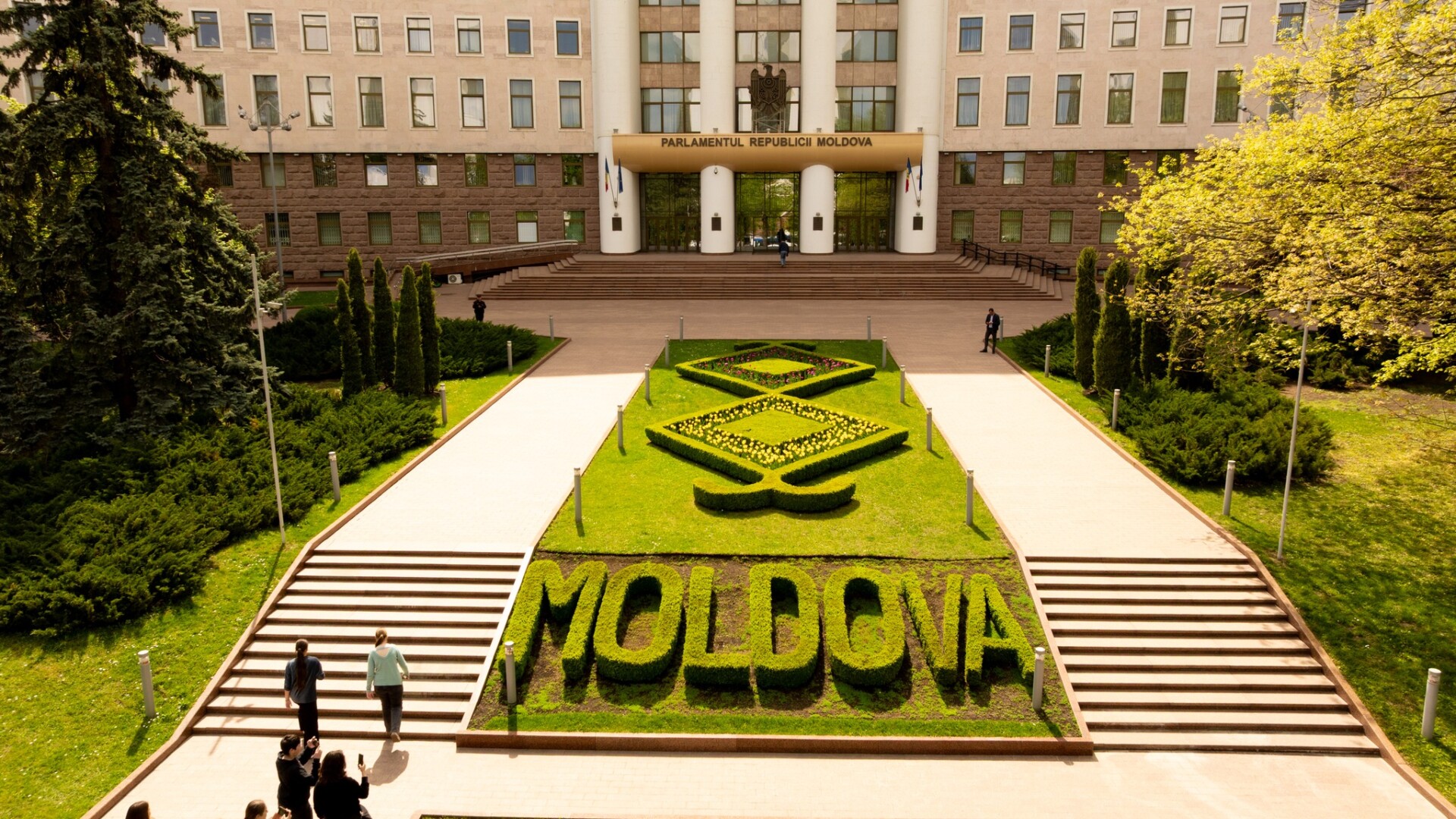
Brussels is preparing to open the first cluster of accession negotiations with Moldova and Ukraine.
Moldova was previously dependent on Russian energy, mired in corruption and under Kremlin influence.
Following approval by all 27 EU member states of preparations to open the first cluster of accession negotiations with Moldova and Ukraine on June 3, the European Commission is expected to formally propose the launch of talks on 15 June.
European leaders could then endorse the move at the European Council summit in Brussels two days later.
“A few years ago not many believed in us,” said President Maia Sandu this month. “We were told (we were) too small, too fragile and too close to the war. We were told our European choice would not survive the pressure. It survived because we stood by it.”
The first chapter which covers the rule of law, democratic institutions and fundamental rights marks the formal start of a process that could lead Moldova into the European Union.
While accession won’t come for years, the EU has come to regard the country as one of the enlargement process’s success stories.
“Moldova is the top performer in preparing for EU membership,” Enlargement Commissioner Marta Kos said during a visit to Chișinău. “Moldova made the single biggest jump in the enlargement report last year from all candidate countries.”
In October 2024, the European Commission proposed a growth plan for Moldova worth up to €1.9 billion for 2025–2027, the largest EU financial support package in the country’s history. Kos noted that Moldova had achieved a 93% implementation rate on the reforms tied to that plan, unlocking more than €600 million in investments already on their way to the country.
Moldova’s European ambitions are closely linked to geopolitics. Since Russia’s 2022 invasion of Ukraine, accession has come to mean not just an economic and political project but also security.
Dozens of Russian drones have fallen on Moldova since 2022 the latest in May just ahead of an important meeting of the Council of Europe ministries in Chișinău.
Sandu also uses hybrid war to try to destabilize democracies around the continent, Sandu said.
International observers asserted that Moldova’s 2024 presidential election and EU referendum, as well as its 2025 parliamentary election, took place in the context of intense hybrid interference.
Amid the pressure, Moldovans voted to enshrine EU membership in the constitution and re-elected Sandu in late 2024.
Kos said: “We are aware of what Russia is capable of,” she said. “When we speak about the accession process of Moldova, the geopolitical part is getting more and more important.”
