













Talk of an Israeli invasion may be premature – but then again, maybe not
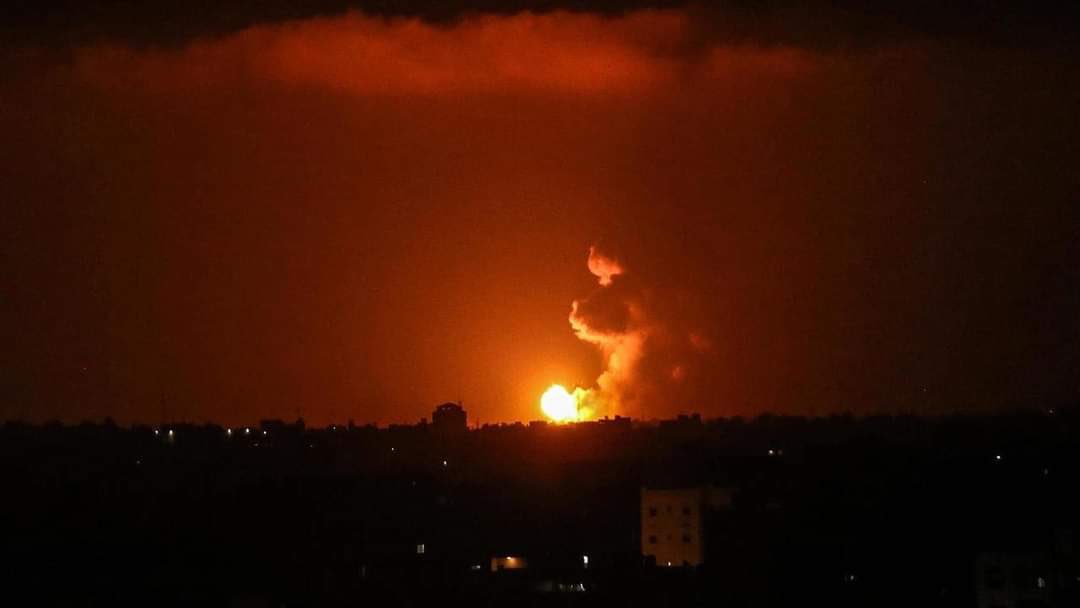
There is talk again of an invasion of Gaza after the Islamist nihilists who run it fired another volley of rockets at Israel. We should pay close attention, because the situation in Gaza is indeed insane, and the Israeli government, whose domestic situation is tenuous, is desperate to change the narrative. It’s not a recipe for calm.
Palestinian media is abuzz today after a “senior Israeli official” (often code for the prime minister) told an Israeli TV station closely affiliated with the right-wing government that in light of the latest rockets (which caused no fatalities, as they usually don’t), an invasion is “only a matter of time.”
It is easy to understand Israeli dissatisfaction with the situation in Gaza, and it would be even easier to understand Palestinian dissatisfaction with it, if the people of Gaza were free to speak. The situation can be summed up as follows:
Israel pulled all soldiers and settlers out of Gaza in 2005, belying lazy claims that it is still “occupied.” The Hamas militant group kicked out the relatively moderate Palestinian Authority of Mahmoud Abbas a year later.
- Gaza has thus been ruled since then by Islamic fundamentalists who have banned alcohol and imposed strict observance of fanatical dress codes on women and so forth — as they do. They are also sworn to Israel’s destruction and see no problem with firing rockets at it in reaction to various things (like the recent days’ death of a Palestinian hunger striker in Israeli prison.
- It doesn’t take a cynic to notice that Hamas is cavalier about Israel’s sometimes deadly counterstrikes, and to even conclude it actually seeks this outcome because a terrorist organization will always thrive on chaos, violence and hatred.
- Consequently, Israel blockades Gaza from the air and sea, and with the help of Egypt (which borders Gaza to the south) by land. Import of goods and movement of people are tightly and sometimes cruelly controlled. It has impoverished an already poor place, fueling black markets, crime and corruption, mainly by the authorities.
Since 2006 there have been about a half-dozen mini-wars, mostly short and contained. But two of them, in the winter of 2009-10 and the summer of 2014, cost thousands of Palestinian lives. They generally end the same: a lull in the rocket fire, promises to ease access and some aid for “reconstruction.”
It is obviously a very bad situation, and it is easy to see why simpletons and populists would argue that something must be done. An invasion of Gaza is a thing. Therefore, must it be done?
It is appealing to many to contemplate a massive use of force to move in, disarm Hamas (and its mini-me for plausible deniability operations, Palestinian Islamic Jihad), and hand the strip back to the Palestinian Authority. By all accounts this will cost not only thousands of innocent Palestinian lives – for the militants can be expected to hide among the hostage population – but hundreds of Israeli soldiers.
Is it the least bad option, which sadly is all Israel and the Palestinians can reasonably hope for? Let the reader decide.
I can think of some other possibilities.
The obvious one would be a so-called hudna with Hamas, meaning a face-saving long-term ceasefire in which the group is allowed to rule Gaza unmolested but ceases attacking until a new generation comes with new ideas and perhaps less fanaticism. Hamas would not need to formally recognize the despised Zionist entity, the rockets will probably stop, and the Gazan people would be condemned to Islamist rule (but also permitted to flee). There have been periodic reports that Hamas is ready for this, and from the perspective of both sides it would be a Faustian bargain extraordinaire.
But better still would be a genuinely generous public offer by Israel, over the heads of Hamas, to start anew. Imagine the Israeli prime minister holding a global news conference at the border and saying something like this:
“I am here to admit that our policy of negativity has not worked, and to offer positivity instead. I want to outline a vision for a decent life for the people of Gaza. In my vision Gaza has a seaport and an airport, has reasonably open access to Israel’s labor market and certainly to the West Bank, and Gazans no longer have reason to fear bombardment from Israel.
“Furthermore,” our highly imaginary prime minister adds, “Israel will pay considerable compensation for destruction and suffering we have caused to individuals, and fund much of the reconstruction in Gaza. We will require no reciprocity and not interfere with capital inflows from the world aimed at development. We will be taking suggestions for any further steps we might take to restore good karma to our troubled neighborhood.
“We want to start over, but we cannot deal with rockets and infiltrations. Our condition is that Hamas lay down its arms and restore the Gaza Strip to the control of the Palestinian Authority. After 17 years, it’s time.
“People of Gaza: your suffering can not only end but be replaced by prosperity and calm. Demand this of the militia that has hijacked your territory. Ask it to restore your legitimate government – the one that still pays your officials.
“To show good faith,” concludes the leader of a country that is at present richer than most of Europe, “I’m placing $5 billion into escrow toward your reconstruction on these conditions. It’ll sit there for as long as necessary.”
Hamas would not go easy. But infighting might erupt between its relative moderates and hard-liners. Meanwhile, an international coalition would arise to back the offer and amplify it, probably including most of the Arab world. Pressure on Hamas would grow, including inside Gaza; the people there cannot overthrow Hamas under current circumstances, but history shows that eventually you reach a limit.
The pressure on Hamas would increase if this were coupled with a genuine willingness to resume peace negotiations with the PA on a two-state solution – and on moves to enable fair elections to be held by the PA, including in east Jerusalem (where Israel has not genuinely offered residents citizenship).
Of course, that would require a new Israeli government, which brings us to a sober assessment of the current one – resting on the coalition between Prime Minister Benjamin Netanyahu’s Likud and ultranationalist and ultra-Orthodox groupings. They are not a bunch of liberals, and they are not far-thinking strategists.
In January, days after assuming power, they blundered badly in ripping off their masks and launching a bid to turn Israel into an authoritarian state in which the government appoints judges and when the puppets fail to please can even overrule them. Mass protests and economic crisis followed, and all polls now show the coalition would now be crushed in a repeat election.
One need not be too cynical to suspect they are desperate to change the narrative. Something must be done. War with Gaza is a thing.
