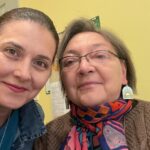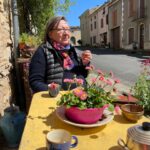








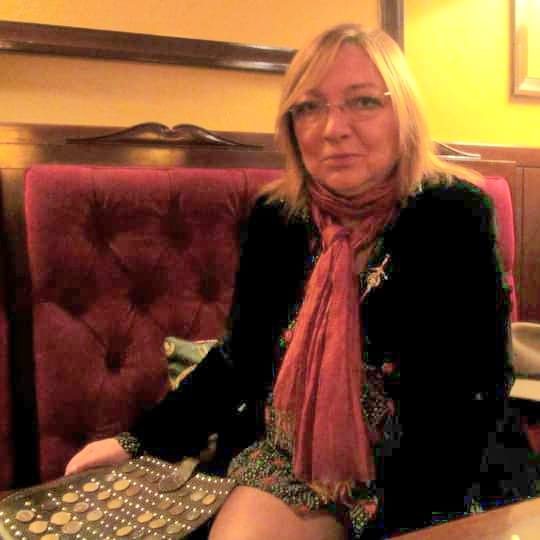
This is a personal tribute to Roxana Dascalu who was a major force in Reuters’ first bureau in Bucharest during the Romanian Revolution and civic activist and “fighter to the end”. Roxana died on February 25 aged 69 after a long illness in the French mountain town of Chalabre which had been her home for many years. Roxana’s funeral was held in France on Tuesday afternoon,
____________________
Within hours, two of her Romanian best friends were on the phone to me weeping, tearfully and lovingly, announcing her passing at 5.30am that day. A few more hours later, obits were spreading across the Romanian media, a mark of how famous Roxana became through her work with Reuters and later as a political activist.
I always knew her as an enthusiastic, great talent, a brilliant linguist, a fast translator, extremely well-read, a smart information gatherer, door opener, a spirited discussant, at times hard to keep up with, and a drinking buddy. I called her a ball of fire.
I remember that we once crawled together through the sewers of Bucharest to interview homeless orphans for a story. And I will never forget the support she gave me in difficult moments in my family life during my four and a half years covering Romania. She also took me to farmers’ homes among her extended kin.
We also joked about the fact we were both born in the Chinese Year of the Monkey (1956). We called ourselves ”two monkeys”. And quite honestly we did monkey around a lot in our newsgathering. Our office was a lot of fun. And Roxana shared my tendency to drink one too many, a habit that she carried to her final exit.
When I set up Reuters’ first permanent office in early 1990, Roxana and her then husband Adrian Dascalu were the key people who had been hired as freelancers by the emergency team of Reuters firemen who came in and out after Ceausescu’s execution on Christmas Day 1989. They were later joined by Laurentiu Ciobanica, Karin Popescu and Luli Popescu and others. At peak, we served the news, econ, photo and RTV services, in addition to producing a local newsletter.
They were good information gatherers but as I built the long-term bureau I then trained Roxana and Adrian as Reuters reporters writing in English for a global audience in our house style. Roxana was always the brightest and fastest to learn our way of writing. She had great sources and was always fast to dig out the news, always beating the competition.
Roxana (nee Dumitrescu) had studied to master’s level at Bucharest University in English and French. She had done some of her high school in Switzerland while her father was on assignment there. From that perspective, her capabilities should be no surprise.
She was under my wing for more than four years until I left Romania to take up a fellowship at Harvard. I knew that I was leaving behind a star. We have remained in touch all these years, and she consulted me when she was writing her book Chronicles of the East several years ago which replayed much of her Reuters experience. “Reuters changed my life”, she said.
We were more than colleagues. We were friends. I have had many conversations with Roxana in recent months while she was ill. She was still always feisty and trying to plan things for the future. She was always a live wire, the same old ball of fire. But her new ambitions were failed by her body.
I arranged a Valentine’s Day online event for her with many Reuters colleagues around the world, but before Valentine’s Day arrived, she collapsed, and ten days later she was taken from us. I wanted to see her one more time and hold her hand. Sadly, that was not to be. Wherever she has gone, I hope she is now at rest. I will miss her. We all will miss her. Rest in peace, Roxana. But I wonder if, like the character Monkey in the Chinese fable Journey to the West, she is now “making trouble in heaven”.
She is the first colleague of my exact age to have passed away. This is a wake-up call that has left me in shock.
Roxana spent her last 15 years visiting and then living in southern France alongside the Pyrenees with her new husband Radu Tanasescu, a Romanian ceramic artist, occupying an old mill at Rivel near Chalabre where he had a clay works, although Roxana often wintered in Bucharest. She lost Radu to cancer almost three years ago.
After ten years with Reuters from 1990 she became one of the casualties in a substantial downsizing of the bureau but migrated easily into the PR industry, working for Cook Communications, and later worked as an independent consultant and civic affairs activist with a mission to protect democracy and Romania’s EU orientation against extremist political forces. She was heavily involved in the Romanian Initiative. She was still advising Romanian civic groups, and suggesting stories to Romanian media, until the end of her life.
In early January she was at the centre of an online gathering of 50 Romanian friends and associates, which she called a “celebration of love”. They put together a video slide show of her life for this occasion. She knew the end was near. And she wanted “to be remembered for the good times we all had together”, not as a sick old woman. She wanted the gathering to be one of “auld lang syne” and “a cup of love”, she told me.
The same was the aim for an online gathering of old Reuters colleagues that she asked me to organise recently, which I targeted for 14 February and called a “Valentine Day gathering”, to avoid mentioning her plight. I and former Reuters colleague Paul Holmes had lined up about 15 people and Paul was going to host the moment on Zoom.
She had messaged me on 12 January and asked me to call her. She told me she was lying in palliative care and believed she was on her last legs. She was at stage four, and her memory was rolling like a film reel through scenes of her life and prompting her to think of the many people she had known throughout her career, including many Reuters colleagues, and wanting to see them.
She was preparing to go off in style. She had a plentiful supply of wine to see her through.
“Roxana was a formidable, kind and brave woman. One of a kind. Hers was a life well spent,” said Alison Mutler, former AP bureau chief who has spent three and a half decades in Bucharest. “She knew how to live and she also knew how to die, and that is something that will stay with me.”
On 13 February Roxana’s health collapsed, and she cancelled the event. On Valentine’s Day, her consciousness was slipping away, her stepdaughter Andrea Tanasescu told Roxana’s friends. The last time I had a real chat with her was when she called me on 6 February from her hospital bed while I was at a war grave in Belgium.
During the conversation she suddenly had a flashback about former Reuters colleague Michela Wrong coming to Bucharest during the revolution. “Michela turned up in an elegant black leather jacket. She parachuted in from writing about fashion in Paris at the end of December 1989. I was struck by this. She was the only woman among the Reuters firemen,” Roxana said.
Roxana then told me that she had recently reconciled with her ex-husband Adrian Dascalu, who we all knew as another mainstay of our Bucharest bureau in those epic days of the revolution. As a result I have reconnected with Adrian.
“During our 14 years together, Roxana was a constant source of inspiration and support. As a journalist, she was dedicated, passionate, and willing to go the extra mile to get the story. She was always ready to help her colleagues draft a good copy or to suggest story ideas. Her work was praised, and she won the hearts of many with her thoughtful and impactful reporting” Adrian said, speaking from Germany.
“In recent years, Roxana channelled her energy into civic movements in Romania, working tirelessly to bring about positive change in her community. Her commitment to social justice and her unwavering optimism were an inspiration to all who knew her,” he said.
“Despite her illness, Roxana remained a beacon of hope and resilience, rallying those around her with her infectious enthusiasm and vision for a better Romania. Her legacy will live on through countless lives she touched and the stories she told. Roxana will be deeply missed by her family, friends, and colleagues, but her memory will remain a treasured part of our lives,” he said.
“Despite the many years since our separation, I find it impossible to accept that she is not with us anymore… it’s devastating.”
Roxana’s popularity and acclaim were impressive both at home and abroad.
The prominent Romanian poet, scholar and activist Radu Vancu issued a statement in which he emphasized the discreet but essential role that Roxana Dascălu had in consolidating pro- European communities. “When we ask ourselves how Romania has so far resisted the extremist, anti-European assault, it is good to remember people like Roxana: she was an energy that sent out dozens of phone calls and emails every day to gather the pro-European and democratic energies, grain by grain,” said Vancu.
“That was her great gift: the strength to gather people, to keep them together, to convince them that no battle for a European Romania is in vain. And it was not in vain,” Vancu said.
“Roxana was often on the same barricades with Radu Vancu in the fight for democracy, anti-corruption, the freedom and justice,” said Roxana’s close friend and soulmate Diana Voicu, who worked for Reuters in 1995-97.
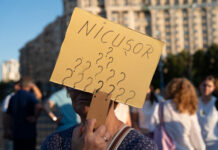
In March 2025, after the country was swept by a spell of pro-Russian and extremist tendencies, spearheaded by far right presidential contender Calin Georgescu, Roxana rallied people to push back to reclaim the pro-European Romania, Diana said.
At her request, Vancu wrote “Manifest for European Romania, she said. ”This document was signed by tens of thousands, rallied 60 NGOs, sparked street protests, and rekindled hope. It was essential in the outcome of the May 2025 presidential polls when Nicusor Dan won,” Diana said, giving Roxana’s work much of the credit for the result.
A statement by Initiativia Romania described her 10-year presence in its work as “often the spark, the very idea itself” and said, “Roxana inspired us with her fighting spirit and was our mentor, friend, colleague and wellspring.”
“Roxana Dascălu was a brilliant journalist, with enormous talent, an immense culture, a benchmark of honesty, and a wonderful soul,” said her close friend Lidia Moise, Editor In Chief at Econtextmedia.
“She was bright and extremely well-informed and, with her husband Adrian, contributed hugely to the success of our fledgling bureau in revolutionary Bucharest,” said Reuters veteran Paul Smurthwaite, who was among the firemen who went in to help cover the revolution.
“I just hope that her journalistic ideals were not too badly corrupted by the Reuters hacks shipped in to run the shop during that period,” he said.
“I am so glad to have had contact with her in recent months. She saw so much and reported on epic change,” said my successor as Bucharest bureau chief, Peter Bale, speaking from New Zealand.
Veteran Reuters correspondent Richard Balmforth, one of the first in at the outbreak of revolution, says he first met Roxana one or two days after Ceausescu’s Christmas Day upon arriving via western Romania. “It was in that heady swirl of hacks, spies, secret police and diplomats that congregated in the reception area of the International Hotel in revolutionary Bucharest. The late Johnny Krcmar from the Vienna bureau, the first Reuters correspondent to get to revolutionary Bucharest, had already recruited Adrian, and he brought in Roxana,” he said. We set up our first office in that hotel.
She was a great “find” for Johnny and myself and others of the Reuters team who deployed over the days and weeks following. She was sparky, feisty, interested in telling you all about what was going on around, and lifting the veil on the bizarre society created by the years of the Ceausescu cult. And she loved to talk. Feet up, she listened to local revolutionary radio to feed us snippets of news, sometimes tittering with laughter at often fatuous comments being broadcast. She dug out a story for me, I recall, about a well-known concert pianist who was coming out of retirement to “play for freedom” now that the Ceausescus had gone. She checked out reports from the rumour mill for us. She was lively, amusing, inquisitive and observant – just what we needed,” Richard said.
“I left for home early in the New Year and did not see Roxana again – though I was able to recall those dramatic days in an exchange of messages with her last month. She said she remembered “all the Reuters anglophones I learned so much from”. “It comes as no surprise to learn from Peter and other colleagues that she proved to be a mainstay of Reuters editorial for many years.”
Former Reuters correspondent Paul Holmes, speaking from New York, described Roxana as a whirlwind. “Roxana was an absolute whirlwind — a font of knowledge of Romania’s Ceauscescu-induced traumas and a guide to the coolest hangouts in Bucharest,” Paul said. “She was smart, sophisticated and sure of herself. It was crystal clear from those early post-revolutionary days that she would be of much more value to the Reuters file than as a fixer, as she went on to prove in a distinguished decade with the Baron.”
Paul worked with Roxana in Romania soon after the revolution and then on subsequent stints in Bucharest, including for the first post-Ceausescu election. “It’s such a shame that she did not get her wish for a Valentine’s Day group chat.”