



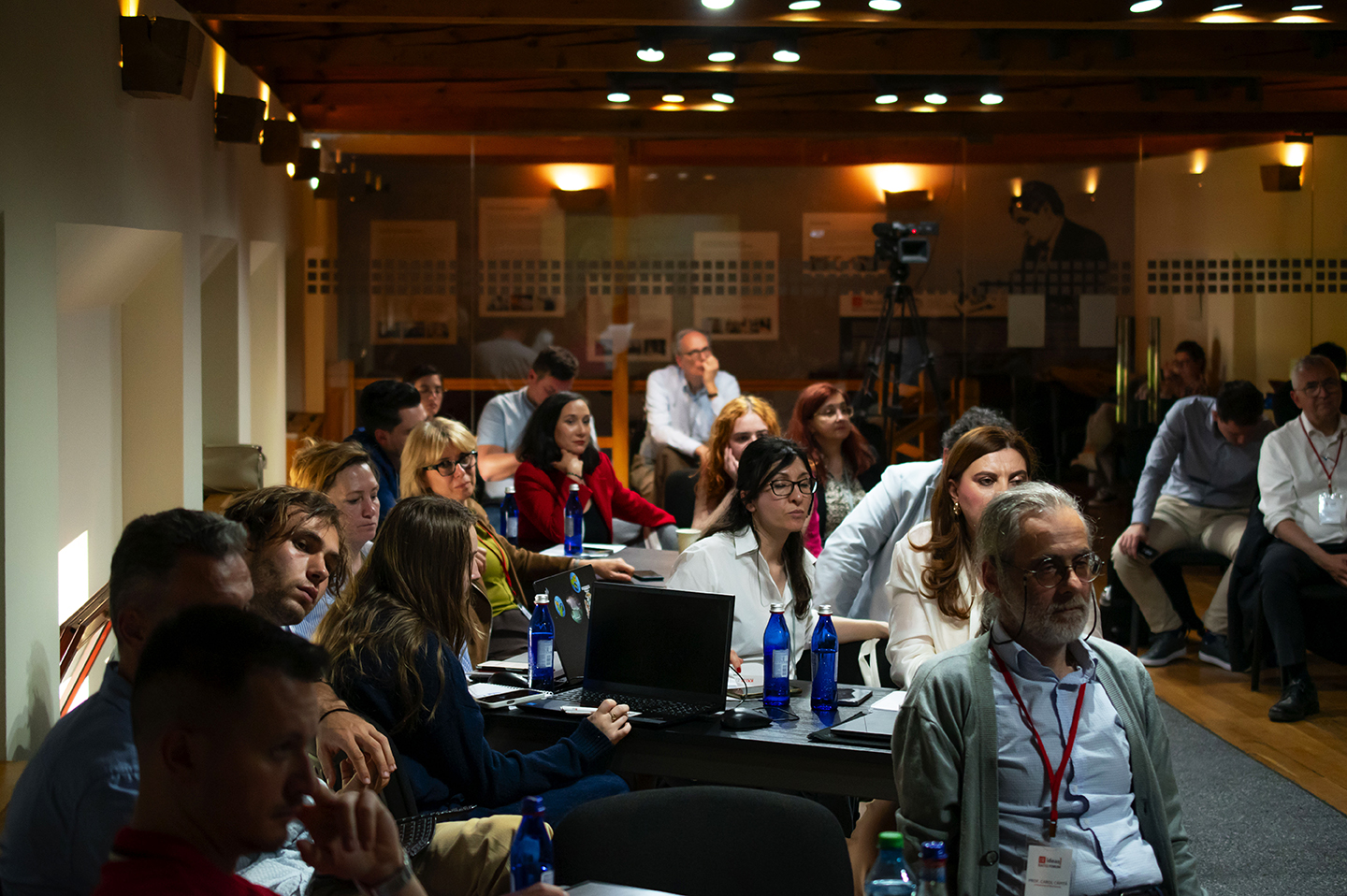
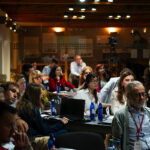
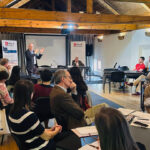
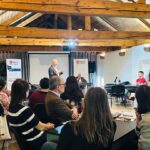
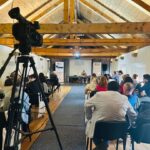
Leading historians, educators, and policy experts from across Europe gathered in at the Ratiu Center for a workshop that examined how history underpins borders, migration, and today’s political challenges.
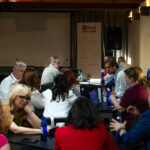
The 15–17 May “Teaching Difficult Histories Workshop: Shapeshifting Nation States – Moving Borders, Moving Peoples.” took place at Turda at the Ratiu Center.
The in-person event, organized as a platform for critical dialogue, addressed the growing relevance of historical narratives in shaping contemporary debates around borders, migration, and identity.
It examined how historical interpretation can contribute to a clearer understanding of present-day geopolitical tensions, including the impact of war, nationalism, and global migration trends. Participants explored how the past is often invoked in political discourse and how history education can play a key role in fostering informed and balanced perspectives.
The workshop was moderated by John Lotherington (21st Century Trust) and featured a distinguished lineup of speakers, including Dr. Stefan Hofmann (Konrad-Adenauer-Stiftung Romania), Prof. Carol Căpiță (University of Bucharest), Dr. Raul Cârstocea (University of Maynooth/Observatory on History Teaching in Europe), Prof. Slobodan Markovich (University of Belgrade), Lidija Šuica (Education for the 21st Century), Prof. Marko Šuica (University of Belgrade), and Dr. Eric Weaver (University of Debrecen).
The program opened with a keynote highlight, The Christopher Coker Lecture, delivered by Dr. Eric Weaver, entitled “The Politics of What’s Missing.” This session set the tone for the discussions by examining gaps in historical narratives and their political implications.
Other sessions tackled a range of topics, including:
- The interpretive power and limitations of historical maps
- The challenges of teaching “difficult histories” in politically sensitive contexts
- Romania’s position as a historical borderland
- The role of education in shaping identities and addressing contested pasts
- Approaches to teaching migration, borders, and cultural diversity in modern classrooms
The workshop also featured a screening of “The King’s War,” a documentary exploring King Michael of Romania’s pivotal decision to switch sides during World War II, providing participants with a case study on leadership and historical reinterpretation.
A central focus of the event was the intersection between curriculum and classroom practice. Dedicated sessions explored innovative methods for teaching sensitive historical topics, including the complex history of Transylvania and broader European migration issues. These discussions emphasized the importance of equipping educators with tools to navigate controversial subjects constructively.
Throughout the three-day program, participants engaged in lectures, discussions, and collaborative exchanges aimed at improving how history is taught and understood in today’s rapidly changing world.
The workshop concluded with a synthesis of key insights, reinforcing the importance of critical thinking, historical literacy, and cross-border cooperation in addressing current global challenges.
What is the Workshop
The annual Teaching Difficult Histories Workshop brings together experts and practitioners committed to enhancing history education and its relevance to contemporary society. By addressing complex and often contested historical narratives, the initiative aims to support more inclusive, nuanced, and informed public discourse.
The RATIU FORUM
The Ratiu Forum is a joint initiative by the Ratiu Family Charitable Foundation,
the Ratiu Democracy Centre and the London School of Economics IDEAS Think Tank.
Romania and the Balkan region are priority areas of interest for The Ratiu Forum.
The Ratiu Forum operates at three main levels (Journalism, History, and Dialogues), sharing expertise through the support of LSE IDEAS, holding regular workshops and lectures, both in-house and public, on subjects of topical interest and expanding external outreach through partnerships with similar institutions. The Ratiu Forum utilizes a wide range of educational tools, from workshops and talks, to the publication of articles and books produced by LSE IDEAS and partners.
For more information visit:
For contact and media enquiries:
[email protected] / Lavinia Iclozan, Communications Director
Professor Christopher Coker who dedicated his life and brilliant mind to writing about war has died
