













The monuments are not just reminders but also a warning for future generations to guard against ‘hatred and intolerance’
The youngest was just seven weeks old, the oldest, 36. They were gunned down as they huddled under a bridge as World War II was coming to a bloody and chaotic end in this part of northwest Romania.
Hungarian military forces allied to Nazi Germany seized the town of Turda in September 1944 and committed a war crime known as the Hărcana Massacre.
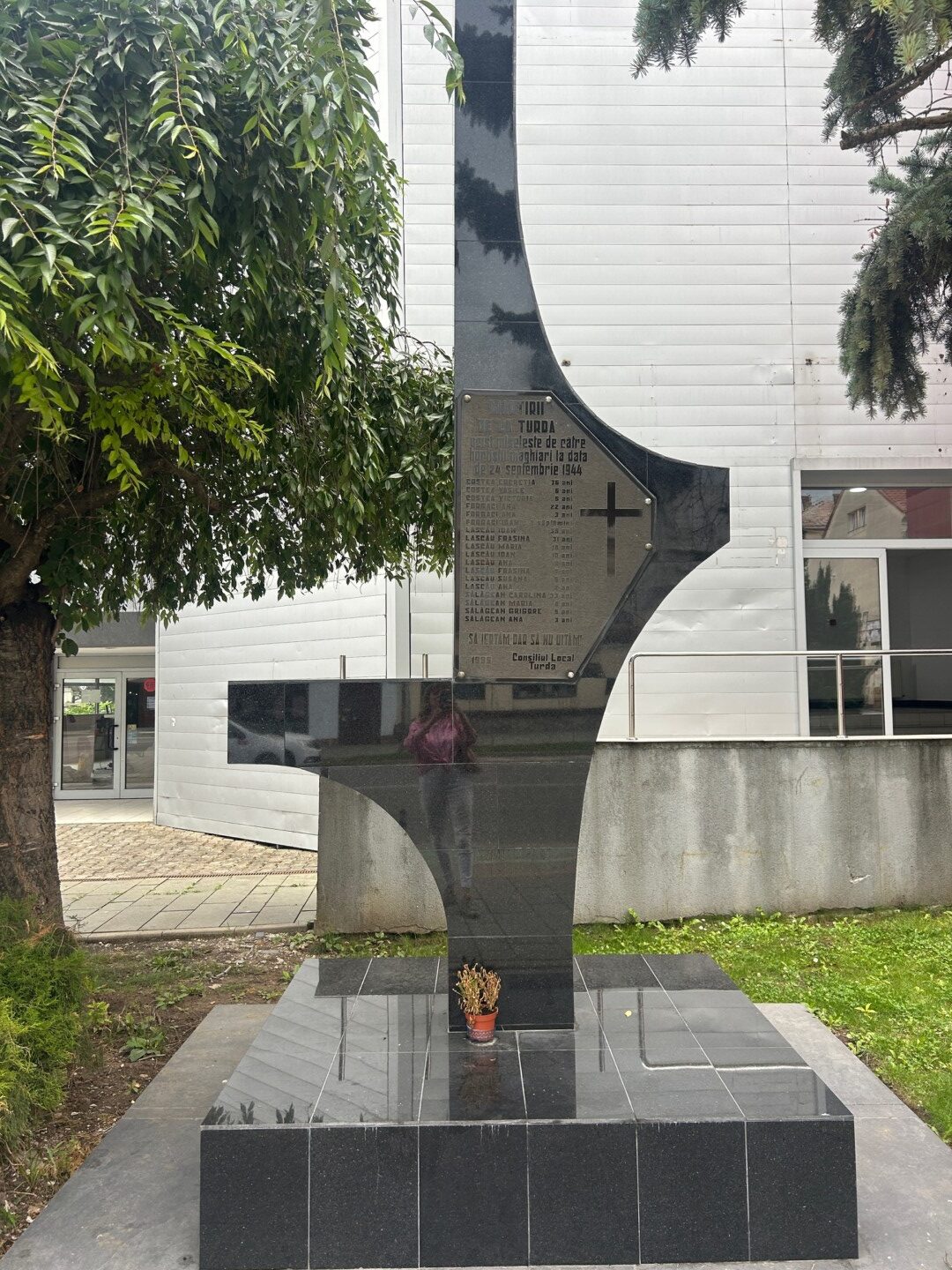
Soldiers opened fire on a group of 18 ethnic Romanian civilians—primarily women and children—who were hiding under a railway bridge in the Hărcana hamlet north of Turda, to escape artillery fire. Eleven of the victims were under 10.
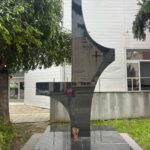
Yet, it was only 50 years later, that local authorities finally erected, in 1995, a black marble monument to honor the martyrs “cruelly killed by Horthyist (Nazi-allied) Hungarians on 24 September 1944.”
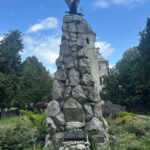
Another monument, only put up in 2008 outside the Orthodox Cathedral, pays tribute to 15 airmen killed in the 1944 Battle of Turda’ between Romanians and Soviets who fought back Nazi Germany and Hungary. Hundreds of Romanians died and there were thousands of Hungarian casualties.
These monuments are important as the communists who ruled from 1945-1989, whitewashed history or were selective and biased. After communism collapsed, Romanians were, at least in theory, free to discover the past, triumphs and tragedies which had been brushed under the carpet for more than 40 years. But efforts often failed and a volatile political landscape now leaves room for revisionism.
“Remembering history is important because it helps a society learn from past mistakes,” Radu Albu-Comanescu, lecturer in European Integration at the “Babeş-Bolyai” University of Cluj-Napoca told Universul.net. “The monuments dedicated to honoring the fallen are not only a reminder, but show the consequences of cultivated hatred, intellectual failure, intolerance, cruelty and aggression.”
“Understanding the roots of such dark moments should help societies recognize and resist similar dangers in the future. Monuments also honor sacrifice. Freedom, peace, stability, they all came at a tremendous human cost,“ he went on.
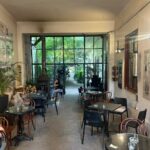
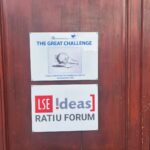
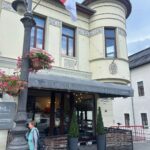
Over the road, is the Casa Ratiu guesthouse, home to the Ratiu Forum, a project with the London School of Economics, IDEAS thinktank, whose role is to build democracy in Romania and the region.
It has a journalism program and a “Teaching Difficult History Programme,’ both in their seventh year.
“The Forum intends to foster critical thinking of history students when dealing with difficult past events such as the Holocaust, the interwar popularity of radical right Iron Guard group, the torture of political prisoners during Romania’s Communist period and other terrible events that are currently ignored by the syllabus,” a booklet says.
“This means facing up to the dark and unpleasant parts of a national story, not merely celebrating the happier, aggrandizing or easier parts of history,” it continues.
Last century, Turda had a thriving population Hungarians and Romanians as well as Jews and Germans. The town of 43,000 dates back more than 2,000 years and was known as Potaissa by the Romans who came here for the salt.
It is also the birthplace of Ion Ratiu, who served as a diplomat in London, then became an enemy of the communist regime, and later ran for president in Romania after communism ended. His legacy continues at the Ratiu Forum, building democracy in turbulent times.
He would likely approve the efforts to teach Romania’s difficult past as a warning for future generations.
And the future is already here. Romania’s AUR party heads polls in Romania with a populist and anti-establishment message and became Parliament’s second-largest party after 2024 elections. Six of the 21 counselors in Turda’s town council are AUR members.
The party has maintained an ambiguous stance on Ion Antonescu and the fascist Iron Guard, characterized by historical revisionism, public minimization of their crimes, and occasional rhetorical praise or defense of interwar figures by key party figures
It has actively opposed official curricula and legislative initiatives focused on the mandatory in-depth study of the Holocaust in Romanian schools, framing such measures as attacks on national dignity, according to Balkan Insight.
Albu-Comanescu, who is also an adviser to the Ratiu Forum, says Romanians need to see their history clearly, not through a political lens.
“A war is not dates and statistics; it is emotional devastation, carnage, torn apart bodies, disfigured faces, cemeteries, lack of food, sleep, is overwhelming anxiety… and non-stop violence. Being aware of the proportions of such crimes, the willingness to prevent them should strengthen identity and reinforce collective memory,” he said.
Emilian Dobre, 29, a Turda native who works at Casa Ratiu, says it is good that the “town is respecting its victims noting that: “Even in school, we never learned about this (Hărcana Massacre). But we are proud we are part of a city that people died to defend.”
However, he says proper democracy will take time. “There is a lot of inter-generational conflict in Romania and people didn’t really understand democracy. They thought it meant I can do what I want but I have no responsibility for my deeds,” he explains.
“I think we need three generations to make bigger changes.”

New book by Romanian visionary Ion Rațiu to be launched at Bookfest Bucharest 2026
