








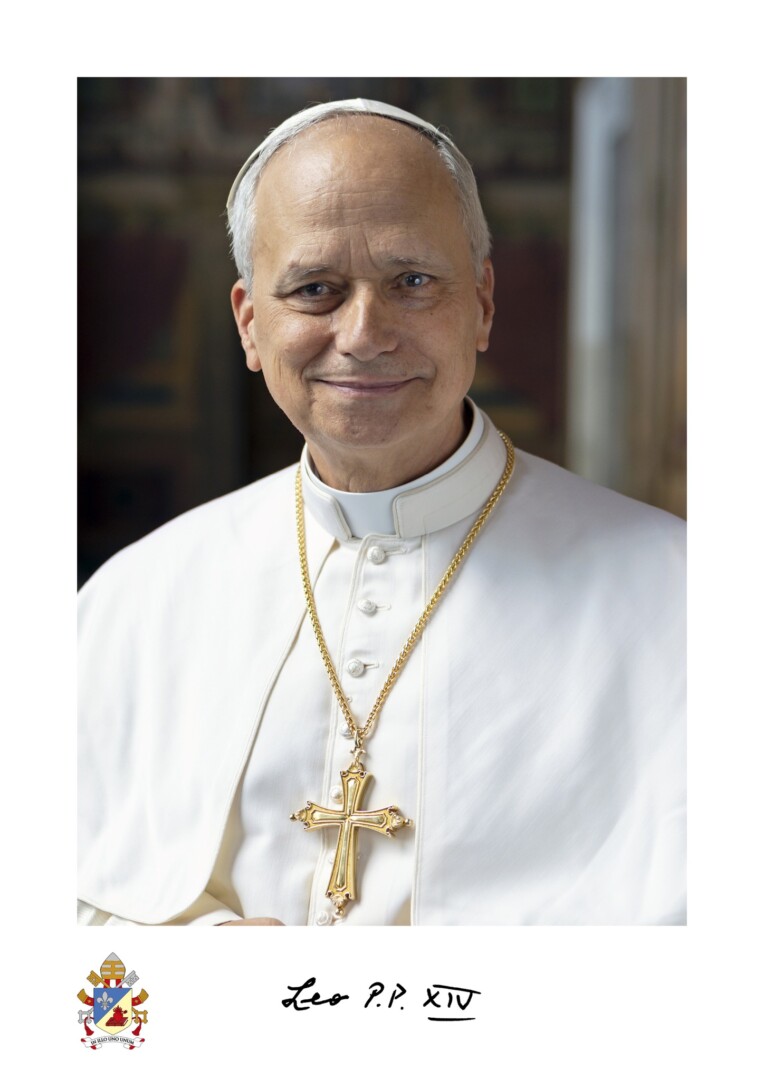
Pope Leo XIV says control of AI must not remain in the hands “of a few” and warns that technology is fueling world conflicts, setting out his proposals in what is the first major theological document_ or encyclical_ of his pontificate.
His proposals include protecting the distinctive “grandeur of humanity” amid rapidly changing technology and for the use of AI in warfare to be subject to “the most rigorous ethical constraints.”
Pope Leo has identified AI as a top priority, and he is the first pontiff to personally present an encyclical letter to the world at the Vatican.
In his encyclical, he focuses on AI in a text that reaches beyond technological questions and touches on crises facing humanity.
Pope Leo said that the “just war” theory – a four-pronged Christian doctrine stating what conditions justify war – is “now outdated,” while military force can only be used for “self-defense in the strictest sense.”
He adds that the “litmus test” for social justice is the treatment of migrants and refugees and offered an apology for the church’s legitimizing in slavery and delay in denouncing it.
The pope has made peace-making a central feature of his pontificate and he used the encyclical to warn that the use of “force, violence and weapons” has “disastrous consequences for civilian populations.”
“The construction of a world in a state of perpetual conflict is an evil and must be named for what it is,” the pope writes.
“Humanity possesses far more effective and capable tools for promoting human life and resolving conflicts, such as dialogue, diplomacy and forgiveness.”
His opposition to Just War follows remarks by US President JD Vance that the pope should “be careful when he talks about matters of theology” after the pontiff stronly criticized joint US-Israeli strikes on Iran and rebuked leaders for using religious language to rationalize war.
The parallels between AI and the ‘Tower of Babel’
In the text, the pope also calls for principles to be applied to the development of AI, including a fairer distribution of resources, human dignity, social justice and care for the environment.
Drawing on a story in the Bible, he warns that humanity with AI risks building a “Tower of Babel,” n attempt for people to “make a name” for themselves with a single power and one language.
The pope says the story is a warning against a plan that “dominates and ultimately dehumanizes,” insisting instead that diverse opinions and groups should contribute to AI’s development.
Leo insists that the technology must protect peoples’ jobs and needs to be subject to “robust legal frameworks, independent oversight, informed users and a political system that does not abdicate its responsibility are required.”
An encyclical is traditionally a letter sent by the pope to the bishops and the wider Roman Catholic Church, but recently it has broadened with Pope Francis using the first encyclical of his papacy to address the whole world on protecting the environment.
Leo XIV’s document on AI, “Magnifica Humanitas” (“Magnificent Humanity”), is viewed as a key text for his papacy, addressing an era-defining topic which he addresses to Catholics and “every person of goodwill.”
Past popes have normally handed that role of presenting an encyclical to cardinals or other senior figures. Instead, the pope oversaw the release of the 235-page booklet alongside Chris Olah, a co-founder of Anthropic, an AI company that has been in legal dispute with the Trump administration over the use of its technology in military and defense operations.
