













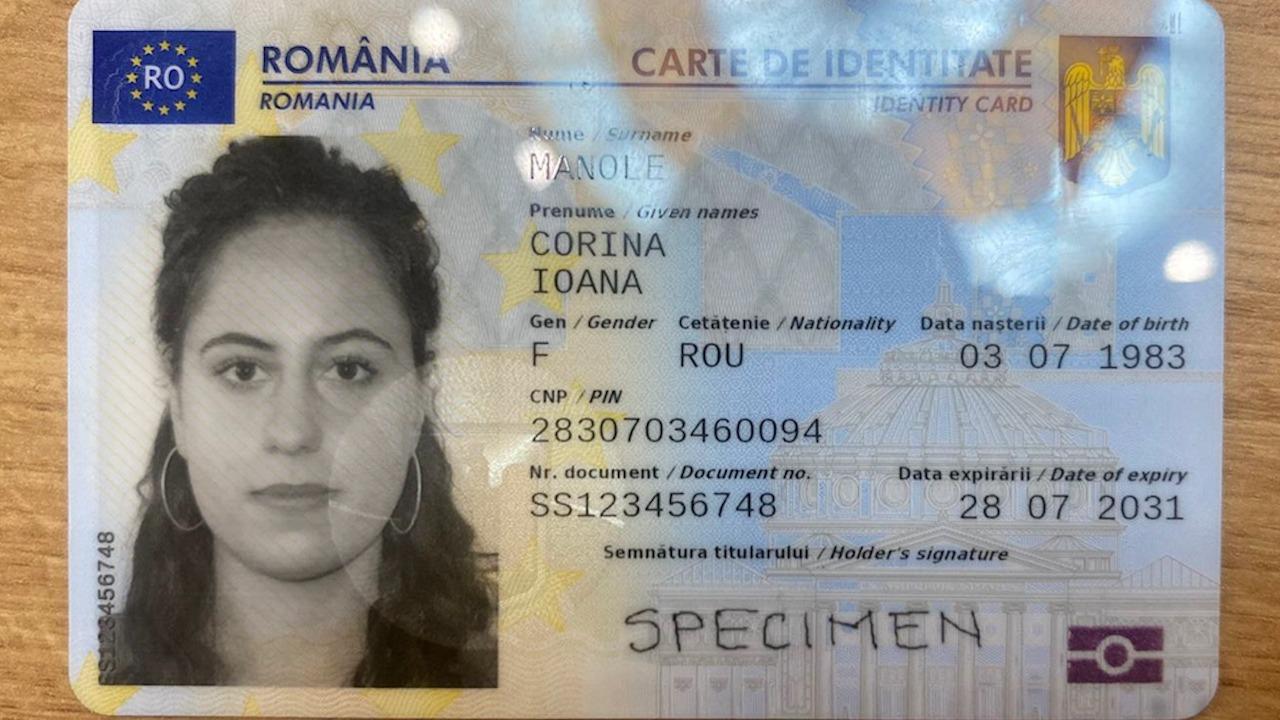
Romania has moved to cancel identity papers for more than 160,000 people, including 100,000 Moldovans.
Since Romania joined the European Union in 2007, there has been a surge of Moldovans taking advantage of Romanian laws giving them an easy path to citizenship.
Some 900,000 Moldovans have legally, acquired Romanian passports if they can prove that a grandparent was originally Romanian.
Having a Romanian ID card brings additional benefits such as access to Romanian banking services, a driving license, or receiving child care allowances.
To be eligible for an ID card, you need an address in Romania, and these were often, legally, provided by intermediaries.
However, some of the addresses used were uninhabited ruins. Others were actual homes but could never have accommodated all the people who claimed to live there.
Dozens of addresses had more than 5,000 people registered, according to Aurel-Catalin Giulescu, head of Romania’s General Directorate of Population Registration (GDPR).
One building, dubbed a “fictitious homes factory,” claimed to have more than 10,000 unMoldovans living there.
There was a case where 22,000 people were registered at the same address. Romanian law did not set any limits.
Authorities say nobody has had their Romanian citizenship or passport canceled as a result of losing their identity card. Driving licenses are also not affected.
Some 20 percent of people who had their cards canceled between 2023 and 2025 have subsequently been able to renew them, according to the GDPR.
In total, people from 86 countries had their ID papers canceled, based on the new law approved by the Romanian Parliament in 2023.
A Digi24.ro investigation showed that Moldovans had the most illegal documents, although they were issued by Romanian authorities.
From 2023 to the end of 2025, of the total number of cancelled identity cards, just over 1,600 people were Russian citizens, about 1% of the total number.
“During assessment carried out between 2020 and 2021… certain difficulties were identified generated by the fact that several people who declared that they had established their domicile were registered at certain addresses.”
