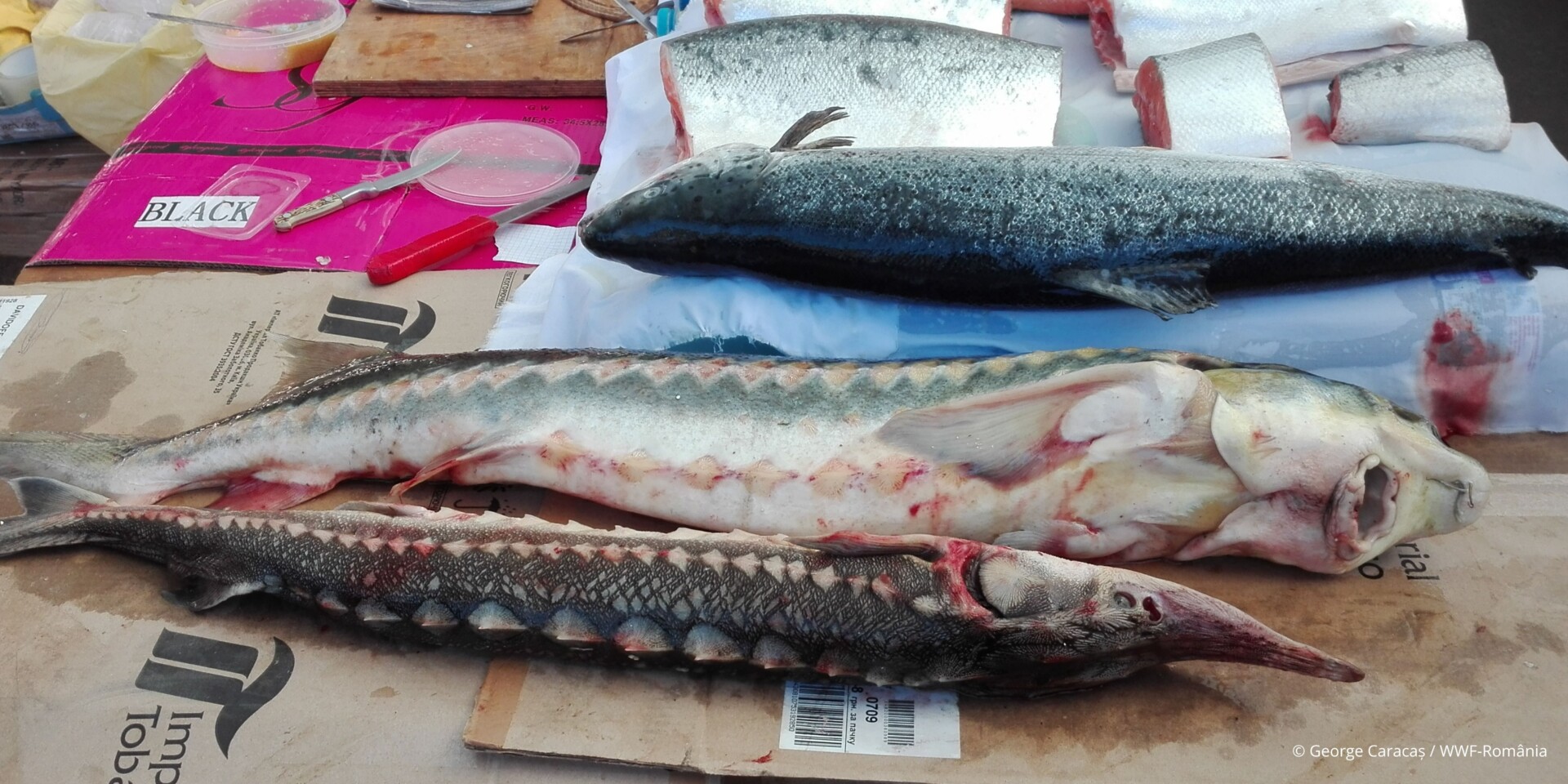
| Despite strict legal protections, Danube sturgeon—among the world’s most endangered species—remain targets of wildlife crime, according to a new report from the World Wildlife Fund.
At least 3,366 sturgeons were involved in documented wildlife crime cases in the Lower Danube between 2016 and 2025. The findings offer the most comprehensive estimate to date of sturgeon poaching and illegal trade in the region.
The report “In the Poachers’ Net: Ten Years of Documented Illegal Activities Against Sturgeons in the Lower Danube Basin (2016-2025)” analyzes official data from control authorities in Bulgaria, Romania and Ukraine. It is the only regularly updated cross-border assessment of sturgeon crime worldwide, and this year marks WWF’s tenth consecutive year of collecting and analyzing official seizure data from the three countries that are crucial to the survival of the Lower Danube’s remaining native sturgeon populations.
“For Romania, these data are a very serious alarm signal. The Lower Danube remains one of the last refuges for wild sturgeons in Europe, and each specimen lost to poaching reduces the chances of population recovery. Although the quantities seized may suggest that sturgeons are numerous and could encourage calls to resume fishing, populations remain too small to support sustainable exploitation by the many communities in the countries where they are found.” said Cristina Munteanu, national coordinator for sturgeon conservation at WWF-Romania. “We need firm law enforcement, constant monitoring and cooperation among authorities, experts and local communities. Protecting sturgeon means protecting the health of the Danube and Europe’s natural heritage.” she added.
Using an improved methodology, WWF has made the most comprehensive estimate yet of the number of sturgeons affected by documented cases of wildlife crime. The approach combined situations where authorities only reported the total weight of seized sturgeons with those where the exact number of specimens was recorded, turning the reported weights into estimates of the number of individuals. Even so, the estimate remains at a modest minimum, given that many illegal catches are inevitably not detected or reported.
The report documents 509 confirmed cases of wildlife crime involving sturgeons or illegal gear used to capture them over the course of ten years. Romania registered 235 cases, Bulgaria 175, and Ukraine 99.
WWF cautions, however, that the number of registered cases should not be interpreted as a measure of poaching pressure on sturgeons, as the detection of cases depends to a large extent on control capacity, reporting practices and access to affected areas. |