











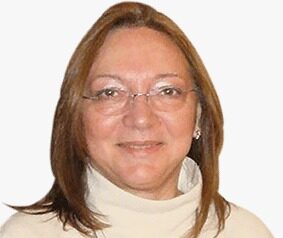
Romanian journalist Roxana Dascalu who covered the tumultuous decade after communism collapsed for Reuters news agency before becoming a passionate civic activist and whose life traced Romania’s difficult passage from dictatorship to democracy, has died. She was 69.
She passed away in Chalabre, France, where she lived in recent years on Wednesday morning after a long illness.
Former Reuters boss, Peter Humphrey, called her ‘a talented linguist’ and a ‘ball of fire.’
She was hired by Reuters to assist the emergency team of foreign correspondents covering the country’s upheaval in the aftermath of the revolution which saw the fall and execution of dictator Nicolae Ceaușescu in December 1989.
She became the first Romanian staffer of the agency and a driving force behind Reuters’ first permanent bureau in Bucharest.
“It changed my life forever,” she later said of that moment. For a young woman who had grown up under one of Europe’s most repressive communist regimes, Reuters represented what she called “the best school of journalism in the world.”
She worked alongside some of the most experienced correspondents of the era as Romania underwent the bloodiest of the revolutions that swept the former Soviet bloc.
What she initially expected to be a brief assignment became a decade-long career — “the best and the worst decade of my life,” as she reported from Romania and across the region, including Moldova, Ukraine, Hungary and war-torn former Yugoslavia, chronicling democratic transitions, economic upheaval and armed conflicts.
Colleagues remember her creativity, intellectual rigor, resilience under pressure, and a voice that grew steadily more confident as East and West met in the newsroom.
Friends recalled her feisty nature, devotion to democracy and ease and pleasure in connecting with different people.
“The journalist Roxana Dascălu has died. When we ask ourselves why Romania has managed to so far resist the extremist and anti-European assault, it is good to remember people like Roxana: she was an energy that just kept giving. She made dozens of phone calls and wrote dozens of emails a day to gather, bit by bit, other European-minded and democratic energies,” wrote Romanian writer Radu Vancu.
“I think it was her great gift: the strength to gather people, to keep them together, to convince them that no battle for European Romania is in vain. And it was not in vain. Thank you for everything, Roxana. May she have a safe journey to the light,” Vancu added.
Her experiences were later captured in her book Chronicles from the East (Cronici din Est), published in Romanian. Poignant, passionate and often humorous, the book tells the human story behind the dispatches and reflects on the cultural collision between a post-communist society and the disciplined world of a Western news agency.
In an interview about her book with Libertatea, she noted that she wrote it “for an unknown child, who I hope was born in that fiery December, and who would now be almost the same age as I was then, and for his unknown parents, whom I crossed paths with, fleetingly, on that night 30 years ago, in that December of fire and blood and thirst for freedom.”
Roxana left Reuters in December 2000 following a major downsizing of the Bucharest bureau, which she described — not without irony — as a “British-style divorce.” She went on to work in public relations in Romania for Cook Communications.
Over the past decade, she became a committed civic activist, working closely with democratic grassroots organizations, including Inițiativa România. “For more than ten years, she was a constant presence in our projects — often the spark behind new ideas — serving as a mentor, colleague, and source of inspiration. Those who worked alongside her remember her as a principled fighter and a person of rare moral clarity,” the organization said in a statement.
In recent years, Roxana also founded Santinela, a civic organization dedicated to defending press freedom and upholding professional journalistic standards. Through Santinela, she worked to expose manipulation, challenge disinformation, and promote rigorous, ethical reporting. The organization also developed a news analysis website, conceived as a space for careful scrutiny of media narratives and public discourse — an extension of her lifelong belief that democracy depends on a well-informed public and a responsible press.
In parallel, she returned to journalism as a contributor from France, writing and commenting for La Dépêche, Libertatea and B1 TV, bringing a lucid, transnational perspective shaped by lived experience in both Eastern and Western Europe. Her commitment to journalistic ethics remained undiminished; in France, she publicly challenged the spread of disinformation, including through an open letter to President Emmanuel Macron, warning of the dangers posed by fake news to democratic trust.
In later years, Roxana lived in southwest France, where she devoted herself to writing while living alongside her husband, Radu Tănăsescu, a Romanian-born ceramics artist. In her village by the Pyrenees, Roxana was at the heart of the community, connecting locals and expats and volunteering for a local association that promotes the region’s cultural heritage.
Roxana Dascalu leaves behind a legacy of principled journalism and engaged citizenship. She belonged to a generation that learned freedom abruptly and understood that democracy must be defended daily. To those who knew her — as readers, colleagues, fellow activists or friends — she remains an example of integrity, courage, and intellectual honesty, and a reminder that being “right” is ultimately about being just.
Her friends remember her empathy and unlimited enthusiasm when it came to fighting for a just cause – and her never-ending willingness to open her home in the old Armenian district of Bucharest, which became a social hub for Romanian journalists, artists and civic activists. In France, she did the same, with many considering her house to be the “informal mayor’s office” of Chalabre.
There was no immediate word about funeral arrangements. She is survived by a stepdaughter.
Peter Humphrey’s statement in full
“When I set up Reuters first permanent office in early 1990, Roxana was among the team of Romanians who had been hired as freelancers by short-stay Reuters correspondents who covered the early days of the revolution. They were good information gatherers but I then trained them as proper Reuters reporters writing in English for the global audience, including Roxana. She was always the brightest and fastest to learn. She was extremely talented and a great linguist. She was under my wing for over four years until I left Romania to take up a fellowship at Harvard. I knew that I was leaving behind a star. We have remained in touch all these years, and she consulted me when she was writing her book Chronicles of the East a couple of years ago. We were more than colleagues. We were friends. I have had many conversations with Roxana in recent months while she was ill. She was still always feisty and trying to plan things for the future. She was always a live wire, the same old ball of fire. I arranged a Valentine Day online event for her with many Reuters colleagues around the world, but before Valentine’s Day arrived, she collapsed, and ten days later God took her away. I wanted to see her one more time and hold her hand. Sadly, that was not to be. Wherever she has gone, I hope she is now at rest. I will miss her. We all will miss her. Rest in peace, Roxana.“
Alison Mutler contributed to this report.
Theodor Oltean, dentist and iconic restaurateur of post-Communist Bucharest, dies
