




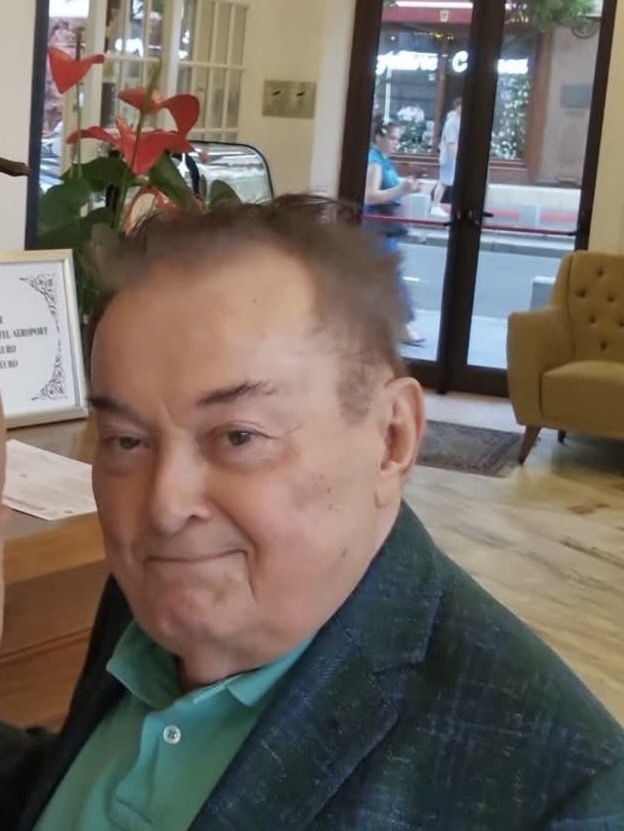
Theodor Oltean, a flamboyant Romanian dentist whose restaurant tucked behind the Bucharest National Theatre fed royalty, politicians, actors, entrepreneurs, and international journalists, has died. He was 82.
The Transylvanian native died Thursday in a hospital in Bavaria, his home for the past 25 years, following a short illness, his family told Universul.net.
In post-communist Bucharest he was known as ‘domnul doctor’, having returned to Romania to launch ‘La Premiera’ restaurant in 1992 which offered the city, just emerging from communism, top-quality cuisine, Venetian balls and live music.
He gained a reputation in the city and beyond for his hospitality, congeniality and Sicilian chef, Maurizio.
“‘Tzutzu’ as he was known was the first to bring Western cuisine and the atmosphere of a fancy restaurant to Bucharest, making ‘La Premiera’ the premier place to be and be seen around Bucharest,”Sandra Pralong, a former presidential adviser to Emil Constantinescu and Klaus Iohannis told Universul.net.
He raised and mentored a generation of young waiters who enjoyed working in the upmarket restaurant and appreciated his caring, avuncular style of management. Many stayed in touch with him and spoke fondly of him years after the restaurant closed.
“For those of us coming out of the fog of communism, still blind and unsure, you were a light that pierced the darkness of those times and you showed us something else: truth, freedom and dignity. You gave us courage and you gave us direction,” wrote Cornel Ghetu on Facebook on Friday.
In 1997, he was named head of protocol to the government of Victor Ciorbea. Every morning, he would take freshly squeezed orange juice_ a rarity at the time_ from his restaurant to the prime minister.
A good chef himself and sociable and generous to a fault, his outspoken views and disregard for conventional hypocrisy did not go down well with everyone. A passionate anti-communist and Transylvanian patriot, he hosted weekly press conferences of the National Peasant Party at his restaurant in the mid-90s.
When the Social Democratic Party returned to power in 2000, he was forced to close ‘La Premiera’ on the pretext of an unpaid electricity bill. The move caused anguish among friends and clients but was almost inevitable as the restaurant was part of the National Theatre and the government controlled the lease.
He returned to his adopted home in Bavaria and resumed his career as a dentist, a profession he continued right up until his final days, defying envious acquaintances who claimed he’d only come back to Romania as he he’d failed as a dentist.
Even as his health failed in his early 80s, he had more patients than he could treat in the small town where he lived. Perhaps reflecting his upbringing as the son of a Greek Catholic priest (forced to convert to orthodoxy by the communists who banned the church), his door was always open to anyone who needed him. His generosity to friends and family, and love of fine food, good hotels and beautiful clothes were legendary, depriving him of much of his wealth, he joked.
To his family and close friends, he was simply ‘Tutu,’ (pronounced Tzutzu) a patriarchal figure who would sometimes tell people uncomfortable truths, though not without kindness. At the same time, he was trusted for his ability to keep a secret and his lack of judgment.
His last visit to Romania was to my marriage blessing this month for which he’d bought a new dinner jacket. Tired but delighted to reconnect with old friends, he chatted with international journalists and their friends, many of which had started their careers in the aftermath of the revolution and were regulars of La Premiera, which they affectionately called ‘La Prem’.
At the reception, he also mingled with Nicolae Ratiu, the son of the late presidential candidate, Ion Ratiu, and Mrs. Pralong. All three had returned to Romania to build a better country after communism collapsed.
The Romania he returned to was a far cry from the country he’d fled in the late 1970s where basic freedoms were denied. As the son of a Greek-Orthodox priest, his file was tainted and he was not able to study scenography, despite possessing natural talent, something which would seen in the décor at ‘La Premiera’. Instead, a family friend encouraged him to pursue a degree in dentistry at the University of Iasi.
As a young dentist, he was assigned a surgery in Gheorgheni, where he earned more than he could spend in the Transylvanian hinterlands. Every month, he’d travel to Bucharest and stay at the Athenee Palace whre he’d order bottles of Mumm Cordon Rouge champagne and pretend he was in interwar Paris_ or interwar Bucharest.
One week, after he returned from Bucharest, the local Communist boss told him he’d been reported on, and was risking trouble for his ‘extravagant’ visits to the capital. “That was when I decided I’d leave,” he told me.
After he settled in Germany, his father was involved in a fatal car accident and he was unable to return to his side, fearing possible arrest. One evening, he told me he’d delivered medicine to try and save his father’s life directly to the pilot of a Tarom plane that was sitting on the runway of Munich Airport.
Later, he gave up his Romanian citizenship, and would visit relatives in Bucharest, piling his car high with delicious food and drink for his family. But as a Romanian who lived in the West, he was regarded with suspicion and was not allowed to stay at their homes.
‘Domnul doctor’ is survived by loyal nieces and nephews and a legion of friends. No details were immediately available about funeral arrangements.
Transylvania Ice Hotel, the coolest place in Romania for winter tourism
