












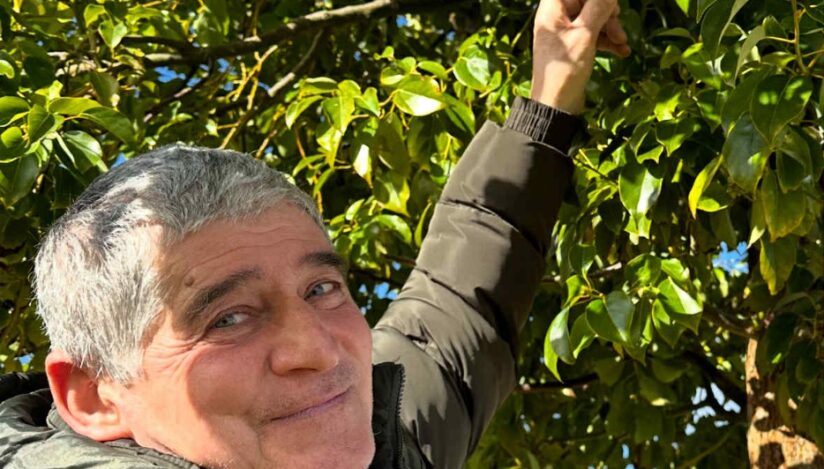
A Romanian worker who was trapped for hours under the rubble of a partially collapsed medieval tower near the Colosseum has died.
On Monday, pieces of the 29-metre Torre dei Conti crashed to the ground.
A second collapse followed 90 minutes later, as firefighters attempted to extract Octav Stroici, who was trapped inside, with aerial ladders.
They managed to remove him 11 hours later, and found him in a state of cardiac arrest.
He passed away in hospital at the age of 66.
Clouds of dust came billowing out of the windows to the sound of collapsing masonry. A second incident took place while firefighters were working on the structure with aerial ladders, trying to extract the trapped man.
Prime Minister Giorgia Meloni also expressed her condolences, and declared a national day of mourning.
The Rome Prosecutor’s office has opened an investigation for manslaughter, negligent disaster, and serious injury, a judicial source said. But at the present moment it appears to be difficult to understand why this happened, given that preliminary checks on the structure certified that it was safe to intervene on it (restoration work amount to 7 million euros so that the tower might be converted into a museum and conference space), and that the building is still standing, though with significant internal damage.
But it hasn’t been used since 2006, and fell into “a general state of disrepair” — not that this in itself would justify dramatic collapse.
The tower was commissioned by Pope Innocent III for his family in the early 13th century, and was originally twice as high, but was scaled down after damage from earthquakes in the 14th and 17th centuries.
A second worker, also Romanian, was rescued almost immediately and taken to hospital with serious but not life-threatening head injuries, while two more workers suffered minor injuries and declined hospital treatment.
The first nine months of 2025 saw nearly 600 similar deaths in Italy.
Kremlin spokesperson Maria Zakharova took the opportunity to comment on Telegram: “As long as the Italian government keeps uselessly wasting taxpayers’ money, all of Italy will collapse, from the economy to its towers”.
Italy’s foreign minister, Antonio Tajani, called these remarks “shameful” and “unacceptable”.
A spelling error, through which Octav in written as “Octay” in most major publications which have taken up the news story, serves as a bitter metaphor for the invisibility of often discriminated-against groups, such as that of Romanian immigrants in Italy. It feels like an extra layer of invisibility added: to the bitter fate of those who leave their countries seeking a better life and, instead, meet the worst.
