

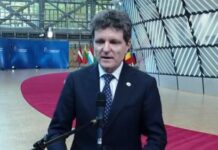
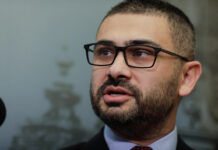

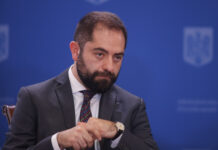



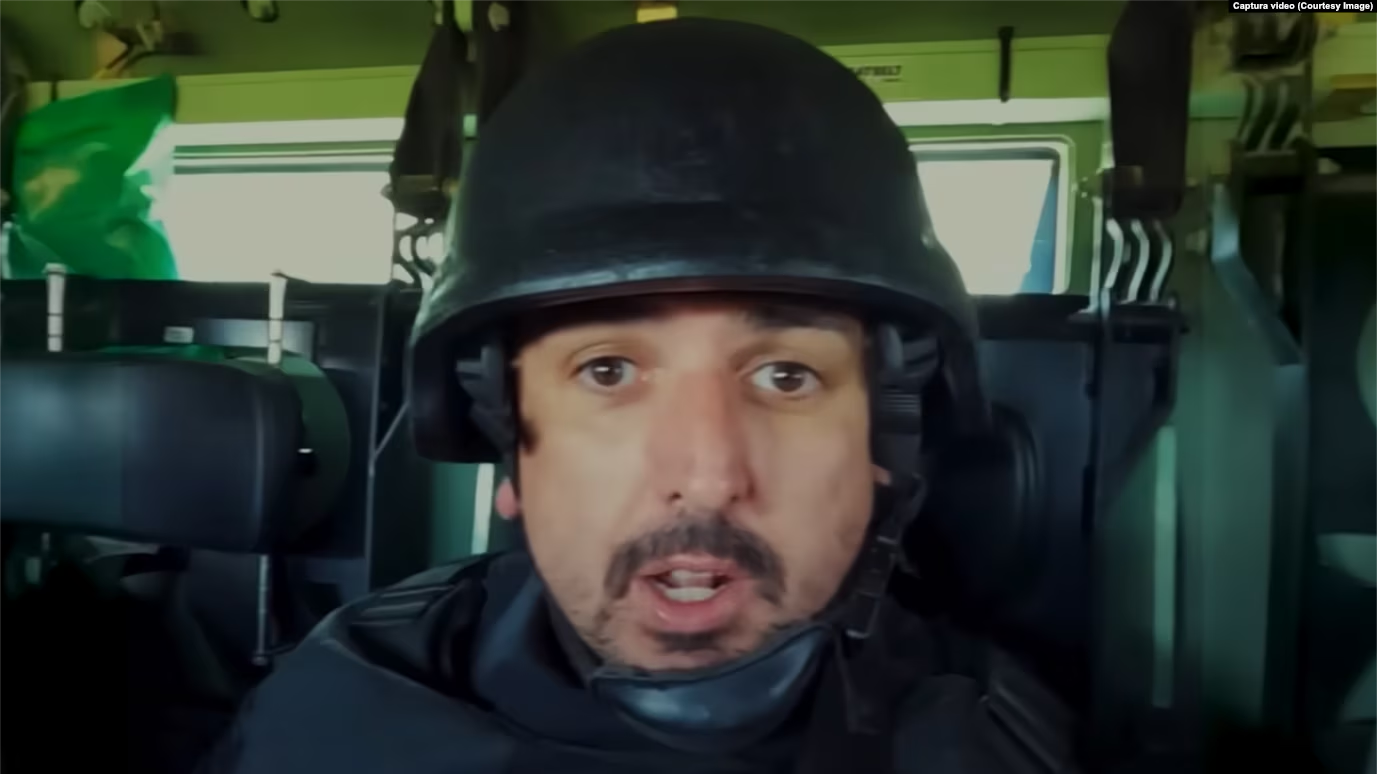
Russia’s security service, the FSB, is pressing criminal charges against three foreign journalists including Romanian pressman Mircea Barbu for reporting from its Kursk region occupied by Ukrainian forces.
In total, Russia has charged 12 journalists for their work from Kursk following a surprise incursion by Ukrainian forces on Aug. 6.
The three journalists investigated by the FSB are Mircea Barbu, who reported from Kursk for HotNews, and Kathryn Diss and Fletcher Yeung from ABC News Australia.
They are being investigated for illegally crossing the Russian border, state news agency RIA Novosti reported according to AFP.
Romania’s foreign ministry condemned the action.
We strongly condemn RU decision to open criminal cases against journalists, including @_mirceabarbu, for reporting from #Kursk. This is a blatant attack against press freedom and fundamental rights. Journalists must be protected, not silenced.
— Ministry of Foreign Affairs of Romania 🇷🇴 (@MAERomania) September 27, 2024
Journalist Mircea Barbu told Radio Free Europe that the Russian authorities’ worried him, but that he would continue to do his job.
“I take it more as an intimidation. The FSB does not tolerate independent voices, independent reporting from this Kursk area. And in general, the Kremlin has a problem with the free press. Russia puts the boot on the neck of all independent journalists,” he said.
He said that he entered Kursk, along with other foreign journalists, aware that he could face reprisals from Russia.
After his report from Kursk was published, Mircea Barbu received death threats from pro-Kremlin “Dva Maiora” channel.
“Iskander missiles are more effective than criminal cases,” read a message published on the Telegram channel “Dva maiora”, which claims to belong to “real soldiers” and has more than 1.1 million followers.
Russian authorities said that reporter Mircea Barbu entered Russia illegally and asked the Hotnews “to condemn the terrorist actions of the armed forces and intelligence services of Ukraine, which have been deliberately hunting and killing their fellow Russian journalists for several years.”
HotNews acknowledged that the journalist crossed the border without Russia’s permission, but said that the same happened when Russian, Chinese and other journalists followed Russian troops in their incursion into Ukrainian territory.
Several foreign media outlets reported from the area occupied by the Ukrainian army, including Italian television RAI, the American channel CNN and Deutsche Welle in Germany.
IIlegal border crossing carry a maximum of five years in prison.
Ukraine’s military launched a surprise offensive in the Russian border region on August 6, the first incursion by a foreign army into Russian territory since World War II.
Russian forces have begun a counteroffensive and claim to have captured part of the territory. Ukraine says it still controls about 100 settlements and 1,000 square kilometers of territory.
Barbu said in a Facebook post that the threat from Russian security services “is a direct attack on all journalists who take risks to bring the truth about armed conflicts… to the public.”
“We cannot allow fear and intimidation to silence us.”
