







An investigation by RFE/RL (Radio Free Europe/Radio Liberty) has found that Serbia granted citizenship to four times as many Russian nationals as all other foreign citizens combined during the first months of 2026.
The citizenships were awarded through an expedited procedure reserved for cases deemed to be in Serbia’s “national interest.”
Brussels expressed concern about Serbia’s commitment to EU integration particularly as among the recipients were several individuals subject to international sanctions. One of the most notable beneficiaries was Valery Kazikayev, who became a Serbian citizen on January 16. He has been under US sanctions since April 2023 because of his business connections to Russian billionaire Alisher Usmanov, a Kremlin-linked oligarch sanctioned by Washington in 2022.
According to the US Treasury, Kazikayev has held senior positions in mining and metals companies connected to Usmanov, including Metalloinvest and Udokan Copper. He also owns the Slovak company KTH Group Spol SRO, which is likewise subject to US sanctions. Ukraine sanctioned him in November 2023, imposing asset freezes and general business restrictions.
Another recipient was Sergei Kondratenko, who obtained Serbian citizenship on November 13, 2025. Ukrainian authorities have sanctioned him for activities considered harmful to Ukraine’s national interests and security. They identified him as the ultimate owner of Royal Pay Europe, a Latvian financial-services company sanctioned by Ukraine in 2023.
Ukrainian investigators accused Royal Pay Europe of involvement in the misappropriation of more than €30 million transferred by foreign banks to a Ukrainian commercial bank. In 2024, Ukraine’s High Anti-Corruption Court confiscated the company’s assets in the country, worth approximately $44 million, and transferred the funds to the state budget. Security officials also linked Kondratenko to a Russian betting network.
A third controversial case involved Yakub Zakriev, the nephew of Chechen leader Ramzan Kadyrov. Serbia granted him citizenship in April 2026 but revoked it only four days later. Zakriev is under both US and UK sanctions because of his senior positions within the Chechen government and his ties to Russian state institutions.
Other Russians who arrived and are not notable public figures do so simpl to avoid military mobilization, or in order to maintain business ties with Western markets. According to Serbian Interior Ministry data obtained by RFE/RL, more than 48,000 Russian citizens held temporary residence permits in Serbia as of January 2025.
RFE/RL’s review of government records shows that Serbia granted citizenship on “national interest” grounds to 44 Russian citizens during the first five months of 2026 alone. Since the start of 2022, more than 300 Russians have acquired Serbian citizenship through the same mechanism.
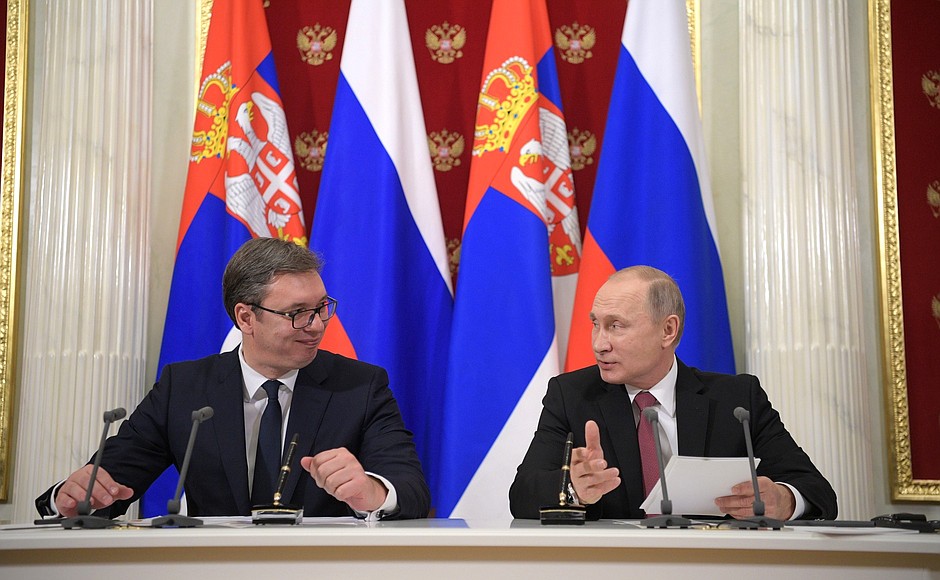
As a candidate country, Serbia is expected to align with EU positions. However, Belgrade has neither joined sanctions against Russia nor ended its visa-free regime with Moscow. As a result, Serbia has not opened a new chapter in its EU accession negotiations since December 2021, partly because of its refusal to align with the bloc’s foreign and security policies. At a recent EU–Western Balkans summit in Montenegro, European leaders again pressed Belgrade to choose a clearer strategic direction.
