












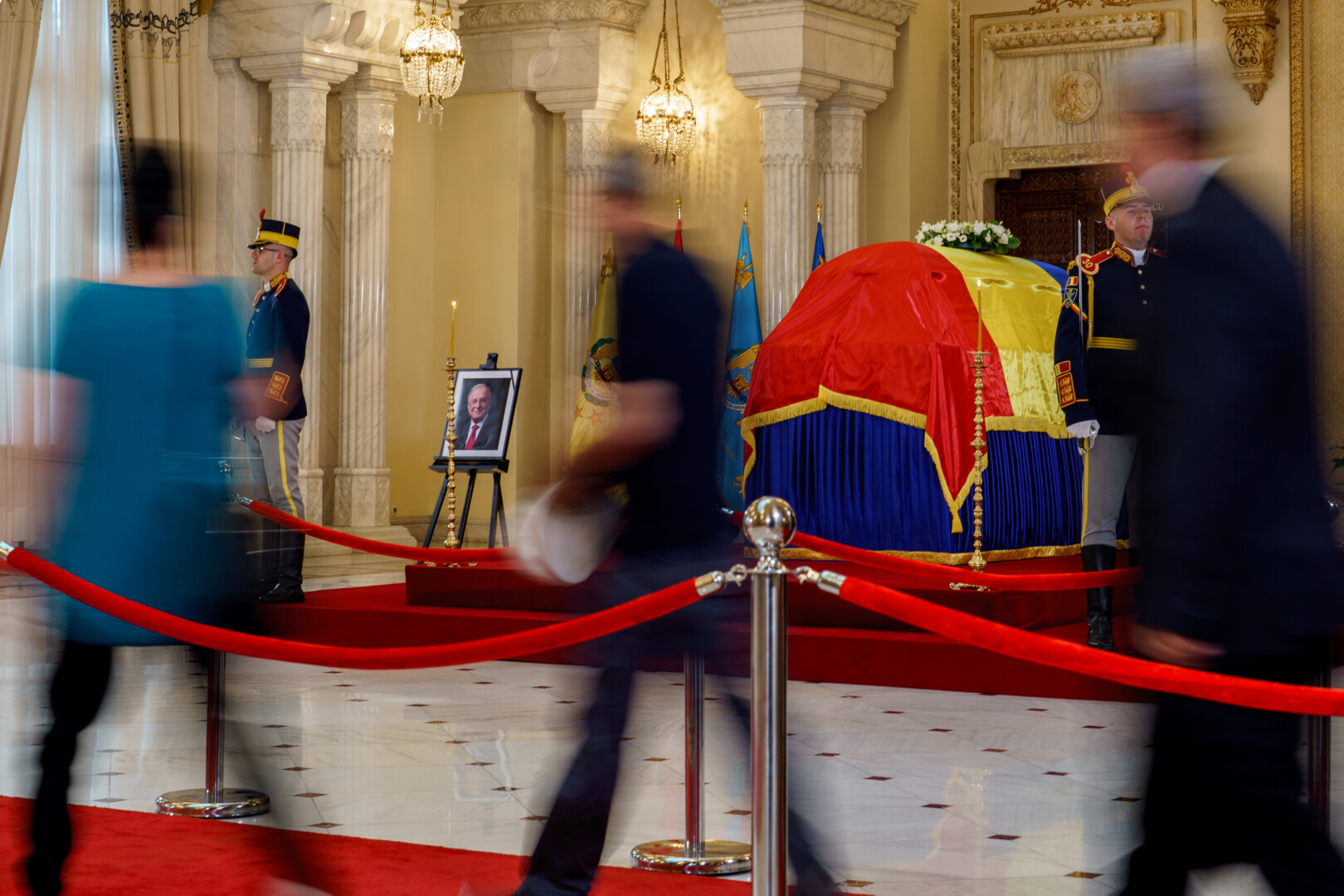
Romania on Thursday is holding a state funeral and has declared a national day of mourning its late President Ion Iliescu, a polarizing figure whose death has reignited old traumas about Romania’s brutal 1989 revolution and the subsequent tumultuous transition to democracy.
Iliescu, who served three terms as president, died on Tuesday, two months after being admitted to hospital for lung cancer.
The former Communist apparatchik is credited for setting Romania on its pro-Western path in his second term in office which eventually led to NATO and EU membership. But there is fury for the hundreds of deaths he allegedly bore responsibility for during the bloody uprising which saw the demise and execution of Communist dictator Nicolae Ceausescu.
Iliescu took over as interim leader on Dec. 22 after Ceausescu was deposed and shot, but the shooting continued, with 850 deaths after Ceausescu’s exit. Iliescu was charged with crimes against humanity for his role but never faced trial, likely because the political establishment found the case too complicated.
The government decreed a state funeral and day of mourning, but leader of the Save Romania Union, Dominic Fritz, a member of the governing coalition, said there should be no national mourning and party representatives would not attend the funeral.
Romania’s new President Nicusor Dan, never a member of the Communist Party, simply said that history would judge the former leader.
Iliescu’s body lay in state on Wednesday but relatively few people turned out to pay their respects. The number of television crews outside the presidential palace outnumbered mourners. One man traveling in a car wound down his window yelled that was Iliescu was “a criminal,” Universul.net observed.
In post-Ceausescu Romania, investigations into the more than 1,100 deaths and 3,000 injured in the bloody uprising have started, stalled, resumed, and stalled again, even after Iliescu was formally charged in 2019.
Romanian officials have paid lip service every December to those who died in the revolution, but the victims have gradually been forgotten.
Commentators say that the failure to secure justice for the victims was due to the revolution brought second-rank communists to powers who ran the country in the years that followed.
That legacy is still present today with the sons, daughters, and proteges of post-communist officials in key positions. A full investigation into the revolution and violent suppression of street protests that left six dead and hundreds injured would possibly implicate members of the army, the security services, and the widely feared secret police, the Securitate, who were never punished and live comfortably, many of them on generous pensions.
