














Catching up with the month’s four-part series on the decline in democratic values and rise of autocracy – a new-old problem that may be part of human nature
Over the past month, Ask Questions Later delved into a pressing global phenomenon: the rise of autocracy and the decline of liberal democracies. “The New Autocracy” series explored the mechanisms by which autocrats consolidate power, the societal factors that enable their endurance, and the broader implications for democratic systems worldwide.
The journey began with A Christmas Tale, the grim story of Nicolae Ceausescu, the Romanian dictator whose rule ended with several bangs on Christmas Day in 1989.
His hasty execution following a farcical trial highlighted the fleeting nature of autocratic power and the grim chaos that often accompanies its collapse. Ceausescu’s regime, infamous for its austerity and repression, serves as a cautionary tale for today’s strongmen. His ambitious yet devastating projects, like the Palace of the People, drained resources and displaced thousands, illustrating how megalomania can devastate a nation. The Latin phrase Sic transit gloria mundi aptly captures the impermanence of such authority, offering a stark reminder to leaders who rely on fear and control. This account also raises questions about justice and revolution—whether swift vengeance, as seen in Ceausescu’s case, is the most effective means of societal healing.
From there, we shifted to a broader context with “The End of the End of History,” an examination of Francis Fukuyama’s 35-year-old assessment that we are approaching an era where liberal democracy reigns supreme. This enticing vision has since been dismantled by the realities of rising polarization, disinformation, and the erosion of shared norms. Most devastatingly, people all over the world now no longer seem to insist on the very rights this evolution purported to guarantee. That’s how we can end up with an actual, legitimate electoral victory by a shady character like Trump.
Social media has played a pivotal role, erasing traditional gatekeepers and enabling the spread of radical ideas. We argued that these platforms have allowed extremist voices to dominate public discourse, exploiting human attraction to agitation and lies. The vulnerabilities of democratic systems—illustrated by examples in Russia, Hungary, and Turkey—underscore the fragility of governance in an era where democracy is no longer seen as inevitable. Even within established democracies like the United States, hyper-polarization and the rise of illiberal movements challenge the core principles of liberal governance.

The third installment, An Example to Megalomaniacs, discussed the mania of entrenched leaders like Vladimir Putin and Xi Jinping, whose prolonged rule often fosters corruption and societal division. We threw some faint praise at Canada’s Justin Trudeau, who at least knew when to go (that week). The piece explored how leadership transitions, when handled responsibly, can strengthen democratic systems by allowing for new voices and ideas. In contrast, the refusal of autocratic leaders to relinquish power often leads to institutional decay and social unrest.
We examined the piggish gluttony of these characters. Vladimir Putin, ruling the largest country in the world by territory, invaded Ukraine to seize more territory. Xi Jinping, competing with India for the world’s most populous nation, covets Taiwan’s population of 25 million people more, and may court disaster to achieve it. Netanyahu, who has served more time than anyone else as Israel’s prime minister, will burn the place to the ground to buy himself a little but more time. Netanyahu is elected, though he’s trying to undermine democracy with “reforms”; the people, many of them at least, don’t mind it.
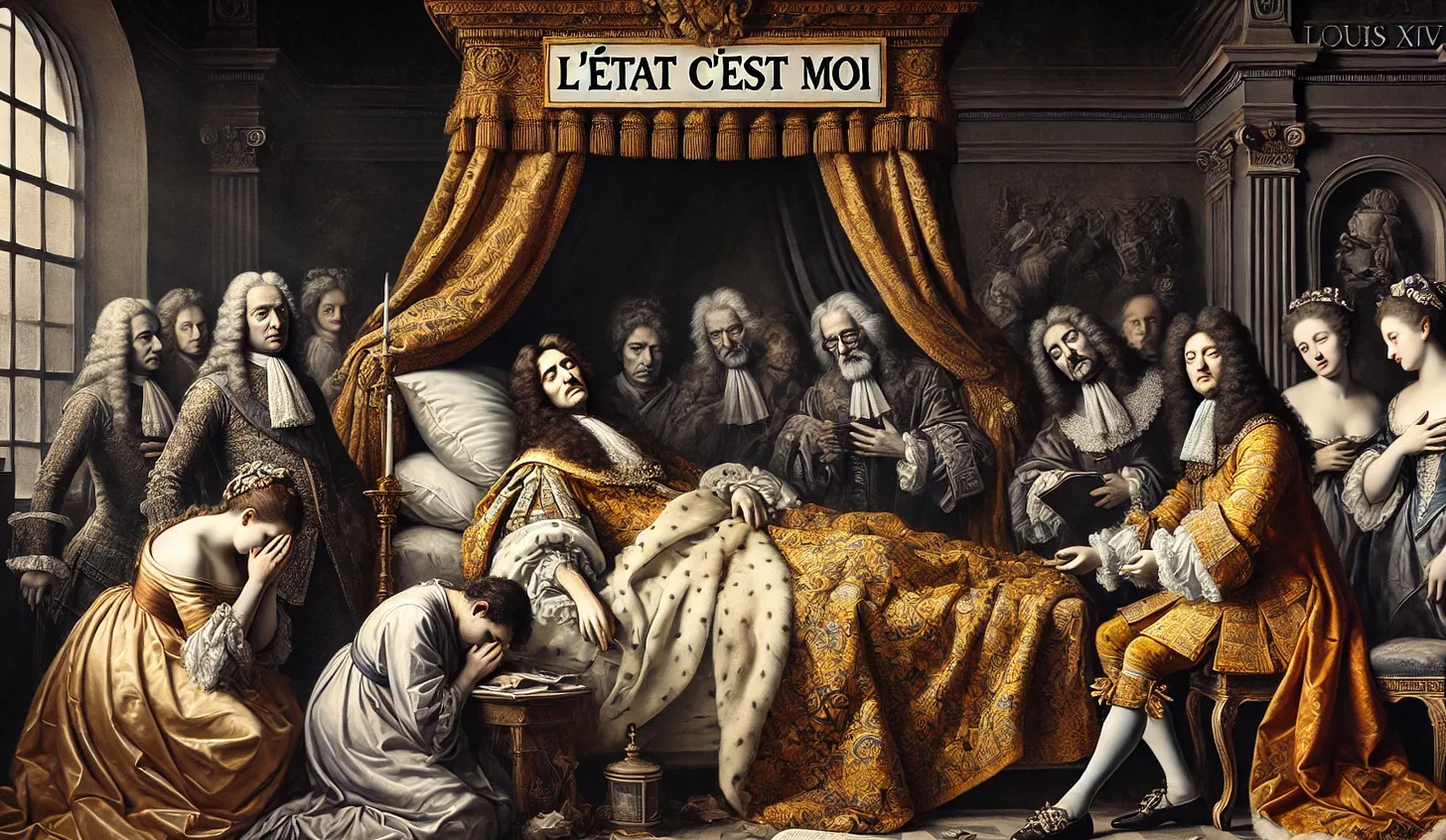
It leads to a parallels with French monarch Louis XIV, whose declaration L’État, c’est moi (“I am the state”) serves as a timeless warning against the dangers of unchecked authority. Leaders who cling to power often do so out of a misplaced belief in their indispensability, but history repeatedly shows that no individual is greater than the state. Louis XIV moved on; France is with us still.
The final installment — Why Are There Dictators? — explored the societal and psychological dynamics that allow dictatorships to persist. How can it be that these people — generally vile criminals — survive another day?

Fear, propaganda, and a human preference for order over chaos often sustain autocratic regimes, even in democratic societies. The rise of illiberal movements and the rhetoric of leaders like Donald Trump demonstrate how authoritarian tendencies can take root in unexpected places. The piece examined why populations tolerate autocrats, highlighting the role of societal complicity, whether through apathy, self-interest, or resignation. It also addressed the psychological appeal of strongman leaders, who promise stability and order (yet often deliver the opposite, and never offer freedom).
Together, these articles weave a narrative of a world grappling with the tension between democracy and autocracy. From Ceausescu’s downfall to the intellectual challenges of Fukuyama’s thesis and the calamities wrought by leaders like Putin, we underscored the fragility of democratic systems and the enduring appeal of strongman leaders who exploit societal divisions and fears to consolidate power.
Readers, be engaged. Democracy thrives on participation, accountability, and the willingness of citizens to challenge authority. The decline of these principles begin with small compromises, such as tolerating disinformation or overlooking abuses of power. Reversing it requires vigilance and collective commitment to the values that underpin free societies. The first week of Trump 2.0 — which we dissected here — should make that perfectly clear.
