











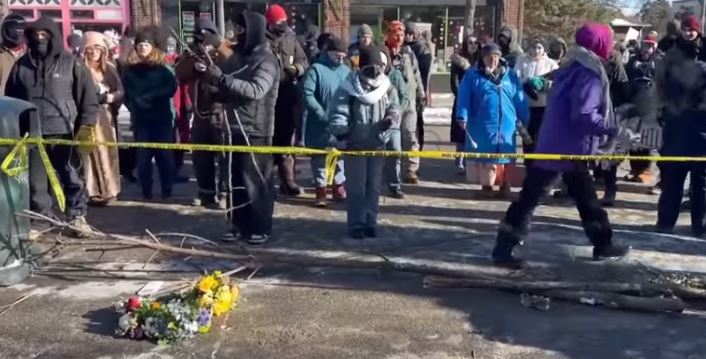
What began as a deadly and confusing encounter on a Minneapolis street has ballooned into a major crisis for the White House: a slow-burning political crisis that refuses to stay contained. The murder by ICE agents of Alex Pretti, a 37-year-old US citizen, has become a perfect case study of visual evidence contradicting the brazen lies of top officials.
The administration’s first instinct was familiar and automatic: DHS said he intended to “massacre law enforcement.” Deputy Chief of Staff Stephen Miller claimed he “tried to assassinate federal agents.” Homeland “Security” secretary Kristi Noem accused him of “brandishing” a firearm. All of it is bullshit.
Once the official version of events is visibly false, everything that follows is suspect. Every press release, every statement of reassurance, every promise of “review” lands in a vacuum of trust. So almost no one believes it when Trump blames “Democrat-ensued chaos” and local officials for the violence. He seems to have noticed the problem, and so has effectively sidelined Noem and ICE chief Gregory Bovino. He spoke to Minnesota Governor Tim Walz, and Walz’s subsequent statement that the White House would look into reducing the federal presence, So the administration is now negotiating with a Democratic governor over how to unwind a crackdown that it loudly and proudly initiated.
There is also a legal headache. Federal judges do not speak casually, and when Chief Judge Patrick Schiltz orders the acting head of ICE to appear personally to explain potential contempt of court, it triggers alarm.
There seems to be some cracks in the Republican wall defending Trump. They’re still small, but real, and dangerous. Chris Madel’s withdrawal from the Minnesota governor’s race, saying ICE has made Republicans unelectable in the state, is a warning sign that Trump’s immigration tactics are beginning to alienate too many people. Critics speak of non-whites living in fear, citizens carrying proof of citizenship, ICE raids based on civil warrants signed by other agents. In Congress, the tone is shifting as well. Andrew Garbarino and Rand Paul both summoned ICE and CBP leadership to testify, and James Comer publicly speculated about withdrawing federal agents from Minneapolis.
In polls, majorities already believe ICE enforcement makes cities less safe, and 71 percent of independents say ICE has gone too far. Those are catastrophic numbers for an administration that has made immigration its defining identity.
The United States is approaching a decision point on Iran
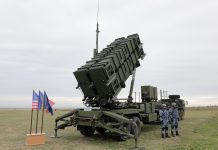
What until recently looked like strategic posturing is beginning to resemble US preparation for a strike against Iran’s regime. The movement of major naval assets into the region, the surge of air-defense systems, the arrival of refueling tankers and strike aircraft, and the visible coordination with Israel have changed the character of the crisis. After Trump’s threats and promises to help protestors, followed by two weeks of silence, a decision point looms. There is no question the regime has massacred its citizens, which is what Trump had warned against.
Iran is warning that any American strike would trigger “all-out war.” Iran’s response menu is grim. It can strike US. bases in the Gulf, risking catastrophic escalation. It can strike Israel, regionalizing the conflict. It can attempt to close the Strait of Hormuz, detonating the global economy. No option is safe.
Strategically, the Iranian regime is at its weakest in decades. Inflation is exploding, the currency is collapsing, energy and water shortages are worsening, and protests have shaken the country nationwide. Tehran’s proxy network has been badly degraded by Israel it its two-year war. Its nuclear program was already hit in the June war. From a purely cold-blooded power perspective, this is the moment when pressure can produce maximal leverage.
Yet the options before the US are not necessarily clean.
- The first is a symbolic strike. This would involve limited attacks on a handful of military or intelligence targets, designed to demonstrate seriousness and force Iran back to negotiations. It would preserve deterrence and satisfy the need to “do something” without plunging the region into war. But it would also betray Trump’s promise to protesters. It would punish the regime without weakening its ability to repress.
- The second option is a strike aimed at the machinery of repression. That means targeting the Revolutionary Guards, intelligence centers, and senior security commanders. This would align most directly with Trump’s rhetoric about helping the Iranian people. It could disrupt the regime’s ability to suppress protests and possibly trigger a political unraveling. But escalation would be likely. Retaliation against US forces or Israel would be hard to avoid.
- The third option is a leadership decapitation. This would mean targeting Ayatollah Khamenei and the highest political structures of power. It is regime change by force, even if not declared as such. It carries the greatest potential reward and the greatest danger. Iran has likely prepared for leadership succession after the loss of senior commanders last year. A vacuum might not collapse the system, though; and the US would own whatever chaos follows.
- A fourth option exists in theory: delay and diplomacy. If protests subside, Tehran could claim compliance with Trump’s demand to stop killing protesters, allowing him to claim success without force. But given the scale of killing over the past month — possibly tens of thousands — US credibility, or what is left of it, would suffer.
All around the world, two things are generally true: Almost everyone except for the likes of Putin would love to see the ayatollahs’ regime gone, and almost no one trusts Trump to decide wisely and ethically. But this is really a risk equation: Do the risks of a strike outweigh the possible benefits?
No More Israeli hostages in Gaza; Rafah Crossing to Open
Israelis went into this week bracing for the possibility of yet another war with Iran. And then came a moment ofpeace: The last hostage came home on Monday. Israelis have been holding their breath for nearly 28 months. With the return of the remains of Staff Sergeant Ran Gvili, they can finally exhale.
Gvili’s story is tragic, heroic, and deeply Israeli. Despite recovering from a fractured shoulder, the 24-year-old put on his uniform the morning the Hamas attack began and rushed south. He helped rescue civilians fleeing the Nova music festival. He fought at Kibbutz Alumim. Wounded and surrounded, he was eventually overpowered, murdered, and taken to Gaza. Gvili went in first. He came out last.
The return of his body, discovered in a Gaza cemetery, fulfills one of the two core war aims Israel set after Oct. 7: bringing every hostage home. The hostage issue created a rare moral unity in a country otherwise fractured. Israelis disagreed on nearly everything else: the conduct of the war, the devastation in Gaza, the government’s competence, international backlash, and the collapse of trust following the judicial overhaul crisis. But on the hostages, they were family. Every Saturday night, families gathered in the plaza outside the Tel Aviv Museum, renamed Hostages Square. For tens of thousands, joining them became ritual.
Over time, that moral unity turned into a political burden for Prime Minister Benjamin Netanyahu. By mid-2024, long before the war reached stalemate, polls showed overwhelming support for a deal that would return the hostages even if it meant ending the fighting after Hamas had been badly degraded. The government did not listen. Hard-liners in the coalition wanted the war to continue indefinitely, even envisioning forced expulsions and Jewish resettlement of Gaza. Netanyahu ultimately required intense pressure from Trump to agree to a ceasefire in September.
Polls suggest Netanyahu faces defeat in the next election. His declaration that Gvili’s return was a triumph rang hollow to many. The state fulfilled a moral obligation, but the government has not redeemed itself. Meanwhile violence actually goes on: Four Gazans were reported killed by IDF fire Tuesday.
Now the argument that progress in Gaza must wait until the final hostage is returned is gone. Attention has turned to reopening the Rafah crossing into Egypt, a move as consequential for Gazans as the hostage issue was for Israelis. If it happens, it would mark an end to the total siege and begin a debate over monitoring, smuggling, and the flow of goods and people.
At the same time, pressure will grow over the other unresolved condition: Hamas’s disarmament. The group still controls parts of Gaza and seems to believe returning hostages has bought it survival. That calculation may soon be tested. The world is telling Hamas that no reconstruction will begin until it is gone, making way for the already-appointed Gaza “technocratic government.”
One thing is certain. In a week when missiles may yet fly, when Israel may yet face costs beyond its control, something quietly monumental happened. The last hostage came home. In an cynical era of promises routinely broken, this one in a way has finally been kept.
