














The International Court of Justice is concerned about Israel’s actions – but not enough to order a halt to the fighting in Gaza.
There will be a lot of spin about Friday’s ruling at the International Court of Justice on South Africa’s charge that Israel is guilty of genocide in its effort to crush Hamas in Gaza. I’d like to offer a straight take on what actually happened – and what did not.
Israel’s critics will make much hay of the court’s finding that there is a “plausible” case that provisional measures are needed to avoid “irreparable prejudice” to Palestinians’ rights. And yes, for sure, Israel got rapped on the knuckles.
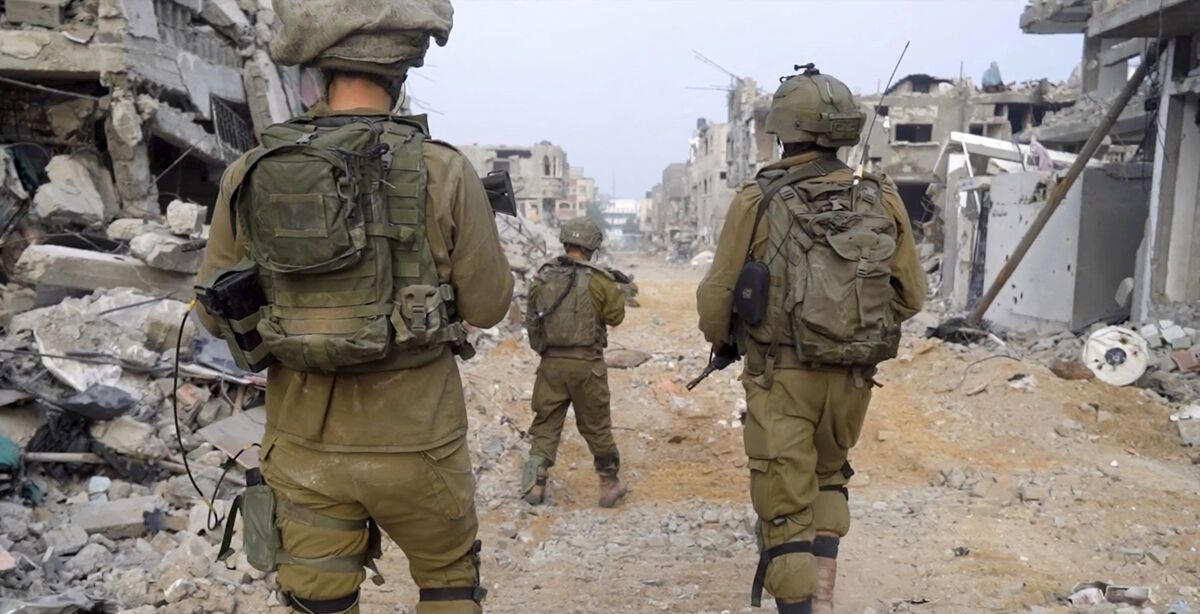
But the main news, for anyone still exercising news judgment, is that the court did not rule that Israel must end its war effort. In effect, therefore, the court ruled that Israel may proceed with the campaign. People should let that sink in: the war, which has so far claimed perhaps 15,000 innocent lives on the Palestinian side (according to the figures from the Hamas-run Health Ministry in Gaza), can go on.
I tried to make this point with a rather exuberant interviewer on Al Jazeera (below).
It is true that the court has no enforcement powers, but a call to end the war (while leaving Hamas in power) would have put Israel in an uncomfortable position – and even more so US President Biden. It would have gone before the UN Security Council where the Americans would have probably vetoed it, bringing Biden more political miseries with the progressive youth and minorities whom he needs in an election year.
When the court wants, it knows how to issue an unequivocal ruling. Last February, for example, it categorically ordered Azerbaijan to end its blockade of ethnic Armenians in Nagorno-Karabakh, after a very brief debate, in clear imperative language. (Azerbaijan ignored the little-reported ruling, tightened the blockade amid charges of “genocide-by-starvation,” and soon attacked, compelling the flight of the entire population of the disputed enclave).
By contrast, the court in this case was rather mild in demanding Israel refrain from genocidal actions and report back in a month, which Israel will surely dutifully do, claiming it continues to try to minimize harm to civilians and always has. The court might as well have asked Venezuela to avoid genocide in Japan, or implored all people everywhere to avoid genocide. It simply does not move the needle on Gaza.
It was always going to be difficult to prove genocide in this case – because the UN’s 1946 Genocide Convention defines the term as the “intent” to destroy a group “in whole or in part.” Israel’s intent is to destroy Hamas and to return the hostages, and the group has embedded its entire infrastructure amid civilians in order precisely to endanger them. Indeed, the Hamas attack on Israeli civilians on Oct. 7 was far more aligned with the definition of genocide – and the court sidestepped this to its shame.
That is not to say that Israel gets away scot-free. The court did not dismiss the charges out of hand, as Israel had hoped; it did not find the charges of genocide completely implausible. It gave Israel some homework and may have contributed a little to Israel being more careful to avoid civilian casualties. That’s good.
But the essence remains where it was. Israel is unlikely to agree to an end of the war with Hamas still in power, and it wants the remaining 130-odd hostages back. It will probably agree to an exile of the Hamas leadership. That is the key to breaking the deadlock, as I wrote here on January 11. In reality, outside of Hamas’ useful idiots on some campuses, the West supports largely all these goals, as well it should.
And once the difficult Benjamin Netanyahu is gone – as polls show three-quarters of Israelis wish him to be – Israel will agree to the Palestinian Authority taking over Gaza and returning to the status-quo-ante of 2007, when Hamas seized the strip in a violent coup. It is not perfect, for the PA is corrupt and disliked, but it’s the only way.
Achieving all this by force alone will be difficult, which is why Israel should engage with Biden’s effort to organize a mega-deal that includes all of the above and also brings peace between Israel and Saudi Arabia. That Netanyahu refuses this damages Israel and the region. It lends credence to the claim that his interest is to prolong the war, knowing that its conclusion will also bring about his own.
I try to avoid clichés, but this one is too true: the Israeli PM, who fluked into power about a year ago, made every conceivable mistake since then and clings to office amid a bribery trial like a man possessed, is an albatross around the neck of his country.
