














An effort to make sense of what happened, why it happened, and where things might go from here
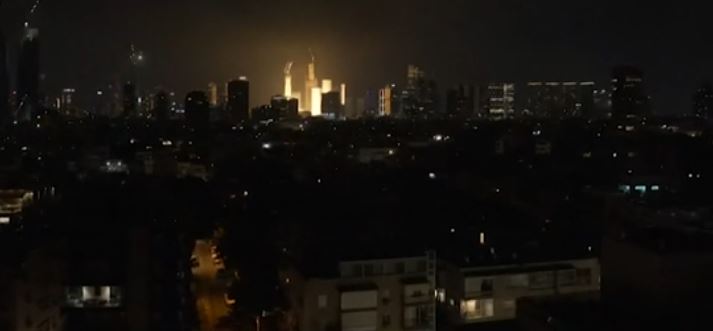
After two days of intense and unprecedented fighting between Israel and Iran, the world is left wondering: What just happened, and what comes next? With denials from Washington, retaliation from Tehran, and shockwaves reverberating from Tel Aviv to the Gulf, this moment marks a critical inflection point. Here’s an effort to take stock of the situation, answer some key questions, and provide a framework for understanding what could become a defining chapter in Middle Eastern history.
SUBSCRIBE TO ASK QUESTIONS LATER
Is Israel aligned with the US?
American officials have been at pains to deny involvement in Israel’s action. But this would beggar belief even if Trump had not praised the attacks as “excellent.” Israel depends on the United States for spare parts for its military, for a diplomatic umbrella at the United Nations, for legal cover from its oppressors at the International Criminal Court, and for critical assistance in deflecting Iran’s ballistic missile and drone counter-strikes. An attack on Iran very plainly could escalate into a broader conflict that could draw in America’s assets, bases, and personnel in the region.
It would therefore take a special level of naivete to think that Israel acted without consultation and, indeed, coordination with the White House, State Department, and Pentagon – especially given that the strike seemingly derailed a new round of nuclear talks that had been expected between the U.S. and Iran on Monday in Oman.
“We don’t expect Israel to get our permission,” said Mike Huckabee, the US ambassador to Israel. OK, well, I don’t expect diplomats to speak the truth at all times. There is no reason to believe the American denials.
Why did Israel strike now?
The simple answer certainly relates to the aforementioned presumed green light from Trump. But two other factors likely played a role – without either, Israel’s tactical position would have been far worse, and perhaps untenable.
First, Iran’s air defenses were badly degraded by Israel last fall in retaliation for the first major ballistic missile attack, which Iran staged after Israel assassinated Hassan Nasrallah, the longtime head of Hezbollah. Iran’s inability to protect its skies has become quite clear. Had Israeli jets been downed and pilots captured, the scenario would have looked very different.
Second, Iran’s proxies have been sidelined to a considerable degree. Hezbollah, which a year ago held the world’s largest non-state rocket arsenal, was effectively thrashed last fall — with thousands of fighters sidelined by exploding beepers and its leadership wiped out. That was by far Israel’s most significant achievement since the Oct. 7 Hamas massacre that ignited the war. It emboldened Lebanon to form a more robust government which has since committed to disarming the militia and warned it over the past 24 hours to leave Israel alone. Hamas is no longer in a position to mount serious attacks from Gaza, and the Iran-backed Houthis in Yemen have been somewhat deterred – both by Israeli and US action, and by distance.
Add to this the International Atomic Energy Agency’s warning in recent days that Iran was in breach of its obligations, and you have a perfect storm.
Cynics will add that Netanyahu, still badly lagging in the polls, needs more victories ahead of elections due by late next year. I could not possibly comment on that – but what is indisputable is that Netanyahu now has a narrative to take to voters and to try to build a legacy. Mainly, it may help some voters focus less on his crushing failure of Oct. 7 – especially the military’s inexplicable delay, many hours long, in responding to the attacks on Gaza-border communities.
What’s the endgame?
Netanyahu has proven willing to take action – and to prolong it – but not great at knowing when to stop. In Gaza, he has refused to sanction any viable day-after plan that could wind down the war, largely because the far-right elements in his coalition prefer indefinite occupation and are content with a forever war that Israel cannot afford. That cannot happen with Iran – a large, powerful country of 100 million people.
Israel also lacks the bunker-busting capability needed to disable Fordow, Iran’s critical uranium enrichment facility buried hundreds of meters underground. That site appears untouched, though Israel struck the Natanz facility, the Arak heavy water plant, and other missile and drone infrastructure. So for some, a perhaps unspoken scenario is drawing the US into the war with the specific aim of targeting Fordow, to finish the job.
The risk of all kinds of other escalation is severe – especially if Iran’s expected second night of counterstrikes causes significant civilian casualties in Israel. Should Israel then retaliate against civilian infrastructure in Tehran, a slippery slope could follow. Iran might block the Strait of Hormuz – triggering a global oil crisis – or attack US assets like the Al Udeid Air Base in Qatar. A global recession could result.
Given these stakes, the United States will likely intervene diplomatically within the week and push to resume negotiations – this time from a position of greater strength. It would be prudent for the US to demand an end to Iran’s support for its regional proxy militias, including the Shiite groups undermining Iraq’s government. All of that craziness must stop. And another key question is whether a dramatic outcome in Iran might also somehow compel what’s left of Hamas to lay down its arms in Gaza.
Is regime change in Iran possible?
Despite real fears about what might follow, a collapse of the Islamic Republic would be welcomed in Israel, across much of the Arab world, and certainly in the West – especially in the United States. There is a global consensus, albeit a quiet one, that the regime in Tehran has inflicted immense suffering on its own people and on the broader region.
That said, the regime has been ruthlessly effective in crushing waves of protest. The US, scarred by past nation-building failures in the Muslim world, is unlikely to get directly involved. This will be for the Iranian people to decide – or possibly for insiders to change. If a plausible scenario exists, it may involve a palace coup – perhaps from the military, or even from within the Revolutionary Guards. That might sound far-fetched, but history shows that authoritarian regimes often appear invincible until, suddenly, they’re not. Just ask Bashar Assad, a pariah’s pariah currently hiding out in Moscow.
Where is the world on this?
There’s more understanding of Israel’s action than one might think – even from leaders who despise the problematic Netanyahu.
Former Romanian Prime Minister Mihai Răzvan Ungureanu told me this, just moments ago: “What Israel did is the last-minute action of a country that felt it had no choice. It felt threatened by Iran and understood that Iran was merely buying time in negotiations and duping the IAEA. Israel was bold enough to take definitive action – against a regime that tried, with the help of Russia, to conceal its true nuclear ambitions. We must put aside fake neutrality and false equivalence, and openly support it.”
I assess he speaks for many, whatever the trolls may say on X.
.
