



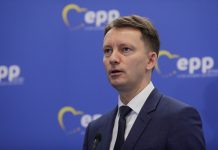

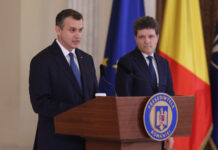
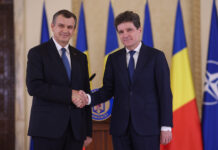
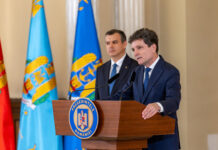



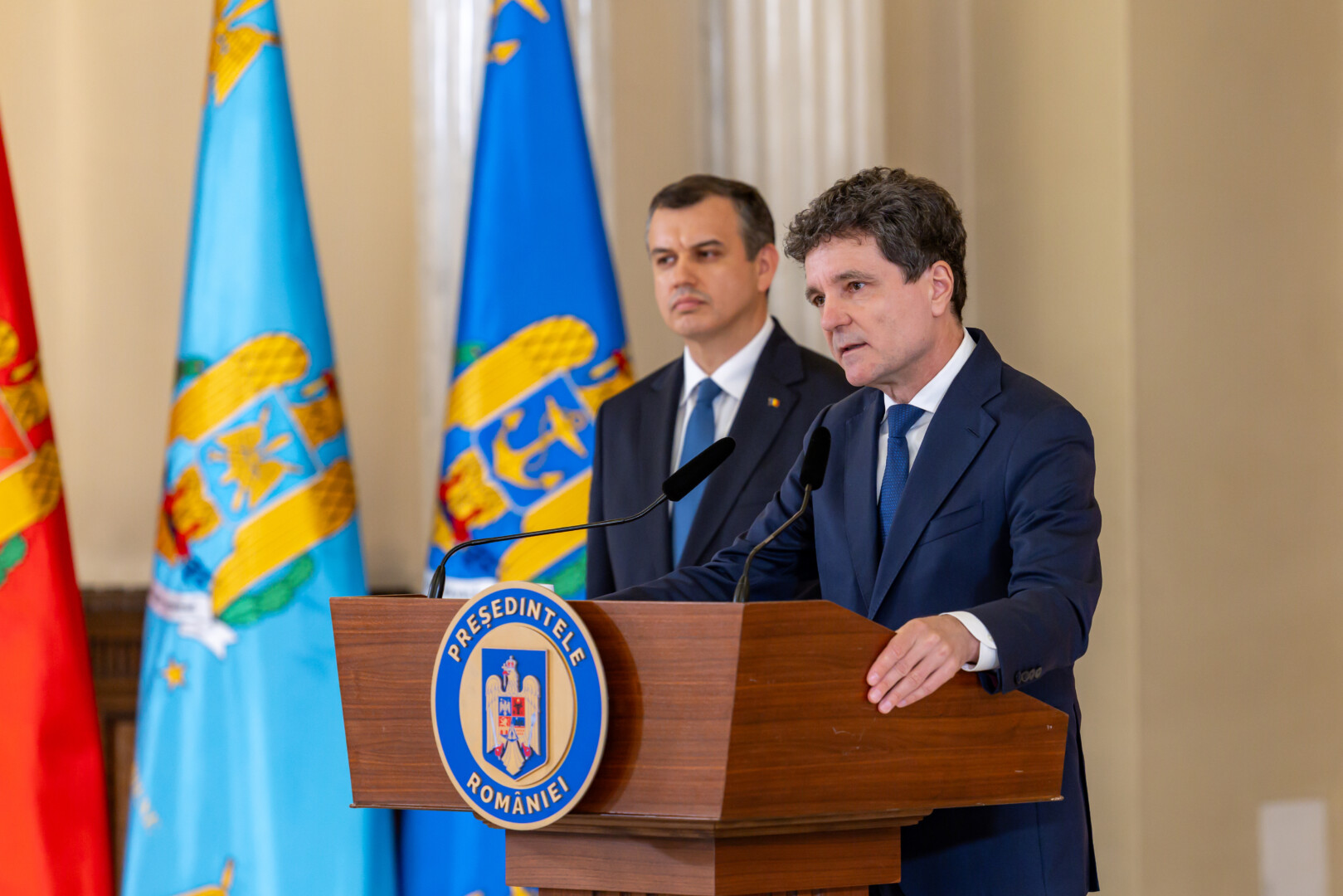
President Nicușor Dan has finally taken the big step, nominating a prime minister, in the person of Eugen Tomac.
It took him a month, as the head of state sought to find a parliamentary majority for the new cabinet.
But on Thursday, when he made the announcement, Romania’s political parties did not publicly suggest that the president’s long wait had served any purpose.
Of course, the parties will clarify whether what they’ve said in this month remain valid under the new circumstances.
Until then, some remarks are self-evident.
- Nicușor Dan appointed a prime minister from his own circle of councilors. This once more underlines the shortage of solutions he had at its disposal.
- But from the position of mediator, the president has begun to position himself as a player. It’s hard to imagine that that during this period when a new government will be formed that Eugen Tomac will be pulling the strings. No, it will be Nicușor Dan. Eugen Tomac will represent what the president wants and be his political-institutional spokesman. Nicușor Dan is himself quite poorly positioned because of the egregious game he played to overturn Ilie Bolojan’s government, but Tomac has even less to offer the parties, he has fewer levers to pressure them (more precisely, none).
- Nicușor Dan continues with the hybrid concepts that are hard to understand. He started last year with the National Strategy for the Defense of the Country 2025-2030, in which he introduced the idea of “solidarity independence” (hardly any clarification). After the motion he transformed the term pro-European into pro-Western regarding the future government’s profile. And he came back with something new, on Thursday, when, he announced a prime minister who sort of independent- because Eugen Tomac is independent only from the parties whose votes he needs, otherwise Tomac is the president of a party (PMP). And on the other hand, we discover that the Tomac government will not be a Cabinet of technocrats, but ‘technical’ (He defined it as “technical, not political”). Cotroceni is playing with words as it was played with the Bolojan’s fate and this is not a good sign.
- Both the president and the prime minister-designate had fair speeches on Thursday, in which they pointed out all the major themes and priorities, probably trying to give assurances both internally and externally. But the fundamental ingredient that was missing from the recipe proposed by Nicușor Dan and Eugen Tomac is related to the real levers that the two would have to implement their intentions.
- For example, even if (and this is uncertain) this “technical” government gets the necessary votes, the act of governing won’t be just technical. It ill be as political as possible, because the governing program, but especially the big decisions depend one hundred percent on political negotiations with the parties and especially with the PSD. No matter how “technical”, professional and well-intentioned the ministers are, what they will be able to do will depend dramatically on the compromises that the head of state will make with the parties (again, especially with the PSD).
- Finally, one more fact is worth noting: Romania’s experience with technocratic or “technical” governments has not been good. Such a government is weak from the start, vulnerable to all sides, and after it is installed, the political environment tends to become more radicalized. This is what happened after the technocratic episode of the Ciolos Government, and it also happened in other European countries as well.
- Moreover, I am very afraid that if today the PSD is lenient towards such a solution (because it would save it from taking responsibility at a difficult time), the same PSD will turn the “technical government” into a scapegoat for everything. And it’s only a matter of time before the party will (again) vent its infamous hemes about heartless technocrats sold out to foreign interests.
Nicușor Dan took a huge risk on Thursday, both for himself and for the country. He may have done it because he really believes that this is the best solution. Or maybe he did it considering that if the Tomac doesn’t muster the votes, Cotroceni will have a better hand second time around, relying on the fact that most parliamentarians are scared of early elections.
Regardless of what President Dan had in mind, appointing one of his advisers as prime minister, one thing remains visible: he once again protected the PSD from the responsibility of forming a government.
Just as while he was harsh with the parties on Thursday, and blamed “political quarrels” and parties that “do not get along with each other”, Nicușor Dan once again protected the PSD and its leader by refusing to pronounce their names when he described the situation. And by doing so, he implicitly cultivated the impression that all parties are equally to blame for the existing political crisis_ for the “same mess”.
That was about as convenient as you could get for PSD leader Sorin Grindeanu.
“I will not experiments” the head of state a week said after the fall of the Bolojan Government. On that occasion, Nicușor Dan thus justified his approach of taking the time to first identify a majority and only then appoint a prime minister.
Looking at the broader prospects of Thursday’s announcement, it cannot be said that the president kept his word.
