













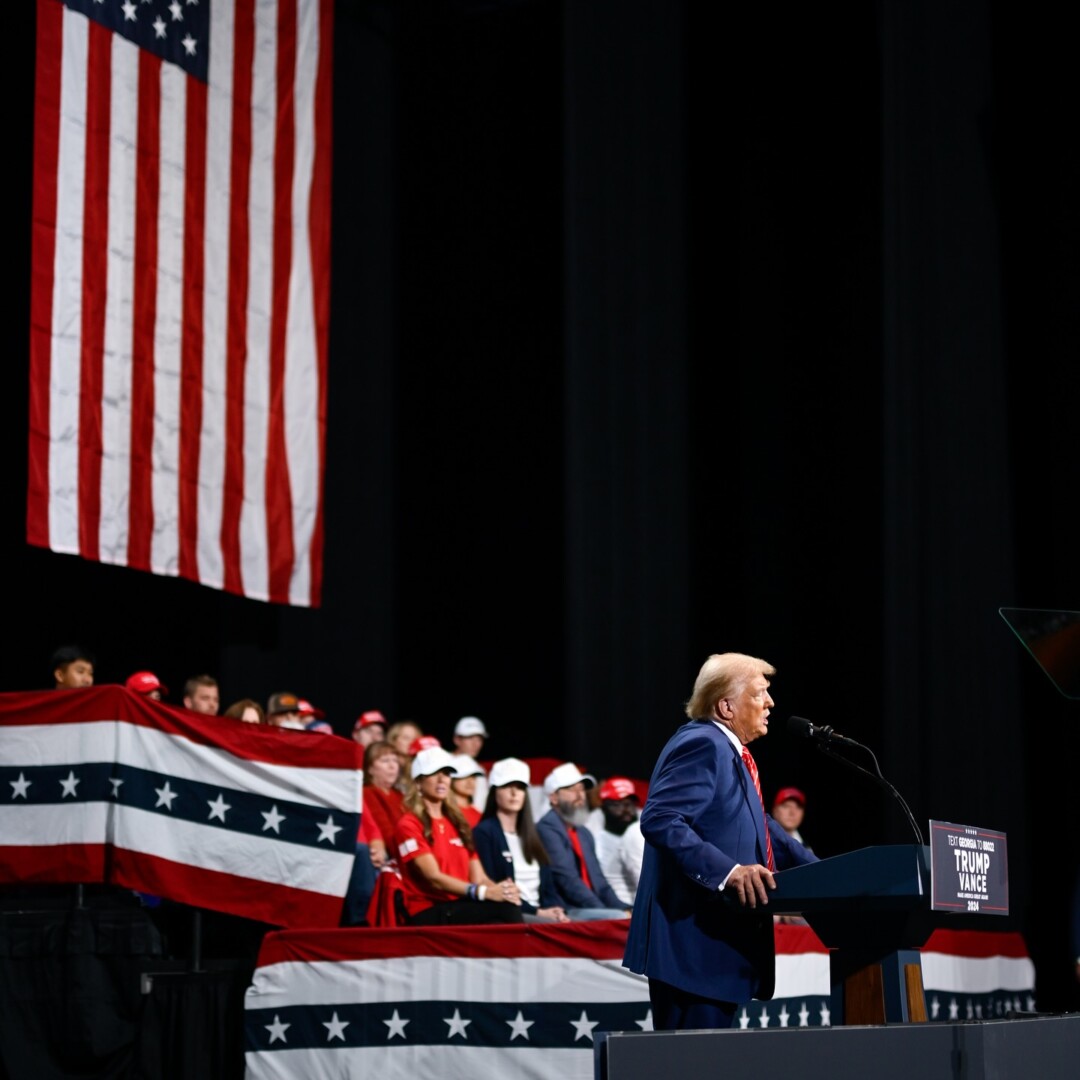
This is a busy week with two important decisions on the table: a new US president for the next four years and the interest rate decision of the US Federal Reserve.
Both events have the potential to impact the financial market and to bring short term volatility, writes eToro analyst for Romania, Bogdan Maioreanu.
Last week brought a flurry of economic data and quarterly earnings from the U.S. Economic growth is only slightly slowing, while inflation remains stagnant. GDP grew at an annualized rate of 2.8% in the third quarter, and the core PCE rate was unchanged at 2.7% for the third consecutive month in September. But the shock came from the labor market where only 12,000 jobs were added in October, despite the unemployment rate holding steady at 4.1%. On a positive note, 75% of S&P 500 companies reported positive surprises in earnings per share (EPS). While the data supports a soft landing, recession risks have increased, which may lead investors to bet again on stronger rate cuts.
The latest US economic data didn’t provide a best-case scenario for Wall Street but remained acceptable for investors, reinforcing expectations for a small Fed rate cut on Thursday. The market has nearly fully priced in a 0.25% reduction to a range of 4.50% to 4.75%. Fed Chair Powell’s press conference could provide crucial insights into the future course of the rate-cutting cycle.
Meanwhile, the outcome of the US elections carries significant weight, as the winning candidate will set the tone for the coming years. However, it remains challenging to gauge how much a president can genuinely influence GDP growth or stock market performance. More critical than political leadership is the overall health of the economy, which currently positions the US relatively strongly. The Federal Reserve retains ample flexibility to respond to unexpected developments. While present risks increase vulnerability to shocks, the long-term outlook remains positive. Even so, the economic impact of political decisions should not be underestimated, as we have seen in the past.
History shows that uncertainty increases volatility in the market. In the last U.S. presidential election in 2020, the VIX, or “fear index,” rose in the weeks leading up to Election Day, reflecting uncertainty about potential policy changes impacting financial markets. This pattern was driven by increased demand for short-term protective options, pushing the VIX higher. Once the election results were known, the index typically declined as uncertainty faded and investors began assessing the impacts of the new administration. In 2020, for instance, the VIX rose sharply in the three weeks before the election, moving from 25.07 to 35.55 on Election Day—an increase of over 40%. This surge reflected the high level of electoral uncertainty that year. However, less than a week after the election, the VIX returned to previous levels, showing how volatility can quickly subside once the election outcome is clear. In this election cycle, we are seeing similar behaviour. Expectations for significant economic policy changes could lead to heightened volatility, driving up the VIX. This is why investors should show caution in times of heightened volatility and stick to their strategies.
Regardless of the election tumult, investors are still seeing the US markets as the ones able to offer the strongest return for their portfolios over the long term, according to the latest eToro Retail Investor Beat survey. When asked about this, 27% of global investors said the US, 18% believe it will be Europe and 12% believe that it will be China. But 32% of the Romanian investors consider the US markets to offer the best potential for their investments, the largest percentage in the survey, followed by 25% that see Europe and 13% that see China as the best performing market in the next 5 years or more.
Last quarter of 2024 looks to be very busy for politicians and investors
