














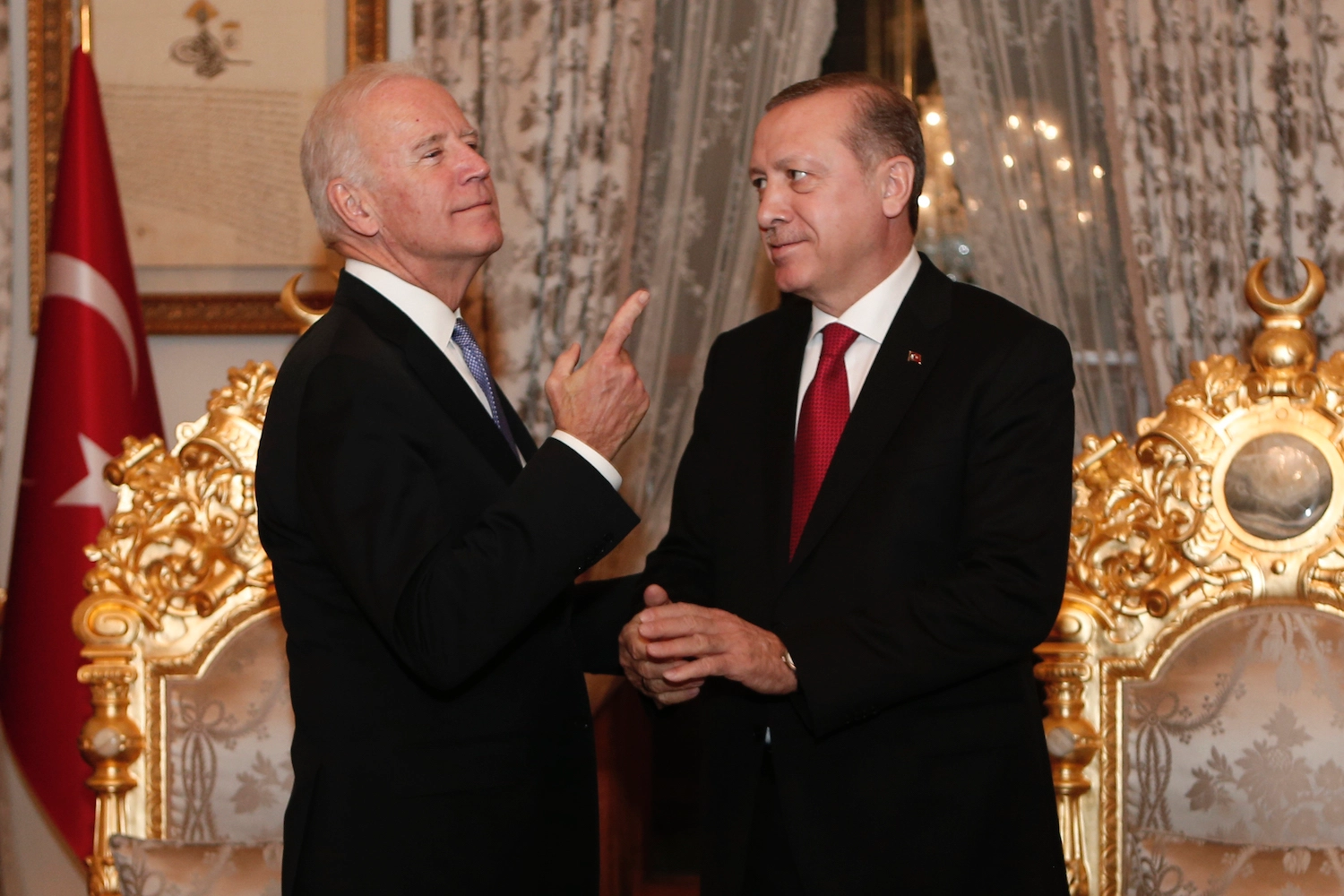
As US President Joe Biden wheels and deals his way with NATO allies – including Romania – the focus is on Turkey. There are multiple priorities and many stakeholders and the Ukraine war looming from and center. But if Biden is interested in doing the right thing, he will also not forget Armenia.
The landlocked country of just 3 million people in the South Caucasus may seem to be on the periphery of Europe, but it is both critical to the political psychology of Turkey and present at the very center of major global fault-lines, chief among them the competition between democracy and authoritarianism.
That is the animating concept that drives the war that Russia launched against Ukraine, and that is the challenge posed by elected autocrats all around the world (indeed, including some US politicians whom the president by face in next year’s election).
It is attaches to the question of What to do about Turkey, which confronts both Europe and America.
Turkey has just reelected its own Islamist authoritarian, Recep Teyyep Erdogan, who has already spent 20 years in power seizing for himself ever greater powers. At this point, other than holding non-falsified elections, Turkey is hardly a democracy: its media, judiciary and security services are all cowed, and the executive is nearly omnipotent.
Yet Turkey is also a NATO member, and as such has been standing in the way of expanding the alliance beyond the 31 members to include Sweden. Erdogan would like Sweden to crack down on political opponents of his who have taken refuse in the country and whom he considers terrorists.
Biden – this week is visiting the UK, Lithuania and Finland – has some leverage over Erdogan, and it shows in the early reports of a deal over letting Sweden in. Turkey wants American F16 fighter jets. Turkey would also like American acquiescence to its occupation of a swath of northern Syria – as well as silence over its continued oppression of its minority Kurds.
There is something else where Turkey would like the West to look the other way: the monkey business is it up to with Azerbaijan.
The regime of Ilham Aliyev in Azerbaijan is so vile as to make Erdogan seem like a liberal. Ever since the collapse of the Soviet Union, the Aliyev family have ruled with an iron fist as a hereditary kleptocracy. According to the Pandora Papers, the family has siphoned off hundreds of millions of dollars’ worth of wealth created by the country’s stores of oil and natural gas. World watchdogs rule the Baku government as among the most corrupt and dictatorial on earth.
All this is fine with Erdogan, who is Azerbaijan’s main supplier of weapons which are then turned against Armenia. That’s right, a major NATO member is arming to the teeth a dictatorship to attack a vulnerable democracy that is trying to build alliances with the West.
Since a war it launched in 2020, Azerbaijan has been engaged in a campaign to cement control over the Armenian-populated region of Nagorno-Karabakh, which has been autonomous since the early 1990s. The region, where 120,000 Armenians live, has been under a crippling Azerbaijani blockade since last December.
But there is more. Azerbaijan occasionally attacks Armenia proper and is plotting with Turkish connivance to seize the Zangezur Corridor, a section of Armenia that would connect Turkey and Azerbaijan. That could be convenient for trade not only between the two ethnically related countries – but also for sanctions-busting on behalf of Russia, with which Aliyev signed a strategic cooperation agreement days before the invasion of Ukraine.
All of this makes a mockery of the idea of decency in international relations, and it also runs against Western interests.
There are specific things that the US should demand of Turkey: Stop aiding and abetting Azerbaijan in its aggression, and affirm its commitment to the territorial integrity of Armenia.
Though morality is not a powerful argument in most cases in international relations, it is also not meaningless for a leader like Biden, who is famous for wanting to do the right thing.
Indeed, that is how he cast his 2020 presidential bid to unseat Donald Trump.
That is, in fact, the reason why Biden decided in 2021 to recognize the genocide of 1.5 million Armenians at the hands of Ottoman Turks a century or so ago. That angered Ankara, but it was the right thing.
Biden should stay true to this form. In his dealings with European leaders and with Turkey, he should not forget Armenia.
I would say the same applies to NATO member Romania: while larger than Armenia it too has been unjustly sometimes seen as peripheral. Now Romania has some leverage too, andit has a meaningful voice in NATO, and is mature enough of a democracy to do the right thing itself.
* * *
Alison Mutler is the director of the Romanian news site Universul.net and is the former Associated Press chief correspondent in Bucharest.
