




Disinformation, disrupted democracy, and a dapper diplomat: Romania’s reckoning becomes a global flashpoint.
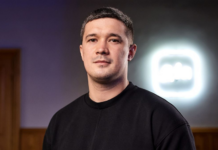
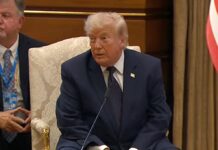
Sporting a flashy watch, above-the-ankle tight jeans, and a neon smile, Dragoș Sprînceană looks more like a nightclub gigolo than a seasoned diplomat. But the businessman has suddenly emerged as Romania’s point man in the era’s most surreal of foreign policy endeavors: the need by supplicant countries to curry favor with Donald Trump.
Sprînceană, whose name means “eyebrow” in Romanian and who turned 46 today, is PM Marcel Ciolacu’s newly appointed envoy to the Trump camp. His job? To “facilitate relations with Trump” at a moment when Romania is trying to walk an impossibly fine line between honoring its European commitments and appeasing a US presidency who openly disdains the EU.
A former bartender and model who reportedly moved to the US in 2002, the trucking transport magnate is a leading Palm Beach Republican and reported Trump donor, and as such apparently struck the government as the ideal Romanian-born Floridian for the job.
So when Sprînceană gave an interview this week to Romanian outlet Digi24 and casually admitted he’d told Washington to “ignore a little bit” Bucharest’s pro-Ukraine, pro-Europe stance, the backlash was swift and the indignation most profound. Former President Traian Băsescu accused Ciolacu of trying to usurp Romania’s foreign policy — a domain constitutionally reserved for the president. These things matter, in the Balkans.
Complicating the picture: Romania’s elected president Klaus Iohannis is no longer in office, having resigned in the wake of Romania’s biggest political crisis in decades. In his place stands an interim head of state, Ilie Bolojan, while Ciolacu angles for influence ahead of the rescheduled presidential elections on May 4.
A Nation at the Center of a Global Storm
What’s at stake in Romania isn’t just who leads the country. In the wake of a November 2024 scandal in which ultranationalist conspiracy theorist Călin Georgescu surged to first place in the first round of president elections — allegedly with Russian help — Romania has become ground zero in the global battle over free speech, disinformation, and democratic resilience.
Georgescu, a fringe figure known for praising Putin and denying the moon landing, vaulted from single digits to first place, fueled by a tidal wave of Kremlin-friendly content on TikTok. Intelligence agencies documented more than 50 million views generated by thousands of accounts tied to foreign propaganda. Romania’s Constitutional Court responded by annulling the election results and banning Georgescu from the rerun — a bold and controversial move that brought both praise and fury.
On the one hand, democratic institutions had acted. On the other, Romania was suddenly under fire — from Elon Musk, from MAGA Republicans like Vice President JD Vance, and from the global far-right for allegedly “censoring” free speech.
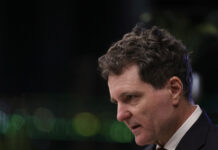
The Digital Services Coordinator, ANCOM, demanded transparency from social media platforms. TikTok was temporarily suspended. Musk tweeted, “You can tell who the bad guys are by who is demanding censorship,” posting a photo of ANCOM’s vice president Pavel Popescu. Popescu shot back, challenging Musk to a public debate and reminding him that Romania had been instrumental in helping test Starlink satellites. “We are fighting a hybrid war,” he said. “And we’re doing it with all institutions engaged.”
Desperate Times, Dubious Envoys
Which brings us back to the flashy envoy (whose name, for afficionados, is pronounced DRAH-gosh spreen-CHYAH-nuh). In another era, the appointment of this dual American-Romanian citizen would have been dismissed as a joke. But these are not normal times. With a politically polarized nation and 11 presidential candidates vying for control, Ciolacu is hedging his bets — trying to keep one foot in Brussels and the other in Mar-a-Lago.
He’s also hoping to appeal to Romania’s growing “sovereigntist” camp—Euro-skeptics who flirt with Moscow and echo MAGA rhetoric. In that context, Sprînceană is less a joke and more a calculated move. On X, the envoy is much given to posting pro-Putin and anti-EU propaganda.

The appointment has proven too much for some seasoned insiders. Kelemen Hunor, head of the ethnic Hungarian UDMR party (Romania’s perennial coalition kingmaker), put it bluntly: “Dragoș Sprînceană doesn’t have the necessary training to speak about politics beyond the pub.”
Yet no one in Ciolacu’s ruling Social Democratic Party has dared speak out. With a pivotal election looming and the eyes of the world fixed on Romania, silence reigns — even as the government flouts diplomatic norms.
What Romania is grappling with is not just a local power struggle, but a new wave of Russian-style propaganda that doesn’t sell the virtues of Moscow so much as it exploits existing grievances: skepticism of LGBTQ rights, frustration over perceived EU arrogance, fears that Ukrainian refugees are favored over locals, and the idea that Orthodox Christians should unite against “decadent” Western values.
It’s a playbook drawn straight from the Kremlin — and one that resonates in Eastern Europe. Slowly but surely, large segments of the population now get their news from TikTok and Telegram, where narratives paint the West as corrupt and Ukraine as the aggressor. If that worldview spreads unchallenged, Romania not only risks backsliding democratically, but may also miss out on the eventual economic boom of Ukraine’s reconstruction—a boon it had positioned itself to benefit from by facilitating refugee support and grain exports. That would suit Moscow just fine. A weaker, divided Romania — unmoored from Brussels, friendly with Trump, and echoing Hungarian populist leader Viktor Orban — is precisely the kind of NATO and EU member Russia prefers on its border.
In this context, the May 4 election really does present an existential choice. Romania, once a reliable Western ally, must decide whether to stay anchored in the EU/NATO consensus — or veer off into nationalist isolation.
The leading centrist, Bucharest mayor Nicușor Dan, may be Romania’s best hope to stay the course. But he’ll have to overcome nationalist George Simion, a former football hooligan banned from entering Ukraine and Moldova, and beat former PM Victor Ponta, who is styling himself as a “bridge” between Europe and Russia. Ponta’s support for Georgescu and his anti-Western dog whistles make him a key player in the tug-of-war for Romania’s future.
Amid all this, Dragoș Sprînceană offers some strange, almost poetic comic relief. He’s already being compared to Anastasia Soare, the famed “Eyebrow Queen” of Beverly Hills, who also hails from the Black Sea port of Constanța. But while Soare built a cosmetics empire, Sprînceană is building something stranger: a bridge from Bucharest to Trump Tower.
It’s a bizarre subplot in a much bigger story. But in Romania today, the bizarre is often the clearest window into the truth.
Alison Mutler is a British journalist who is a longtime foreign correspondent in Bucharest and is currently the director of the Universul.net news website, publishing in both English and Romanian.
