













Claire Berlinski and I began today’s episode of Critical Conditions with a glance at Paris, where Emmanuel Macron has just lost another prime minister, his seventh in recent years. Sébastien Lecornu resigned after less than a month and lasted barely twelve hours after naming his cabinet, setting a record for brevity in the Fifth Republic.
Claire said this has become almost comic — the French now barely blink when a government collapses — but the markets are no longer amused. Macron keeps appointing the same kind of technocratic center-right figure, only to see both the left and right unite to destroy him. I noted that France’s parliament is now divided into three blocks — left, right, and center — and none can form a stable majority. Budget reforms are the flashpoint: every attempt at even modest austerity sparks revolt. This is why French borrowing costs have suddenly spiked higher than Italy’s, something once unthinkable. Claire observed that the French are curiously calm, as if accustomed to chaos, but the system is plainly failing. The semi-presidential model that was meant to guarantee stability has produced paralysis, and Macron seems incapable of finding a way out.
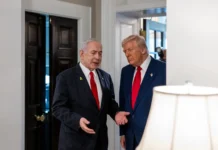
From there we turned to the Middle East, where the stakes are somewhat higher. I tried to shoehorn some method into the madness: The Trumpy proposal for an end to the war, the reconstruction plan for Gaza, and the American guarantee that effectively treats an attack on Qatar as an attack on the US. Claire asked why such a tiny emirate would be given this privilege. I said it was a down payment: Washington is expecting Qatar to force Hamas to surrender its weapons — without which the Gaza ceasefire proposal will collapse.
The question now is whether Hamas will truly disarm. If it does, Gaza could be handed to a technocratic government or the Palestinian Authority, tens of billions in aid could flow, and Israelis and Gazans might finally emerge from their nightmare. Normalization with Saudi Arabia and even Lebanon or Syria could follow. Hezbollah might really be disarmed, Iran’s regional chaos project set back, and Israel restored to the international community. That is one possible future.
The other is darker. If Hamas refuses, Israel may reoccupy Gaza militarily. The hostages will likely perish. Gaza will become an insurgency nightmare. Israeli politics could spiral into siege mentality, perhaps even reviving Netanyahu’s career. Outrage could spread into the West Bank, into Israel itself, and into terrorism worldwide. These are the two futures now hanging in the balance.
Claire and I agreed that Trump is pressing for an answer within days because he wants to be nominated for the Nobel Peace Prize. The idea is absurd, but his carnival-barker tendency to declare victory too soon has consequences. With Iran, he boasted in June that its nuclear program had been obliterated by the US strike, removing pressure that might have forced Tehran to make more permanent concessions (instead they are now rebuilding). With Hamas, the same error could once again squander leverage.
Two very different crises, both somehow related to the current perilous moment. Claire and I will be back later this week to see how they unfold.
