









Here are some of the incidents:
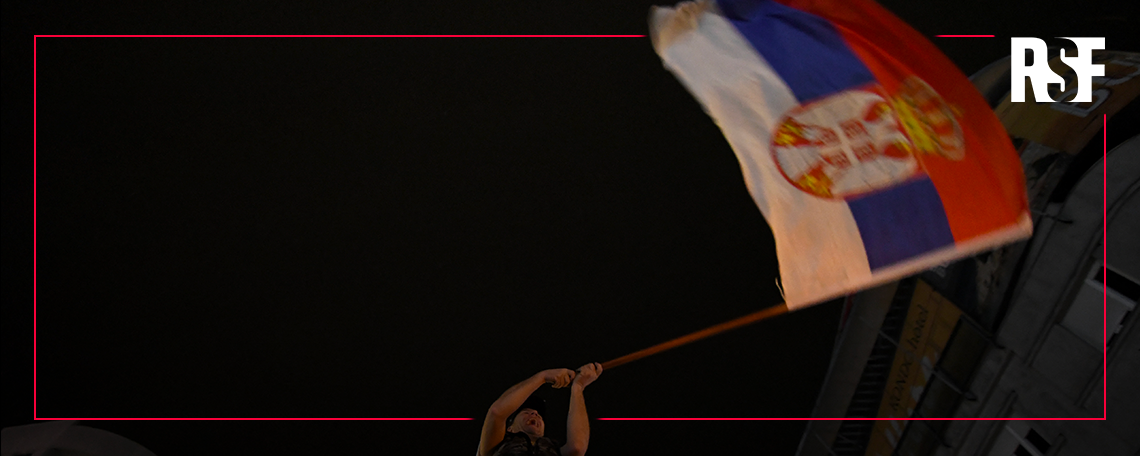
When independent journalist Dalibor Stupar tried to film the arrival by bus of pro-government activists, he was prevented from doing so by those who were supposed to protect him. After pushing him, the police illegally seized his phone, claiming he had no right to cover the public gathering organized on 11 October by regime supporters to counter the anti-government protests. The assault on this reporter from the Beta news agency and the Autonomija news site is symptomatic of the situation facing Serbian journalists who, for a year now, have been covering the protests triggered by the collapse of the Novi Sad railway station in the north of the country, which left 16 people dead.
So far there have been 82 cases of physical abuse against journalists, the highest annual number since 2008, according to comparative data from RSF and its local partner, NUNS.
About half of the violence was shockingly perpetrated by law-enforcement officers who, “moreover, look the other way when journalists are attacked by pro-government protesters,” RSF said.
Through NUNS, RSF is supporting journalists who have been targeted, providing financial support and technical assistance to supply protective vests and helmets to professionals covering the protests, a statement said.
“We pay tribute to the Serbian journalists who are heroically covering the protests in the face of the institutionalization of violence by the regime of President Aleksandar Vucic. We call on the international community to provide financial, legal and political support so that they can work safely and so that their attackers are brought to justice. Press freedom in Serbia is at stake, as is our right to information about events in this European Union (EU) candidate country, including the authorities’ respect for the right of assembly,” said Pavol Szalai, director of RSF’s Prague Bureau
European response to RSF’s calls
Following appeals in July and August 2025 by RSF and other international and Serbian organizations, the European Parliament strongly criticized the Serbian government in a resolution adopted on 22 October.
The resolution also condemns political pressure targeting Serbia’s largest independent channel, N1, whose newsroom has been nominated for the 2025 RSF Press Freedom Prize in the Courage category for its protest coverage.
A week before the European Parliament’s resolution, European Commission President Ursula von der Leyen communicated to Aleksandar Vucic the need for “progress as regards […] media freedom,” but did not press further.
Nine international press freedom and journalist groups, including RSF, had previously warned her of the dangerous precedent that EU inaction in Serbia would set for the Western Balkans.
“The instruments at the Commission’s disposal, including the suspension of EU funds, should be implemented in order to send a clear message about the EU’s commitment to independent journalism and media freedom in the region,” they wrote on 13 October in a joint statement.
Two especially violent days
Since RSF’s last assessment in August 2025, two days have been particularly violent for journalists covering the protests in Novi Sad. On 5 September, law-enforcement officers assaulted Emir Kahrimanovic of the 021.rs site, Katarina Stevanovic of the weekly Vreme, Nemanja Sarović of the KTV channel, as well as Ksenija Pavkov and her cameraman colleague from the N1 television channel. In addition, during a raid at the University of Novi Sad, police detained several members of the student editorial team of Blokada info and seized their equipment.
On 11 October, officers used disproportionate force against Darija Matic of the site Masina.rs, Brankica Matic of the site Storyteller, as well as Miljko Stojanovic and Andela Risantijevic of the site Glas Zajecara. On the same day, a man threatened and followed N1 journalist Lea Apro before grabbing her hand and taking her phone; he was detained by the police—a rare occurrence.
Out of 180 countries and territories in RSF’s 2025 World Press Freedom Index, Serbia ranks 96th.-
Romania falls in World Press Freedom Index – and it’s not alone in that
