











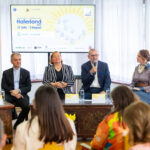
Haferland Week, the famous festival in the heart of the Transylvanian Saxon community, kicked off its 13th edition on Wednesday, with a new Youth Haferland Youth addition that serves young people, communities and cultural heritage.
The festival spans the delightful villages of Archita, Saschiz, Homorod, Rupea, Criț, Roadeș, Meșendorf, Cloașterf, Bunești and Viscri. Visitors can choose from some 50 events: concerts, theater performances for adults and children, traditional dance performances, conferences, guided tours, food tastings, craft workshops and exhibitions, etc.
“The fire was started by Michael Schmidt and Peter Maffay (Eds: in 2013), but this fire needs to be sustained by those that come to Haferland every year,” said Daniel Zikeli, Evangelical chief priest of Brașov, and Assistant Bishop of the Evangelical Church C.A.
Michael Schmidt, the chairman of the M&V Schmidt Foundation, the festival’s founder and organizer, called it “one of the most famous cultural events of the summer and an opportunity to reunite Saxons who’ve emigrated with those who stayed in their homeland, and at the same time, to promote values such as diversity, tolerance, cultural openness and economic cooperation.”
He credited Peter Maffay, a major musician in Germany who like Mr. Schmidt was born in the area for giving him the idea of starting the festival. Maffay who is originally from Brasov is the co-initiator of the Haferland Week festival through his Tabaluga Foundation, his humanitarian organization.
The festival now has a new section called Youth Haferland following the partnership started last year between the M&V Schmidt Foundation and The Duke of Edinburgh’s International Award Romania Foundation. The DoE award is an educational and adventure camp designed to create bridges between young people, communities and cultural heritage, with a focus on civic engagement and identity.
A global enterprise, The Duke of Edinburgh’s International Award program offers international recognition and a structured framework of non-formal education activities for young people aged 14 to 24. At the international level, the program is sponsored by HRH The Duke of Edinburgh, and at the national level by HM Margareta, Custodian of the Romanian Crown.
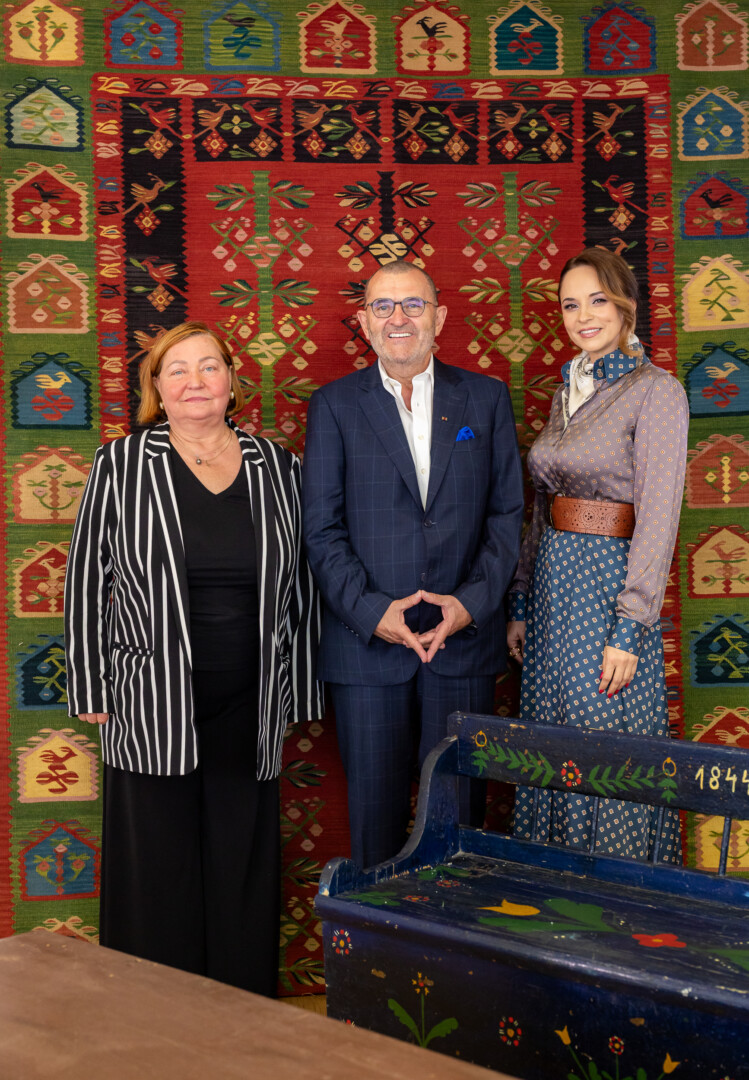
”In a world where the link between generations is weaker than ever, Youth Haferland has managed to create a bridge between the past, present and future,” said Mihaela Mariș, the vice president of the The Duke of Edinburgh’s International Award Romania.
“Haferland keeps the fires burning,” Ms. Maris added. “I hope Haferland Youth will play a little part.”
Romanian TV personality Andreea Marin called it: ”The most important cultural project in Romania and not just for the Saxons. It has grown year by year … and it has developed” the region.
“It helps us understand better who we are and perhaps to get on better with each other,” she added.
Paulina Popoiu, the director of the Village Museum, which hosted the event, thanked the organizers for choosing the open air museum which features dozens of Romanian rural houses in different architectural styles according to the region.
“The Saxons are a civilizing ethnic group. Wherever they went, they brought civilization,” she said.
Among the festival’s renowned events are the Saxon brass band concerts, folk dances, religious music, baroque and jazz concerts, as well as the traditional Saxon ball, which this time will be organized on the esplanade of the Rupea fortress, a space as generous as it is spectacular, with a unique perspective on the city’s surroundings.
A highly anticipated event this year is the hike to the almost 700-year-old Saschiz refuge fortress, which includes a guided tour of the fortress, followed by a cultural picnic. The fortified church in the locality is one of the two religious edifices in Haferland included in the UNESCO World Heritage Site, along with the fortified church in Viscri.
Another first is the “flight of the lolas” from Agnita, an old custom of the Saxon guilds from the Middle Ages. The tradition marked the handing over of the guild chest to the new starost of each craftsmen’s guild. The ceremony took place at the end of a parade of guilds, who were accompanied by journeymen wearing masks, called “lole”, armed with whips. Probably originating from ancestral agrarian rites, the role of the lolas was to dispel evil spirits by slapping their whips.
Saxons from Agnita emigrated in mass after 1990 and customs disappeared only to be brought back to lifein 2006. It’s rare for the flight of the lolas to be presented outside Agnita.
Haferland Week raises awareness of the importance of the Saxon community of Haferland who have lived here for more than eight centuries. The unique secular and religious architecture, with fortified religious edifices, built to serve the spiritual needs of the community and to defend it, the language and traditions of the inhabitants represent are unique in Europe.
The festival is a key factor for the tourist, economic and social development region.
“It doesn’t matter what is says in your ID papers; everyone can walk barefoot in the grass, pray in peace, dance or taste local delicacies,” said Andreea Marin,
“It’s a desire to keep roots,” she added. “But also a desire) to keep growing.”



‘With a hint of Shakespeare’: the Noble sisters hold summer concert at Haferland Saxon festival
