













In its US-backed deal with Israel, Lebanon took a big step toward reclaiming its country. Its leaders must be protected from assassination by Iran and Hezbollah.
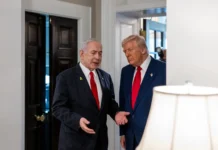
Here’s what I’m thinking as I contemplate the framework deal signed in Washington this weekend in which Israel and Lebanon resolved to make peace. I’m thinking that the surest path to looking ridiculous these days is to offer enthusiastic support for a scheme concocted by Trump and Netanyahu. I’ll admit that right off the bat — and yet this case is rather tempting.
I flirted with the mistake of taking these two charlatans seriously during the opening days of the Iran war: Israel’s tactical performance, built upon one of the most remarkable intelligence operations in modern history, was so overwhelming that it briefly seemed possible the Islamic Republic might mercifully collapse, saving the people of Iran and transforming the Middle East. Instead, what followed was an monumental strategic blunder. The US turned out to have no plan for the predictable Iranian disruption of shipping through the Strait of Hormuz, panicked as energy markets reacted, and rushed into a ceasefire that amounts to a stunning capitulation. Trump transformed what should have been the regime’s moment of maximum weakness into a diplomatic victory so total that the tyrants of Tehran, these faux-pious mafiosi, can hardly believe their luck.
So Iran arrived at the negotiations in Switzerland behaving as though it had acquired the right to pronounce upon Lebanon’s future as well. By insisting the Gulf crisis and Lebanon were inseparable, Tehran sought to portray itself as Lebanon’s protector, supposedly restraining Israel, when in reality it was attempting to save Hezbollah, the militia through which it has systematically undermined Lebanon’s sovereignty for decades. In his desperation, Trump allowed it – and the Catholic convert JD Vance gleefully turned the other cheek.
I have been ruminating that Iran pushed the envelope too far. They made Trump look ridiculous to a degree that he may actually care about more than the fate of the Republicans in the midterms. Unlike the character in the Godfather Part II, Trump seems to think he can afford to look ridiculous, but perhaps there’s a limit. Maybe that explains the Israel-Lebanon deal, which came out of ambassadorial-level talks that featured low expectations, yet seem to put Iran in its place.
You have to rub your eyes at what’s in the document (full text here):
“Israel and Lebanon affirm the right of each state to exist in peace, and their mutual desire to live in security as neighboring sovereign states. Israel and Lebanon hereby declare their intent to conclusively end the conflict, address its underlying causes, and to therewith formally conclude any state of war between them.”
Of course, that’s how neighbors should behave. But for most of the past 78 years, Lebanon has refused to behave this way. The sole exception was during the brief effort, in the early 1980s, to reach a peace deal under President Amin Gemayel – which fell apart. Indeed, Lebanon has been on the radical side for refusing to offer equal rights to the descendants of Palestinian refugees from 1948 – Sunni Arabs culturally and ethnically no different from Sunni Lebanese – for fear of somehow legitimizing the existence of Israel. So this is a big departure.
Lebanon also explicitly asserts that the “LAF (Lebanese Armed Forces) will restore effective sovereign authority over all Lebanese territory, pending the verified disarmament of non-state armed groups and dismantlement of associated infrastructure, enabling the Israel Defense Forces (IDF) to progressively redeploy out of the Lebanese territory.” Lebanon promises to ensure that Hezbollah and “such groups will have no military or security role and no armed capabilities anywhere in Lebanon.”
So that means disarming Hezbollah, and the term “progressively” suggests a recognition of Israel’s right – basically its need – to remain in a buffer zone (which should be very small) until this is achieved. Of course, Lebanese President Joseph Aoun and PM Nawaf Salam have been claiming they want to disarm Hezbollah, but this is now a written commitment cosigned by the United States.
Tough guys all over the commentariat landscape will dismiss all this as as empty words. In Israel, the usual suspects will claim that Israel can only depend on itself. But I think works have value, and commitments still count for something, and it is better to have them all pointing in the direction of progress and peace. Besides, as I wrote just last week, Israel’s half century of dealing with Hezbollah on its own has not been a success.
The US undertakes to help the LAF improve its abilities. That’s great, but more will be needed. If Lebanon truly intends to reclaim its sovereignty, it must now go much further. The government should issue an unequivocal declaration that it neither seeks nor welcomes Iranian involvement in Lebanese affairs. Lebanese officials have implied this position, but implication is no longer enough. The world needs to hear it. They should say plainly that Lebanon does not want Iran’s help and that Hezbollah does not serve any interest of the Lebanese state.
Having done so, Beirut should formally request precisely the international assistance required to make that vision a reality. American support for the Lebanese Armed Forces is welcome, but it is unlikely to be sufficient on its own. Lebanon should ask friendly nations to help restore the state’s monopoly on force, including, if necessary, through an international stabilization mission operating at Lebanon’s invitation alongside the Lebanese Armed Forces. Hezbollah has never been merely a domestic political movement; it has been an Iranian military project operating inside another sovereign country, and it is an affront to the regional and world order.
Iran, meanwhile, should finally be told that there is a limit to the leverage that Hormuz give them over Trump. This madness has gone to the regime’s collective head, and they are making Trump and by extension the US and the West look very weak. Iran has zero right for a voice over Lebanon’s future. Lebanon does not border or threaten Iran. The linkage Iran has established should be ripped apart, clearly and publicly. Iran should also be prevented from rerouting any of the blackmail funds the US seems prepared to hand it to its proxies – not just Hezbollah but the Houthis, Hamas, Islamic Jihad and the PMF in Iraq.
The choice before Hezbollah should likewise become unmistakably clear. It can surrender its weapons and accept that the Lebanese state alone will exercise military authority, or it can refuse and accept the consequences of standing in the way of Lebanon’s recovery. Now that Syria is no longer allied with Hezbollah (which propped up Bashar Assad), the group is surrounded. If need be it should be steamrolled – but not by Israel.
It is also important that the signed framework clarifies that Israel has no territorial claims on Lebanon. Too many people – including my interviewers on some TV channels – seemed way too confused about this. Israel’s incursions into Lebanese territory were for the sole purpose of fighting Hezbollah, which has been attacking it.

I’m not normally prone to give much credit to Netanyahu, and it is obvious that he has been pushed by the US – but at least he has not messed this up. It’s possible that he will in general move to a more moderate stance as Israel’s October election approaches; he is a wily character. Israel still needs to be rid of him, but here’s one decent thing he did.
Meanwhile, the first foreseen steps are modest. Israel has agreed to withdraw first from two pilot zones, one south of the Litani River and another within the expanded security zone north of the Litani. Those areas will be transferred to the Lebanese Armed Forces, which are expected to establish effective state control before additional Israeli withdrawals take place. The United States has also committed itself to strengthening the Lebanese Armed Forces and establishing a trilateral coordination mechanism to oversee implementation. Those are sensible provisions, but they are only the beginning.
This agreement does not solve the Hezbollah nightmare overnight, but it establishes extremely important principles. If it is fully carried out, one can envision a peace treaty with Syria as well, and then it is a whole new ballgame in the Middle East.
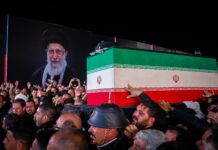
Be sure that Lebanon’s courageous leaders are in under immediate danger of assassination by Hezbollah and Iran — both of which condemned the deal as shameful. They must be protected in every way, and Lebanon must be rewarded.
