














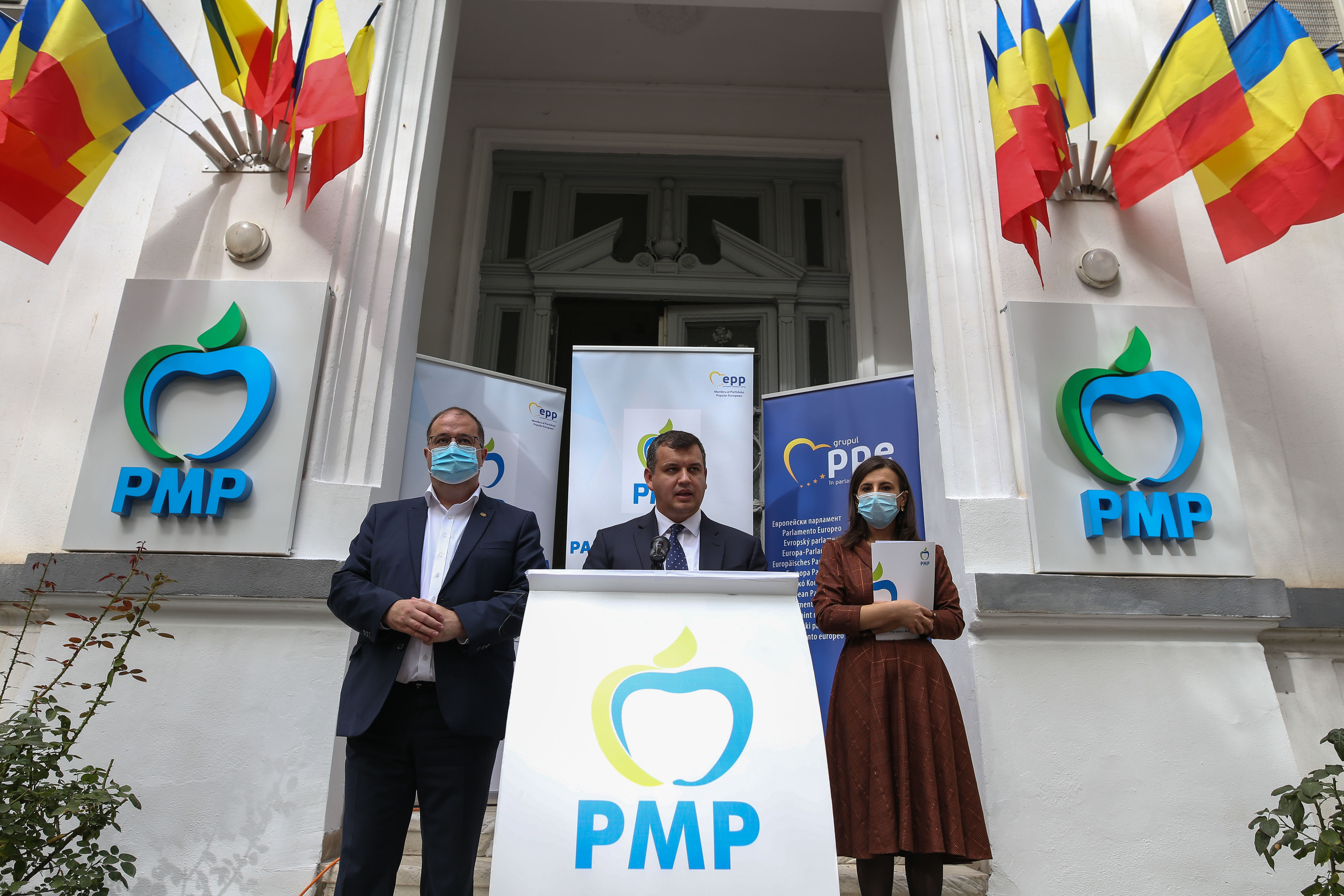
MEP Eugen Tomac has stated that CJEU (Court of Justice of the European Union) proceedings over the lawsuit that he initiated on behalf of Romania for its rejection from the Schengen Zone could last between one year and a half and two years.
“There are many elements that we will bring to the Court for discussion and obviously our strategy is much broader and I am aware that this is a long process, and I am prepared to defend every request in this lawsuit, because it is based on the provisions of the EU’s Functioning Treaty and of course, the Schengen acquis. It is essential that we carry through with this action, because if no unanimity is reached in the next two years, this lawsuit is our only remaining chance”, Tomac told a press conference on Saturday at PMP headquarters.
He emphasized that this initiative does not block Romania’s Schengen accession negotiations, but voiced an opinion that Romania will not join this year.
“The lawsuit opened at the Court of Justice of the European Union does not block Romania’s negotiations with Austria, it doesn’t block Bulgaria’s negotiations with the Netherlands. The Council has the right and the freedom to make this decision at any time. So a lawsuit at the Court of Justice of the European Union doesn’t hinder in any way the Council’s freedom to meet whenever it considers – there can also be an extraordinary Council meeting – and take a decision to correct this injustice”, said the MEP.
He noted that Romania and Bulgaria have been meeting the Schengen accession criteria since 2010, as acknowledged by a European Commission report, in contrast to Croatia, which applied to join only in 2021 and was accepted in 2022.
Eugen Tomac pointed out that no MEP up to now has ever challenged an act of the EU Council in court, and that through his legal action, he hopes that MEPs will obtain the right to act as privileged applicants, just as member states, the European Parliament, the Council and the Commission. Currently, MEPs can only act as non-privileged applicants, which means that they must demonstrate a direct interest in the challenged act.
“Until 1990, not even the European Parliament had privileged applicant status in challenging regulatory acts of the Commission or the Council. There was a precedent in this regard as well. That is precisely why I emphasize that, in addition to the annulment of this act, I pursue the same right for MEPs too, regardless of where they come from, because it is fundamental. We do not have the right of legislative initiative, as the Romanian MPs have, for example, but at least in matters related to the EU policies and the acts adopted by the Council, let us also enjoy this right to appeal in the Court of Justice of the European Union as privileged applicants”, he said.
Furthermore, MEP Tomac asked for permission for the Court to request the government of Romania or the European Parliament to intervene in this process.
“At least in the European Parliament we have several instruments at hand through which we can ask for this, which I will do in the next period. We have a debate scheduled this month in the LIBE Committee, I spoke with the chairman of the committee, he will call this debate where we will invite the Austrian and the Dutch Interior ministers to explain the reason for their abstention, which has nothing to do with the migration issue. And obviously, I will fight for the European Parliament to intervene in this lawsuit on my side. It is a more complex procedure and of course, we are battling for all the chances, but it’s a first”, he said.
On February 6th, Tomac filed an action for annulment based on Art. 263 of the Treaty on the Functioning of the European Union, requesting that the Court declare the illegality of the implicit decision following the December 8, 2022 vote by which the Council decided against the full enforcement of the provisions of the Schengen acquis in Romania. Tomac maintains that his main argument can be found in the Accession Treaty, which provides in Protocol 1, Art. 4 para. (2) that “the provisions of the Schengen acquis are to be applied on the territory of each of these member states only on the basis of a European decision adopted by the Council in this regard, after verification, in accordance with the applicable Schengen evaluation procedures, of the fulfillment on the territory of the respective state of the necessary requirements for the application of all the relevant parts of the acquis”.
